Merchant Category Code (MCC) 4111 is the classification used by the International Organization for Standardization (ISO) for local and suburban commuter passenger transportation, including ferries. This code applies to businesses that provide scheduled transport services within a metropolitan area. Transactions with city buses, subway systems, and commuter trains will typically fall under this category. The code also covers passenger ferries that operate on a regular, non-tourist route.
Which businesses fall under MCC 4111?
MCC 4111 applies to a broad range of public transportation establishments:
- City Bus Lines: These services provide scheduled transportation along fixed routes within a city. Examples include New York's MTA buses and the public bus systems in cities like Chicago or Los Angeles.
- Subway and Metro Systems: This category covers underground or elevated electric railway systems that serve a metropolitan area. Think of the London Underground, the Paris Métro, or the Washington Metro.
- Commuter Rail Services: These trains connect suburban areas to central city business districts on a regular schedule. Well-known examples are the Long Island Rail Road and New Jersey Transit.
- Light Rail and Trolley Operators: These businesses operate electric rail cars, often at street level, within urban areas. The streetcars of New Orleans and San Francisco's cable cars fall into this group.
- Passenger Ferries: This includes companies that transport passengers via water on a scheduled, non-tourist basis. The Staten Island Ferry in New York is a classic example of this service.
- Scheduled Airport Shuttles: These services offer fixed-route transportation between airports and city locations, distinct from on-demand taxis. The JFK AirTrain is a prime example of this type of transit.
Business implications of MCC 4111
Payment networks including Visa, Mastercard, American Express, and Discover use MCC 4111 to categorize transactions, which affects several aspects of business operations. These networks use the code to assess a business's risk profile. For transportation services under MCC 4111, this generally translates to lower interchange rates due to the high volume and low value of typical transactions. Beyond risk assessment, the MCC code influences other operational functions that streamline financial management for businesses and their customers.
Expense tracking
Companies rely on MCC codes to automate the categorization of business expenses on credit card statements. For MCC 4111, this simplifies tracking commuter costs, which can be important for managing employee benefits programs and potential tax deductions related to transit expenses.
Financial analysis
Businesses use MCC 4111 data to analyze spending patterns on transportation. This information allows finance teams to track travel costs with precision, forecast future expenses more accurately, and develop informed budgets for employee travel and commuter-related expenditures.
Compliance and auditing
The consistent application of MCC 4111 creates a clear audit trail. This helps companies verify that employee expenses align with corporate travel policies and simplifies the process of internal and external audits.
Rewards and customer behavior
Credit card issuers often tie rewards to specific MCCs, and many offer bonus points or cash back for transit purchases. This coding can influence a customer's choice of payment method, as they may prefer cards that reward their daily commute.
How to verify your business's MCC
Commuter transportation service owners should confirm their MCC classification to permit proper transaction processing and avoid customer confusion regarding rewards eligibility. If you find out that your business is incorrectly classified—for example, a commuter ferry service coded as a sightseeing tour operator—contact your payment processor immediately to request reclassification.
Here's how to verify your MCC classification is set up correctly:
- Contact Your Payment Processor: Your merchant services provider assigned the MCC code when you opened your account. To verify your classification, you can contact their customer service department or review the details in your original merchant agreement documents.
- Review Processing Statements: Monthly merchant statements typically display the assigned MCC code for your business. Look for a four-digit number, usually located in the account information or business profile details section of the statement, to confirm your current code.
- Check with Your Acquirer: The acquiring bank or financial institution that processes your payments also maintains your MCC code in their system. You can reach out to their merchant support team, and they can confirm your current classification upon request.
- Test Transaction Method: Some merchants opt to process a small test transaction using a personal credit card. They then check the transaction details on their statement to see how it was categorized. This method is less reliable than direct confirmation from your processor.
How to choose a reliable payment service provider
Your MCC 4111 classification affects interchange rates, making your choice of payment processor a financial decision. Providers handle transit transactions differently, with variations in pricing, settlement speed, and support that impact your bottom line. To find the right fit, evaluate providers based on these factors.
- Transparent pricing: Look for a provider with a simple, flat-rate structure to avoid complex models. This predictability helps with financial planning. The JIM tap-to-pay app for iPhone and Android charges 1.99% per transaction with no setup costs, monthly fees, or premium card surcharges.
- Payment method support: Your processor should accept major credit cards and digital wallets like Apple Pay and Google Pay. This support is necessary to meet modern customer payment preferences and avoid lost sales.
- Fast fund access: High-volume, low-value transactions require steady cash flow. Quick access to funds helps you cover immediate expenses like fuel costs, vehicle maintenance, and payroll without delay.
- Security: Select a processor that protects customer data with encryption and tokenization. A secure system uses tokenization for every transaction, so card numbers are never stored on your device or in your system.
- Reporting: Modern processors offer more than basic statements. For example, the JIM AI assistant provides sales reports and transaction history through a chat interface, which helps you track performance.
Streamline payments with JIM
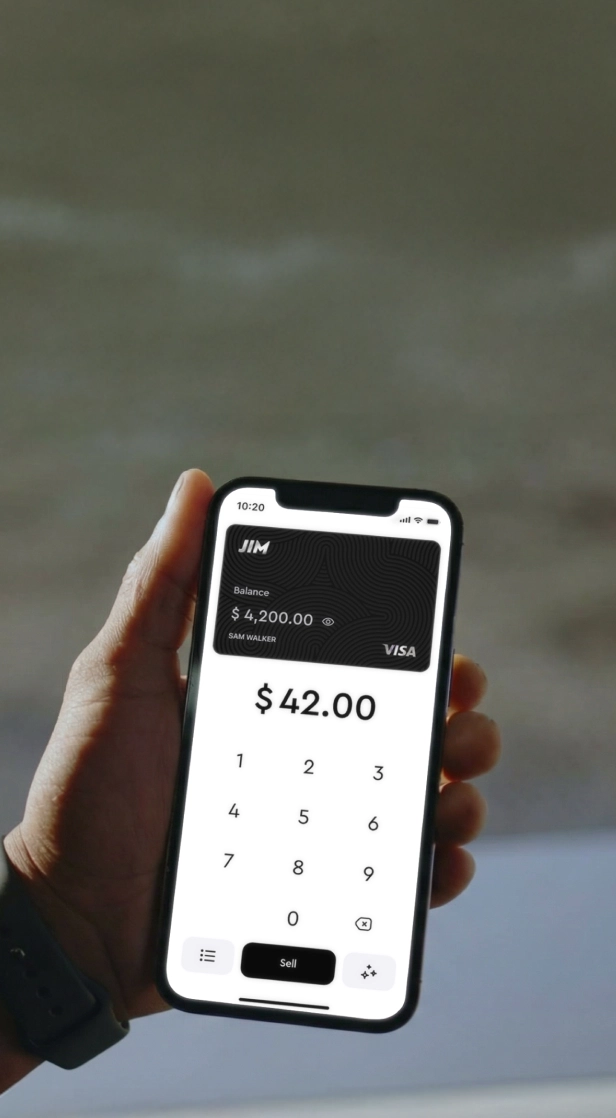
JIM offers commuter transportation service owners a straightforward payment processing solution. You can turn your iPhone or Android device into a tap-to-pay terminal with the JIM tap-to-pay app, which uses NFC technology so you need no extra hardware. The price structure is a flat 1.99% per transaction. You face no setup costs, monthly fees, or variable rates for premium cards.
For online sales, you can use payment links at a rate of 4.99% + $0.30 per sale (ideal for customers to pre-purchase monthly transit passes). With JIM, funds are available instantly on your JIM Visa Prepaid Card. You can add this card to Apple Pay or Google Pay for immediate use of your revenue.
.avif)