Merchant Category Code (MCC) 4121 is a classification for taxicabs and limousines designated by the International Organization for Standardization (ISO). This code applies to businesses that offer passenger transportation, including standard taxi rides and pre-arranged limousine services. Transactions for these specific ground transportation options fall under this category, which distinguishes them from other travel purchases like bus or train tickets.
Which businesses fall under MCC 4121?
MCC 4121 applies to a broad range of passenger transportation establishments:
- Rideshare Services: These app-based platforms connect passengers with independent drivers using their personal vehicles. Companies like Uber and Lyft are prominent examples whose transactions process under this specific merchant category code.
- Taxicab Operators: This includes traditional taxi fleets and independent owner-operators who provide on-demand or dispatched rides. Well-known city fleets, such as Yellow Cab, fall squarely into this classification.
- Limousine Companies: Businesses offering pre-arranged luxury transportation for events, corporate travel, or airport transfers use this code. These services often feature high-end vehicles and professional chauffeurs for a premium experience.
- Black Car Services: A step above standard taxis, these services provide on-demand or scheduled rides in upscale sedans. They offer a more professional and discreet transportation option than typical rideshares or cabs.
- Airport Shuttle Services: This category covers private companies that offer shared or direct rides to and from airports. Unlike public transit, these shuttles operate on a per-person or per-group fare basis.
- Water Taxis: In coastal or riverfront cities, businesses that transport passengers via boat for short-distance travel use this code. These services function like road taxis but operate on designated waterways.
- Pedicab Services: These human-powered vehicles, often found in tourist districts or downtown areas, offer short-distance rides. Transactions for these bicycle-driven rickshaws are classified under MCC 4121.
Business implications of MCC 4121
Payment networks including Visa, Mastercard, American Express, and Discover use MCC 4121 to categorize transactions, which affects several aspects of business operations. These networks use the code to deduce the risk level of a business. For transportation services under MCC 4121, this assessment influences the interchange rates charged for processing payments, directly impacting revenue.
Beyond risk and fees, the MCC classification has further operational implications for both the business and its customers. These functions help streamline financial management and shape consumer choices, as detailed in the following sections.
Expense tracking
Companies rely on MCC 4121 to automate the categorization of travel expenses on corporate credit card statements. This simplifies employee reimbursement for taxi or limousine rides. Properly categorized transportation expenses also create a clear record for claiming business-related travel deductions during tax season.
Financial analysis
Businesses analyze spending patterns under MCC 4121 to gain a clear view of their transportation costs. This data allows finance teams to track expenditures against budgets, forecast future travel expenses, and identify opportunities to negotiate rates with preferred transportation providers.
Compliance and auditing
Consistent application of MCC 4121 creates a reliable audit trail for expense verification. This allows internal and external auditors to quickly confirm that transportation charges align with company travel policies and regulatory requirements.
Rewards and customer behavior
Credit card issuers often offer bonus rewards for travel-related purchases, and transactions coded under MCC 4121 typically qualify. This incentivizes customers to use their rewards cards for taxis and limousines, potentially influencing their choice of transportation service to maximize points.
How to verify your business's MCC
Taxicab and limousine owners should confirm their MCC classification for proper transaction processing and to avoid customer confusion regarding rewards eligibility. If you find that your business is incorrectly classified, for example, a limousine service coded as a car rental agency, contact your payment processor immediately to request reclassification.
Here's how to verify if your MCC classification is set up correctly:
- Contact Your Payment Processor: Your merchant services provider assigned the MCC during account setup. To verify your classification, contact their customer service department or review the terms in your original merchant agreement documents for the assigned code.
- Review Processing Statements: Your monthly merchant statements typically display the assigned MCC. Look for a four-digit number in the account information or business profile details section to find your code and confirm its accuracy.
- Check with Your Acquirer: The acquiring bank or financial institution that processes your transactions maintains the MCC in their system. Their merchant support team can confirm your current classification upon request and provide the necessary details.
- Test Transaction Method: Some merchants run a small test transaction on a personal credit card and check how it appears on the statement. This method is less reliable than direct confirmation from your processor and may not show the code.
How to choose a reliable payment service provider
Your MCC 4121 classification affects interchange rates, making your choice of payment processor a primary business decision. Providers handle these transactions differently, with variations in pricing, settlement speed, and support that compound over time. Consider these factors when you select a service.
- Transparent pricing: A flat-rate model avoids complex interchange fees and hidden costs, which simplifies financial planning. The JIM tap-to-pay app for iPhone and Android charges 1.99% per transaction with no setup costs, monthly fees, or premium card surcharges.
- Payment method support: Your processor should accept all major credit cards like Visa, Mastercard, and Discover. Support for digital wallets, including Apple Pay and Google Pay, is also a standard expectation for customers.
- Fast fund access: Immediate access to funds helps manage daily operational costs. Quick settlements let you cover expenses like fuel, vehicle maintenance, and payroll without delay, which improves your business cash flow.
- Security: Your processor must protect sensitive customer data. Standard features include end-to-end encryption and tokenization, which replaces card numbers with a unique code for each transaction to prevent fraud.
- Reporting and analytics: Modern processors offer detailed reports for business analysis. The JIM AI assistant provides sales reports and transaction history through a chat interface, offering a clear view of performance.
Streamline payments with JIM
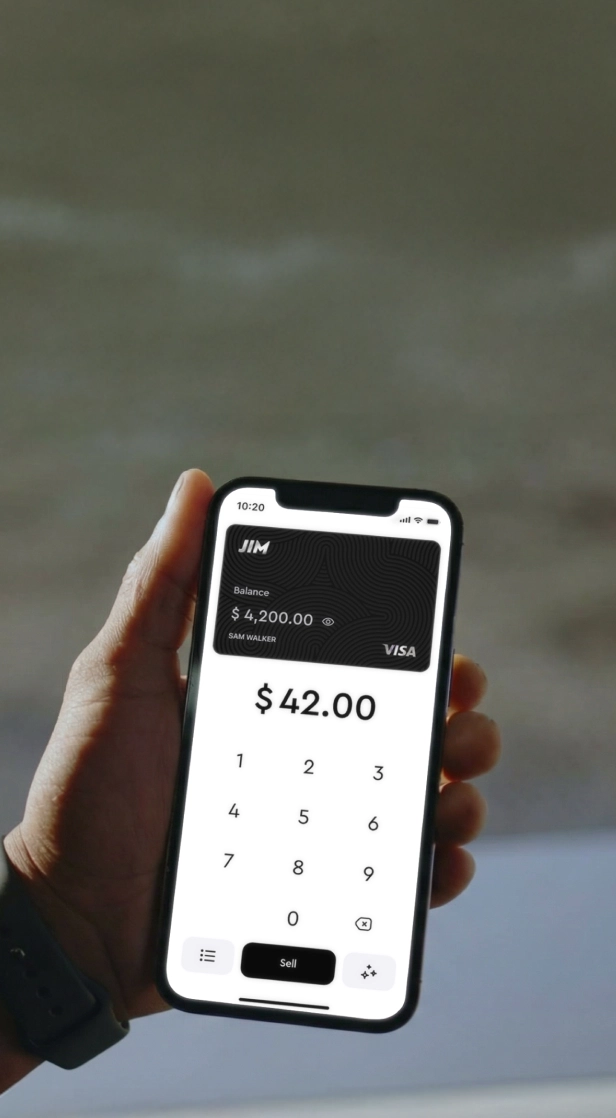
JIM offers taxicab and limousine owners a straightforward payment processing solution. The JIM tap-to-pay app turns your iPhone or Android into a payment terminal with NFC technology, so you need no extra hardware. You pay a flat 1.99% per transaction with no setup costs, monthly fees, or variable rates for premium cards.
For remote charges, use link payments (for pre-booked rides) at a rate of 4.99% + $0.30 per sale. After a transaction, funds become available instantly on your JIM Visa Prepaid Card. You can add this card to Apple Pay or Google Pay for immediate use. This direct access to your money lets you cover daily expenses without delay.
.avif)