Merchant Category Code (MCC) 9402 is the classification for postage stamps, set by the International Organization for Standardization (ISO). This code applies to transactions where the primary purchase is postage stamps. Businesses under this category include government postal services, automated postal centers, and third-party vendors who are authorized to sell stamps, separating these sales from other types of government or retail transactions.
Which businesses fall under MCC 9402?
MCC 9402 applies to a broad range of postal service establishments:
- National Postal Services: These are government-operated entities responsible for mail collection and delivery. They are the primary sellers of postage stamps, such as the United States Postal Service (USPS) or Canada Post.
- Automated Postal Centers: These self-service kiosks, typically located in post office lobbies, allow customers to buy stamps and mail packages. Transactions for stamps at these machines fall under MCC 9402.
- Contract Postal Units: These are private businesses, like a local pharmacy or gift shop, that provide postal services on behalf of the national post. Stamp purchases at these locations use this specific code.
- Authorized Online Stamp Retailers: This includes the official e-commerce websites of national postal services, like the USPS's The Postal Store. They also include authorized third-party vendors that sell valid postage online.
- Stamp Vending Machines: These are automated machines found in public places like airports or office buildings that dispense postage stamps. The transaction is coded specifically for the stamp purchase.
- Philatelic Bureaus: These specialized counters or stores cater to stamp collectors by selling commemorative and collectible stamps. Their sales are classified under MCC 9402, distinct from general merchandise.
Business implications of MCC 9402
Payment networks including Visa, Mastercard, American Express, and Discover use MCC 9402 to categorize transactions, which affects several aspects of business operations. These networks use the code to assess the risk profile of a business. Since MCC 9402 is tied to government postal services, it is generally considered low-risk, which can result in lower interchange fees for merchants.
Beyond risk assessment and transaction fees, this classification also has implications for several other operational areas. The code helps businesses and financial institutions manage expenses, analyze spending, and structure customer rewards programs based on specific purchasing behaviors.
Expense tracking
MCC codes allow companies to automate the categorization of expenses on credit card statements. Purchases under MCC 9402 are automatically identified as postage, which simplifies tracking these operational costs. This clear identification helps businesses accurately claim tax deductions for postage expenses.
Financial analysis
Businesses use MCC data for detailed financial analysis. By isolating transactions coded as 9402, companies can track their exact spending on postage. This information supports more accurate expense forecasting and helps in the management of departmental budgets and cost-saving opportunities.
Compliance and auditing
The consistent application of MCC 9402 creates a clear audit trail for business expenses. This standardized coding allows for straightforward verification of postage purchases during internal reviews or external financial audits.
Rewards and customer behavior
Credit card issuers often tie rewards programs to specific MCCs. A card might offer bonus points for purchases at government agencies, including those under MCC 9402. This can influence a customer’s decision to buy stamps from a particular vendor to maximize their rewards.
How to verify your business's MCC
Postal service and stamp vendor owners should confirm their MCC classification to ensure proper transaction processing and avoid customer confusion regarding rewards eligibility. Should you discover an incorrect classification, for example, a contract postal unit coded as a gift shop, contact your payment processor immediately to request reclassification.
Here's how to verify is your MCC classification is set up correctly:
- Contact Your Payment Processor: Your merchant services provider assigned the MCC during account setup. To verify your classification, you can contact their customer service department or review the details outlined in your original merchant agreement documents.
- Review Processing Statements: Your monthly merchant statements typically display the assigned MCC. Look for a four-digit number, often located in the account information or business profile section, to confirm the code applied to your transactions.
- Check with Your Acquirer: The acquiring bank or financial institution that processes your payments maintains the MCC in their system. You can call their merchant support team, and they can confirm your current classification over the phone.
- Test Transaction Method: Some merchants run a small test transaction on a personal credit card and then check the statement to see how it appears. This method is less reliable than direct confirmation from your payment processor.
How to choose a reliable payment service provider
Your MCC 9402 classification directly influences interchange rates, but payment processors handle these transactions differently. Variations in pricing, settlement speed, and support have a cumulative effect on your business. To find the right fit, evaluate providers based on the following criteria for your postal service or stamp retail business.
- Transparent pricing: Look for a provider with flat-rate pricing to avoid complex interchange-plus or tiered models that obscure the true cost. The JIM tap-to-pay app for iPhone and Android charges 1.99% per transaction with no setup costs, monthly fees, or premium card surcharges.
- Payment method support: Your processor should accept all major credit cards, including Visa, Mastercard, and Discover, along with popular digital wallets like Apple Pay and Google Pay to meet customer expectations.
- Fast fund access: Quick access to funds is important for managing cash flow. Instant settlements help you cover immediate operational expenses such as restocking stamp inventory, making supplier payments, or meeting payroll without delay.
- Security: A secure processor protects customer data with technologies like encryption and tokenization. Tokenization replaces sensitive card details with a unique code for each transaction, so card numbers are never stored on your device.
- Reporting: Modern processors offer more than basic transaction logs. JIM's AI assistant provides sales reports and transaction history through a simple chat interface, which helps you track performance.
Streamline payments with JIM
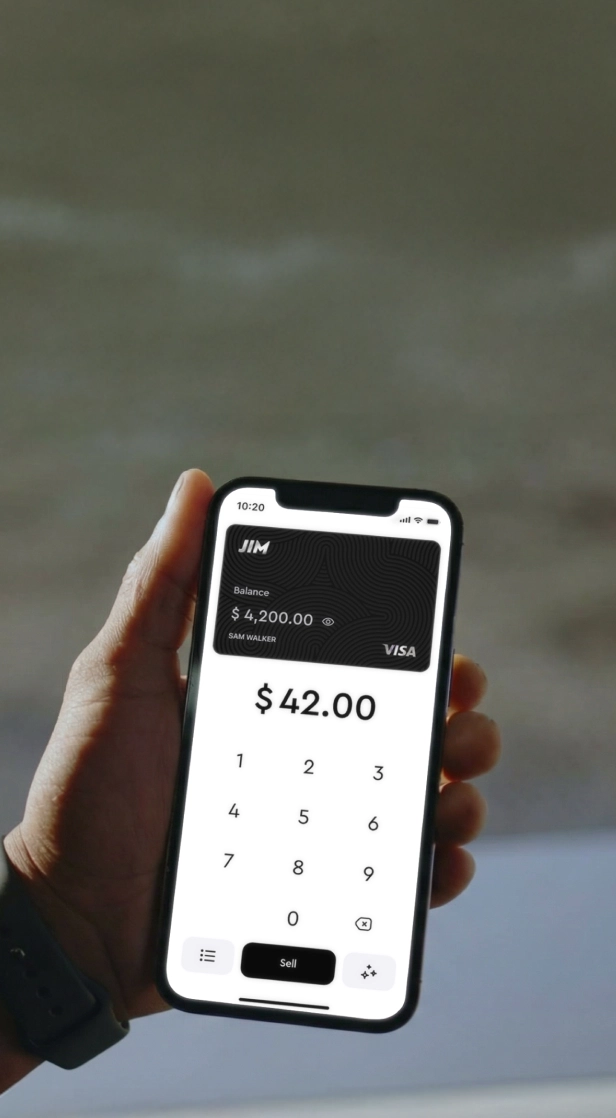
JIM offers postal service owners a straightforward solution to process payments. The JIM tap-to-pay app transforms your iPhone or Android phone into a payment terminal, so you need no extra hardware. It uses NFC technology to accept credit cards and digital wallets. You benefit from a clear price structure: a flat 1.99% per transaction. There are no setup costs, monthly fees, or variable rates for premium cards.
For remote sales, you can create payment links for a fee of 4.99% + $0.30 per sale (ideal for online stamp orders). JIM also provides instant access to your funds. Your money settles immediately on a JIM Visa Prepaid Card. You can add this card to Apple Pay or Google Pay, so your revenue is available for immediate use.
.avif)