Merchant Category Code (MCC) 5331 is a classification used for variety stores by the International Organization for Standardization (ISO). This code applies to businesses that offer a wide assortment of general merchandise, often at a single, low price point. These retailers, sometimes known as dollar stores or five-and-dime shops, sell a mix of items like household goods, small toys, and seasonal decorations, distinguishing them from more specialized retail outlets.
Which businesses fall under MCC 5331?
MCC 5331 applies to a broad range of retail establishments:
- Dollar Stores: These retailers offer a wide array of products, typically priced at one dollar or other low, fixed price points. Chains like Dollar General and Dollar Tree are prime examples of this model.
- Variety Stores: This category includes traditional five-and-dime shops that sell a mix of inexpensive household goods, toys, and candy. Ben Franklin stores are a well-known example of this classic format.
- Discount General Merchandise Stores: These businesses sell a broad assortment of goods, often including closeout or overstock items, at prices lower than traditional retail. Examples include chains like Big Lots and Ollie's Bargain Outlet.
- Party Supply Stores: Establishments focusing on decorations, costumes, and favors for events fall under this code. Party City is a prominent retailer in this space, offering a diverse mix of themed merchandise.
- Novelty and Souvenir Shops: Often found in tourist destinations, these shops sell a wide range of inexpensive mementos and gift items. They offer a varied selection of locally themed trinkets and apparel.
- Closeout and Liquidation Retailers: These stores specialize in selling merchandise from other businesses that are closing or have excess inventory. They provide a diverse and ever-changing product mix to consumers at a discount.
Business implications of MCC 5331
Payment networks including Visa, Mastercard, American Express, and Discover use MCC 5331 to categorize transactions, which affects several aspects of business operations. These networks assess a merchant's risk profile based on their MCC. For variety stores under MCC 5331, this classification influences the interchange rates charged for processing credit card payments, directly impacting profitability.
Beyond risk assessment and transaction fees, this code serves other operational functions. It helps standardize financial data for analysis and reporting, providing a framework for both internal and external processes. These applications extend into expense management, compliance, and even customer loyalty.
Expense tracking
Companies rely on MCC codes to automate the categorization of business purchases. When an employee uses a corporate card at a variety store, the transaction is automatically labeled under MCC 5331 on the statement, which simplifies expense reporting and budget allocation.
Financial analysis
Businesses analyze spending data sorted by MCC to identify patterns and manage budgets. Tracking expenditures under MCC 5331 allows a company to see how much is spent on miscellaneous supplies from discount retailers, which informs future forecasting and cost-control strategies.
Compliance and auditing
Consistent application of MCC 5331 creates a clear audit trail. This simplifies the process for internal and external auditors to verify that expenses align with corporate spending policies and financial records.
Rewards and customer behavior
Credit card issuers often structure reward programs around specific MCCs. A card might offer bonus points for general merchandise, but the MCC 5331 classification for variety stores could place it in a different rewards category, influencing a cardholder's choice of where to shop.
How to verify your business's MCC
Variety store owners should confirm their MCC classification to allow for proper transaction processing and avoid customer confusion regarding rewards eligibility. If you find out that your business is incorrectly classified—for example, a variety store coded as a grocery store—contact your payment processor immediately to request reclassification.
Here's how to verify is your MCC classification is set up correctly:
- Contact Your Payment Processor: Your merchant services provider assigned the MCC during account setup. To confirm your classification, contact their customer service department or review the details in your merchant agreement. This is the most direct way to get an accurate answer.
- Review Processing Statements: Your monthly merchant statements typically display the assigned MCC. Look for a four-digit number in the account information or business profile section. This code identifies your business category for all transactions processed during that period.
- Check with Your Acquirer: The acquiring bank or financial institution that handles your payments maintains the MCC code in their system. You can reach out to their merchant support team, and they can confirm your current classification directly from their records.
- Test Transaction Method: Some merchants run a small test transaction and check how it appears on a personal credit card statement. While this can offer a clue, this method is less reliable than direct confirmation from your payment processor or acquirer.
How to choose a reliable payment service provider
Your MCC 5331 classification directly affects interchange rates and processing requirements. Since payment processors handle these transactions differently, your choice of provider matters. Variations in pricing models, settlement speeds, and support can accumulate to affect your bottom line. Consider the following factors when you select a partner.
- Transparent pricing: A flat-rate model simplifies cost management compared to complex tiered structures. The JIM tap-to-pay app for iPhone and Android charges 1.99% per transaction with no setup costs, monthly fees, or premium card surcharges, which makes financial forecasting straightforward.
- Payment method support: To meet customer expectations, your processor should accept all major credit cards like Visa, Mastercard, and Discover, along with popular digital wallets such as Apple Pay and Google Pay.
- Fast fund access: Quick access to funds is important for cash flow management in a variety store. It allows you to restock inventory, cover supplier payments, and meet payroll without delay, which keeps operations smooth.
- Security: Top processors protect your business and customers with end-to-end encryption and tokenization. With tokenization, actual card numbers are never stored on your device, which reduces your liability in a data breach.
- Reporting: Modern processors offer advanced analytics to track performance. The JIM AI assistant, for example, provides sales reports and transaction history through a simple chat interface to inform business decisions.
Streamline payments with JIM
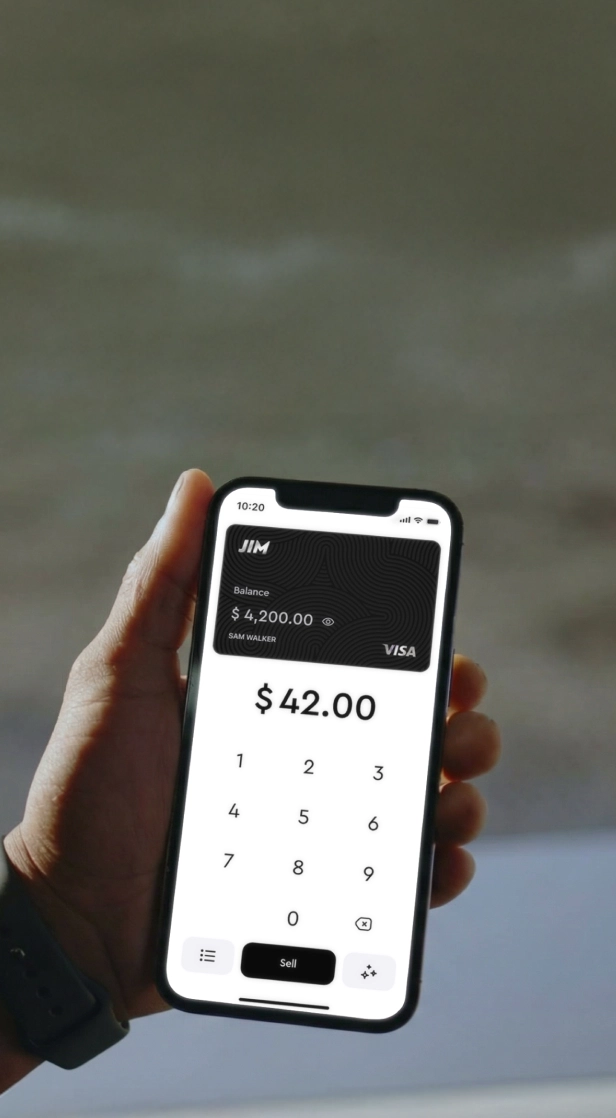
JIM offers variety store owners a straightforward payment solution. The JIM tap-to-pay app transforms your iPhone or Android device into a payment terminal with NFC technology, so you need no extra hardware. You get a flat 1.99% rate per transaction. There are no setup costs, monthly fees, or variable rates for premium cards.
For remote sales, you can use payment links for 4.99% + $0.30 per sale (for example, to take deposits on custom party supply orders). After a sale, your funds become available instantly on a JIM Visa Prepaid Card. You can add this card to Apple Pay or Google Pay for immediate use.
.avif)