MCC 5441 is a merchant category code used by the International Organization for Standardization (ISO) to classify candy, confectionery, or nut stores. This code covers transactions at businesses that primarily sell packaged or bulk candies, chocolates, and nuts. For example, specialty shops like fudge makers, popcorn stands, and stores selling roasted nuts would process payments under this classification. These businesses focus on confections as their main product offering.
Which businesses fall under MCC 5441?
MCC 5441 applies to a broad range of retail confectionery establishments:
- Candy stores: These retailers offer a wide variety of pre-packaged and bulk candies. Businesses like See's Candies and Dylan's Candy Bar use this code for their sweet-focused transactions.
- Chocolate shops: Establishments specializing in high-quality chocolates, from truffles to bars, fall under this category. Chocolatiers like Godiva or local artisan chocolate makers process customer payments with this code.
- Nut stores: These shops primarily sell roasted, candied, or bulk nuts. You will find this code used at dedicated nut stands in markets or specialty stores like The Nutty Bavarian.
- Popcorn shops: Businesses that focus on selling gourmet popcorn in various flavors use this MCC. Chains such as Garrett Popcorn Shops classify their sales with this specific code.
- Fudge shops: Often found in tourist destinations, these stores make and sell fresh fudge. Payments at well-known fudge makers, including those on Mackinac Island, are processed using MCC 5441.
- Gourmet caramel shops: This includes stores famous for caramel apples, caramel corn, and other caramel-based treats. Rocky Mountain Chocolate Factory is a prime example of a business that uses this code.
Business implications of MCC 5441
Payment networks including Visa, Mastercard, American Express, and Discover use MCC 5441 to categorize transactions, which affects several aspects of business operations. These networks use the MCC to deduce the risk level of a business. Since candy and nut stores are considered low-risk retail, this classification can lead to favorable interchange rates. Beyond risk assessment, the MCC code is used for other operational aspects that streamline financial management.
Expense tracking
Companies use MCC codes to automatically categorize purchases on corporate credit card statements. This simplifies tracking expenditures from confectionery suppliers, though any tax deduction depends on the business purpose of the expense rather than the code itself.
Financial analysis
Businesses analyze spending data tied to MCC 5441 to understand procurement costs and manage inventory budgets. This information helps track expenses related to confectionery products and supports more accurate financial forecasting for the company's operations.
Compliance and auditing
Consistent MCC application creates a clear audit trail for expense verification. This allows companies to confirm that purchases from candy, nut, or chocolate shops align with corporate spending policies during financial reviews.
Rewards and customer behavior
Credit card issuers use MCCs to manage rewards programs. Purchases under MCC 5441 may not qualify for broad bonuses like "groceries," which can influence a customer's choice of where to shop to maximize their points or cash back.
How to verify your business's MCC
Candy, nut, and confectionery store owners should confirm their MCC classification to ensure proper transaction processing and avoid customer confusion regarding rewards eligibility. If you find out that your business is incorrectly classified, for example, a chocolate shop coded as a grocery store, contact your payment processor immediately to request reclassification.
Here's how to verify if your MCC classification is set up correctly:
- Contact Your Payment Processor: Your merchant services provider assigned the MCC during account setup. You can verify your classification by contacting their customer service team or by reviewing your merchant agreement documents. This provides the most direct confirmation of your business's assigned code.
- Review Processing Statements: Your monthly merchant statements often display the assigned MCC. Look for a four-digit number, usually located in the account information or business profile section of the statement. This provides a regular opportunity to check your business's classification.
- Check with Your Acquirer: The acquiring bank or financial institution that processes your transactions maintains the MCC code in their system. You can reach out to their merchant support team, who can look up and confirm your current classification upon request.
- Test Transaction Method: Some merchants run a small test transaction on a personal credit card. They then check the card statement to see how the purchase is categorized. However, this method is less reliable than direct confirmation from your payment processor.
How to choose a reliable payment service provider
Since MCC 5441 affects interchange rates, selecting the right payment processor is an important decision. Processors handle these transactions differently, with variations in pricing, settlement speed, and support that impact your business. Consider the following factors when you choose a provider for your store.
- Transparent pricing: Opt for flat-rate pricing to avoid complex models that obscure the true cost per transaction. The JIM tap-to-pay app for iPhone and Android charges 1.99% per transaction with no setup costs, monthly fees, or premium card surcharges.
- Payment method support: Your processor should accept all major credit cards and digital wallets. Support for Visa, Mastercard, Discover, Apple Pay, and Google Pay meets customer expectations and prevents lost sales.
- Fast fund access: Instant access to funds helps with cash flow management. Quick deposits allow you to restock inventory, cover supplier payments, and make payroll without delay, which is especially useful for seasonal businesses.
- Security: A secure processor protects customer data with tokenization and encryption. JIM uses tokenization for every transaction, so card numbers are never stored on your device. This reduces your liability and builds customer trust.
- Reporting: Look for a provider that offers clear analytics. JIM's AI assistant provides sales reports and transaction history through a chat interface, simplifying business analysis and financial tracking.
Streamline payments with JIM
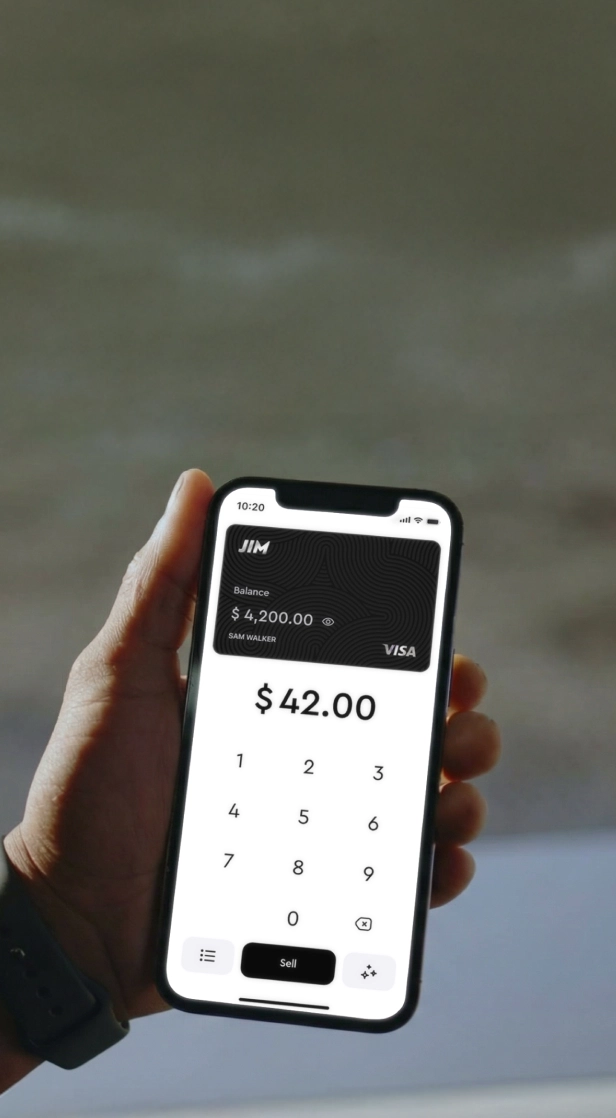
JIM offers confectionery store owners a straightforward payment solution. With the JIM tap-to-pay app, you turn your iPhone or Android phone into a payment terminal without extra hardware. The app uses NFC technology to accept contactless payments directly on your device. You get a flat 1.99% rate per transaction, with no setup costs, monthly fees, or variable rates for premium cards.
For remote sales, you can use payment links for 4.99% + $0.30 per sale (for custom candy boxes or online orders). After each transaction, your funds become available instantly on a JIM Visa Prepaid Card. Add this card to Apple Pay or Google Pay to use your earnings immediately for business expenses. This direct access to money supports your daily cash flow.
.avif)