MCC 5533 is a merchant category code used by the International Organization for Standardization (ISO) to classify Automotive Parts and Accessories Stores. This code applies to businesses that primarily sell new, used, or rebuilt automotive parts and accessories. Transactions for items like car stereos, air conditioners, tires, and automotive paint fall under this classification. The category also includes specialty shops that focus on performance or speed-related equipment for vehicles.
Which businesses fall under MCC 5533?
MCC 5533 applies to a broad range of automotive retail establishments:
- Auto Parts Stores: These retailers offer a wide selection of new and aftermarket parts for vehicle maintenance and repair. Well-known examples include national chains like AutoZone, O'Reilly Auto Parts, and Advance Auto Parts.
- Tire Dealers: These businesses specialize in the sale and installation of new or retreaded tires for various vehicles. Major companies in this space are Discount Tire and Goodyear Auto Service centers.
- Car Stereo and Alarm Installers: These shops focus on aftermarket electronic accessories, including audio systems, speakers, and vehicle security alarms. This includes specialty installers and the automotive departments of retailers like Best Buy.
- Automotive Paint Suppliers: These stores provide professional-grade paint, primers, and finishing materials for vehicle bodywork and restoration. Examples include Sherwin-Williams Automotive Finishes and PPG Automotive Refinish distributors.
- Performance and Speed Shops: These specialty retailers cater to enthusiasts by selling high-performance engine components, suspension upgrades, and racing equipment. Summit Racing Equipment and Jegs are prominent mail-order and retail examples.
- Truck Accessory Retailers: These stores sell parts and accessories specifically for trucks, Jeeps, and SUVs, such as bed liners, covers, and lift kits. National chains like 4 Wheel Parts operate in this category.
- Used Auto Parts Dealers: Often called salvage or junkyards, these businesses sell used or rebuilt parts recovered from end-of-life vehicles. LKQ Corporation is a large operator in this sector alongside local pick-your-part yards.
Business implications of MCC 5533
Payment networks including Visa, Mastercard, American Express, and Discover use MCC 5533 to categorize transactions, which affects several aspects of business operations. These networks use the code to assess a business's risk profile, which in turn influences the interchange rates charged for transactions. Businesses under MCC 5533 typically face standard-risk interchange fees.
This classification extends beyond payment processing. The MCC code is also used for several other operational aspects, from expense management to customer analytics, which provides a clearer picture of financial health and consumer behavior.
Expense tracking
Companies often rely on MCC codes to automate expense management. When an employee makes a purchase at an auto parts store, the transaction is automatically categorized as a vehicle expense on their corporate card statement, which simplifies record-keeping for potential tax deductions.
Financial analysis
This MCC allows businesses to analyze spending patterns with precision. By isolating transactions under MCC 5533, financial teams can track vehicle maintenance costs, create accurate expense forecasts, and develop more informed budgets for their fleets or operational needs.
Compliance and auditing
The consistent application of MCC 5533 creates a clear audit trail. This simplifies the process for internal and external auditors to verify that expenses claimed as automotive-related are legitimate and compliant.
Rewards and customer behavior
Credit card issuers use MCCs to determine rewards eligibility. Cardholders with bonuses for automotive spending are incentivized to shop at businesses coded with MCC 5533, which can directly influence their purchasing decisions and foster customer loyalty.
How to verify your business's MCC
Automotive parts and accessories store owners should confirm their MCC classification for proper transaction processing and to avoid customer confusion regarding rewards eligibility. If you find that your business is incorrectly classified, for example, an auto parts store coded as a general repair shop, contact your payment processor immediately to request reclassification.
Here's how to verify if your MCC classification is set up correctly:
- Contact Your Payment Processor: Your merchant services provider assigned the MCC code when you set up your account. To verify your classification, contact their customer service department or review the details in your original merchant agreement documents.
- Review Processing Statements: Your monthly merchant statements typically display the assigned MCC code. Look for a four-digit number listed in the account information or business profile section of the statement to check your business's classification.
- Check with Your Acquirer: The acquiring bank or financial institution that processes your transactions also maintains the MCC code in their system. You can reach out to their merchant support team, and they can confirm your current classification upon request.
- Test Transaction Method: Some merchants process a small test transaction on a personal credit card and check how the purchase appears on the statement. This method is less reliable than direct confirmation from your processor, as statement descriptions can be generic.
How to choose a reliable payment service provider
Your MCC 5533 classification directly affects interchange rates and processing requirements. The right payment processor can help manage these costs, but providers handle this category differently. Variations in pricing models, settlement speed, and support create cumulative effects on your business. Consider the following factors when you select a partner.
- Transparent pricing: Look for a provider with flat-rate pricing to avoid complex interchange-plus or tiered models that obscure the true cost of a transaction. The JIM tap-to-pay app for iPhone and Android, for example, charges 1.99% per transaction with no setup costs, monthly fees, or premium card surcharges.
- Payment method support: To meet modern customer expectations, your processor must accept all major credit cards, including Visa, Mastercard, and Discover. Support for digital wallets like Apple Pay and Google Pay is also a standard requirement.
- Fast fund access: Instant access to funds is important for auto parts stores, which have constant cash flow demands. Quick settlements allow you to restock inventory, cover supplier payments, and meet payroll without delays that disrupt operations.
- Reporting: Modern processors offer more than just basic transaction logs. The JIM AI assistant, for instance, provides detailed sales reports and complete transaction history through a simple chat interface, which helps you analyze business performance.
Streamline payments with JIM
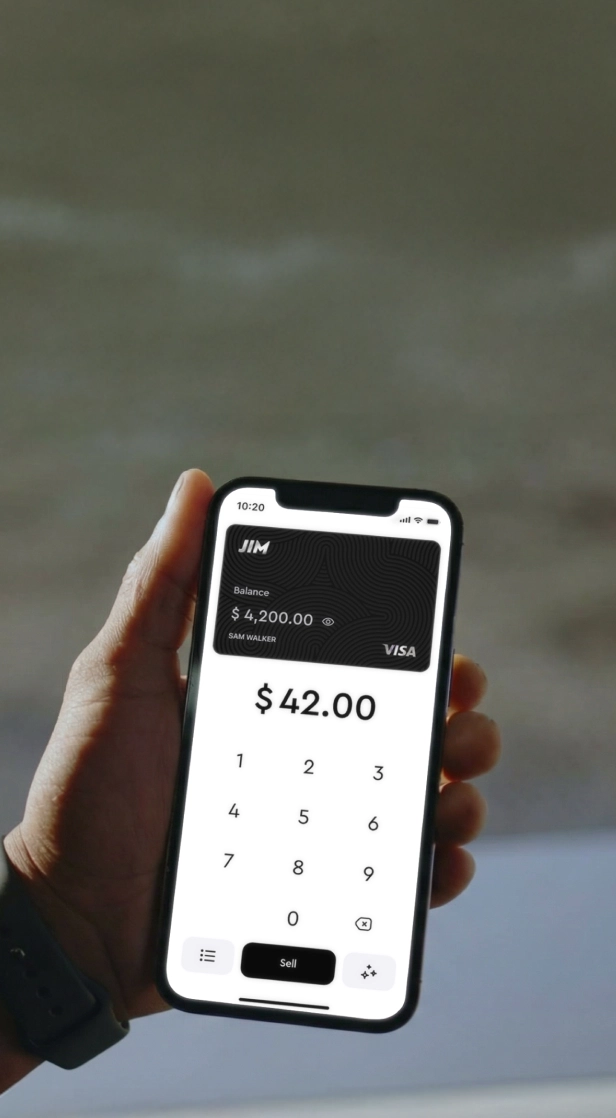
JIM offers auto parts store owners a straightforward payment processing solution. The JIM tap-to-pay app transforms your iPhone or Android device into a payment terminal through NFC technology, so you need no extra hardware. You get a flat 1.99% rate per transaction with no setup costs, monthly fees, or variable rates for premium cards.
You can also create payment links for remote sales (like for a special order part) at 4.99% + $0.30 per sale. All your funds become available instantly on a JIM Visa Prepaid Card. You can add this card to Apple Pay or Google Pay for immediate use at other businesses or online.
.avif)