Merchant Category Code (MCC) 7333 is the classification for photography, art and graphic -- commercial, a category defined by the International Organization for Standardization (ISO). This code covers transactions for businesses that offer services such as commercial photography, videography, and graphic design. It also applies to art dealers and studios that sell visual works to commercial clients for advertising, marketing, or other business needs.
Which businesses fall under MCC 7333?
MCC 7333 applies to a broad range of creative service establishments:
- Commercial Photography Studios: These businesses provide professional photo services for business clients. They often specialize in areas like product shots, corporate headshots, or images for advertising campaigns.
- Graphic Design Firms: Firms in this category create visual concepts for companies. Their work includes logos, branding packages, and marketing materials to communicate ideas that inspire, inform, or captivate consumers.
- Commercial Videography Services: These providers produce and edit video content for corporate use. This includes promotional videos for websites, training materials for employees, or television commercials for broadcast.
- Web Design Agencies: Specializing in the visual layout and user interface of websites, these agencies build online presences for businesses. They focus on the graphic elements that define a brand's digital footprint.
- Stock Photography Services: Online platforms like Getty Images or Adobe Stock fall into this group. They license vast libraries of photos and videos to businesses for use in marketing and media.
- Art Galleries and Dealers: This includes establishments that sell visual art, such as paintings or sculptures, to commercial clients. These pieces often decorate corporate offices, hotels, or other business spaces.
Business implications of MCC 7333
Payment networks including Visa, Mastercard, American Express, and Discover use MCC 7333 to categorize transactions, which affects several aspects of business operations. These networks use the code to assess a business's risk profile. For MCC 7333, which covers service-based transactions often with custom pricing, the perceived risk can influence the interchange rates charged for processing payments.
Beyond risk assessment and transaction fees, the MCC code serves other functions within a business's financial ecosystem. It helps with internal expense management and provides data for financial planning. These operational uses of the code are detailed below.
Expense tracking
Companies rely on MCC codes to automatically sort business expenses on credit card statements. This categorization simplifies tracking expenditures on commercial art or design services. For businesses purchasing these services, proper coding can also substantiate claims for relevant tax deductions on creative work.
Financial analysis
Businesses analyze spending data associated with MCC 7333 to understand their investment in creative services. This information allows them to monitor project costs, forecast future design or photography expenses, and manage marketing budgets more effectively against their financial goals.
Compliance and auditing
The consistent application of MCC 7333 creates a clear audit trail for financial review. This standardized coding allows auditors to quickly verify that expenses for creative services are legitimate and align with company policy.
Rewards and customer behavior
Credit card issuers use MCCs to determine eligibility for rewards on specific spending categories. A card offering bonus points on business services may attract clients to firms under MCC 7333, influencing their choice of a design or photography partner.
How to verify your business's MCC
Commercial photography and design owners should confirm their MCC classification to ensure proper transaction processing and avoid customer confusion regarding rewards eligibility. If you find out that your business is incorrectly classified, for example, a graphic design firm coded as an office supply store, contact your payment processor immediately to request reclassification.
Here's how to verify is your MCC classification is set up correctly:
- Contact Your Payment Processor: Your merchant services provider assigned the MCC code during account setup. To verify your classification, contact their customer service department or review the details in your original merchant agreement documents.
- Review Processing Statements: Your monthly merchant statements typically display the assigned MCC code. Look for a four-digit number listed in the account information or business profile section of the statement to find your code.
- Check with Your Acquirer: The acquiring bank or financial institution that processes your payments maintains the MCC code in their system. You can call their merchant support team, and they can confirm your current classification over the phone.
- Test Transaction Method: Some merchants process a small test transaction on a personal credit card and then check how the charge appears on the statement. This method is less reliable than direct confirmation from your payment processor.
How to choose a reliable payment service provider
Your MCC 7333 classification affects interchange rates, which makes your choice of payment processor an important one. Providers handle transactions for creative businesses differently, with variations in pricing, settlement speed, and support that impact your bottom line. Consider the following factors when you select a payment service provider.
- Transparent pricing: A flat-rate model avoids the complexity of tiered or interchange-plus pricing, which makes it easier to forecast expenses. For example, the JIM tap-to-pay app for iPhone and Android charges 1.99% per transaction with no setup costs, monthly fees, or premium card surcharges.
- Payment method support: To meet modern customer expectations, your processor should accept all major credit cards and popular digital wallets. This includes Visa, Mastercard, Discover, Apple Pay, and Google Pay.
- Fast fund access: Quick access to funds helps manage cash flow for operational costs common to MCC 7333 businesses. Instant settlements allow you to cover immediate expenses like supplier payments for equipment or software and meet payroll on time.
- Security: Look for a provider that uses tokenization and end-to-end encryption to protect customer data. JIM uses tokenization for every transaction, so card numbers are never stored on your device, which reduces your liability.
- Reporting: Advanced analytics can offer valuable business information. JIM's AI assistant provides sales reports and transaction history through a simple chat interface, which helps you monitor performance.
Streamline payments with JIM
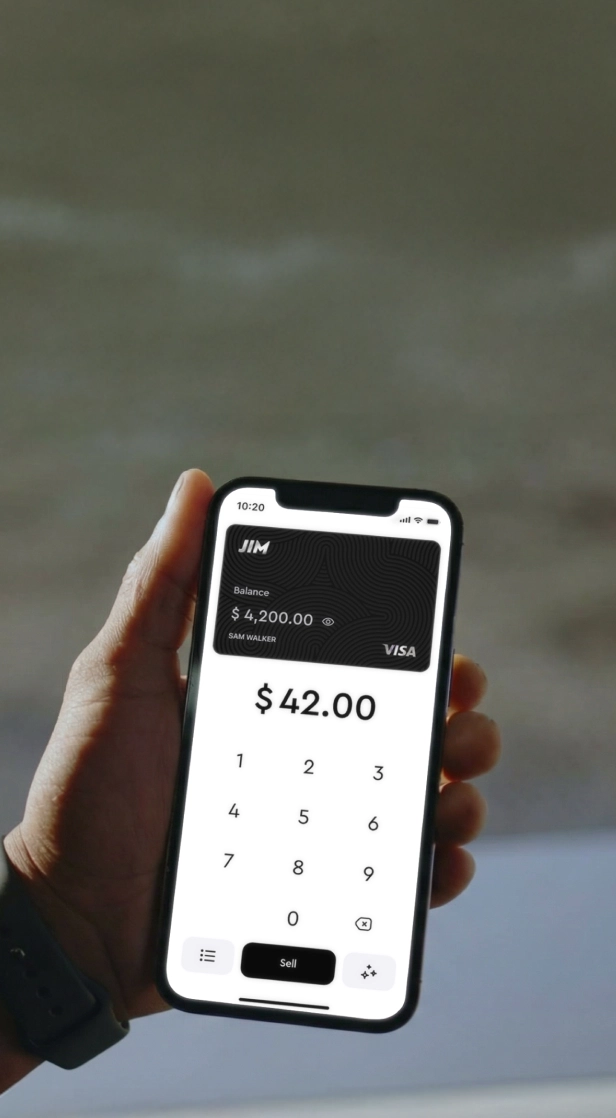
JIM offers commercial photography and design owners a straightforward payment solution. The JIM tap-to-pay app transforms your iPhone or Android into a payment terminal with NFC technology, so you need no extra hardware. You pay a flat 1.99% per transaction, with no setup costs, monthly fees, or variable rates for premium cards. For remote work, you can use payment links to collect deposits before a photoshoot, which cost 4.99% + $0.30 per sale.
After a transaction, your funds become available instantly on a JIM Visa Prepaid Card. You can add this card to Apple Pay or Google Pay for immediate use. This quick access to your money helps you manage your business’s cash flow. You can cover project expenses or pay for new equipment without delay.
.avif)