MCC 8021 is a merchant category code used to classify dentists or orthodontists by the International Organization for Standardization (ISO). This code applies to businesses that offer general and specialized dental care. Transactions under this category include payments for services like routine check-ups, cleanings, fillings, and various orthodontic treatments. The code covers payments made directly to a dental or orthodontic practice for its professional services.
Which businesses fall under MCC 8021?
MCC 8021 applies to a broad range of dental service establishments:
- General Dentistry Practices: These offices provide routine care like cleanings, fillings, and check-ups. National chains such as Aspen Dental and countless local family dentists use this code for their patient transactions.
- Orthodontic Clinics: Specialists in correcting teeth and jaw alignment use this code for services like braces and aligners. Examples include independent orthodontists and companies that process payments for their treatments.
- Pediatric Dentistry Offices: These clinics focus on the dental health of children from infancy through their teen years. Practices like Kool Smiles and other child-focused dentists classify their services under MCC 8021.
- Oral and Maxillofacial Surgeons: These specialists perform surgical procedures, including wisdom tooth extractions and corrective jaw surgery. Payments for these complex dental operations fall under this merchant category code.
- Endodontists: Known for root canal therapy, these dentists treat issues inside the tooth. When you pay for a root canal procedure, the transaction is categorized with the 8021 code.
- Periodontists: These practitioners concentrate on the prevention, diagnosis, and treatment of gum disease. Services such as gum grafts and deep cleanings are processed using the MCC 8021 classification.
Business implications of MCC 8021
Payment networks including Visa, Mastercard, American Express, and Discover use MCC 8021 to categorize transactions, which affects several aspects of business operations. The networks use this code to deduce the risk level of a business. Since dental services are generally low-risk, practices with MCC 8021 may receive lower interchange rates, which reduces their processing fees.
Besides risk and pricing, the MCC code is used for other operational aspects. These functions range from internal expense management to influencing how customers choose to pay, providing a structured framework for financial activities.
Expense tracking
Companies use MCCs to automate the categorization of business expenses on credit card statements. This simplifies tracking expenditures for dental services, which can be useful for managing employee health benefits or preparing documentation for potential tax deductions related to business health expenses.
Financial analysis
Businesses can analyze spending patterns by filtering transactions with MCC 8021. This data helps them monitor healthcare-related costs, forecast future expenses with greater accuracy, and adjust budgets accordingly. It provides a clear view of how much is spent on dental services.
Compliance and auditing
The consistent application of MCC 8021 creates a clear audit trail for financial reviews. This simplifies the process of verifying expenses and confirms that payments were made to legitimate dental service providers.
Rewards and customer behavior
Credit card issuers often offer bonus rewards for specific spending categories, such as healthcare. When a dental office is correctly coded with MCC 8021, customers may be more inclined to use a card that offers rewards for medical expenses.
How to verify your business's MCC
Dental practice owners should confirm their MCC classification to ensure proper transaction processing and avoid customer confusion regarding rewards eligibility. If you find that your business is incorrectly classified, for example, a dental office coded as a general medical office, contact your payment processor immediately to request reclassification.
Here's how to verify if your MCC classification is set up correctly:
- Contact Your Payment Processor: Your merchant services provider assigned the MCC code when you set up your account. To verify your classification, contact their customer service department or review the details in your original merchant agreement documents.
- Review Processing Statements: Your monthly merchant statements typically display the assigned MCC code. Look for a four-digit number in the account information or business profile section of your statement. This number represents your current business classification.
- Check with Your Acquirer: The acquiring bank or financial institution that processes your transactions maintains the MCC code in their system. You can reach out to their merchant support team, who can access your account details and confirm your current classification.
- Test Transaction Method: Some merchants process a small test transaction on a personal credit card and then check how the charge appears on the statement. This method is less reliable than direct confirmation from your processor, as statement descriptions can be generic.
How to choose a reliable payment service provider
Since MCC 8021 affects interchange rates and processing requirements, the choice of a payment processor is an important one. Different providers handle transactions for dental practices differently. Variations in pricing models, settlement speed, and support can have a cumulative effect on your business. Consider the following factors when you select a provider.
- Transparent pricing: A flat-rate pricing model is often simpler than complex tiered or interchange-plus structures. This predictability helps with financial planning. The JIM tap-to-pay app for iPhone and Android charges 1.99% per transaction with no setup costs, monthly fees, or premium card surcharges.
- Payment method support: To meet patient expectations, your processor should accept all major credit cards, including Visa, Mastercard, and Discover. Support for digital wallets like Apple Pay and Google Pay is also standard.
- Fast fund access: Quick access to funds improves cash flow management for your practice. Instant or next-day deposits allow you to cover immediate expenses like payroll, supplier payments, and ordering new dental supplies without delay.
- Security: Top providers protect sensitive patient data with security features like tokenization and end-to-end encryption. Tokenization ensures that actual card numbers are never stored on your device or in your system, which reduces liability.
- Reporting: Modern processors offer advanced analytics to monitor business performance. JIM's AI assistant provides sales reports and transaction history through a chat interface, offering quick business insights.
Streamline payments with JIM
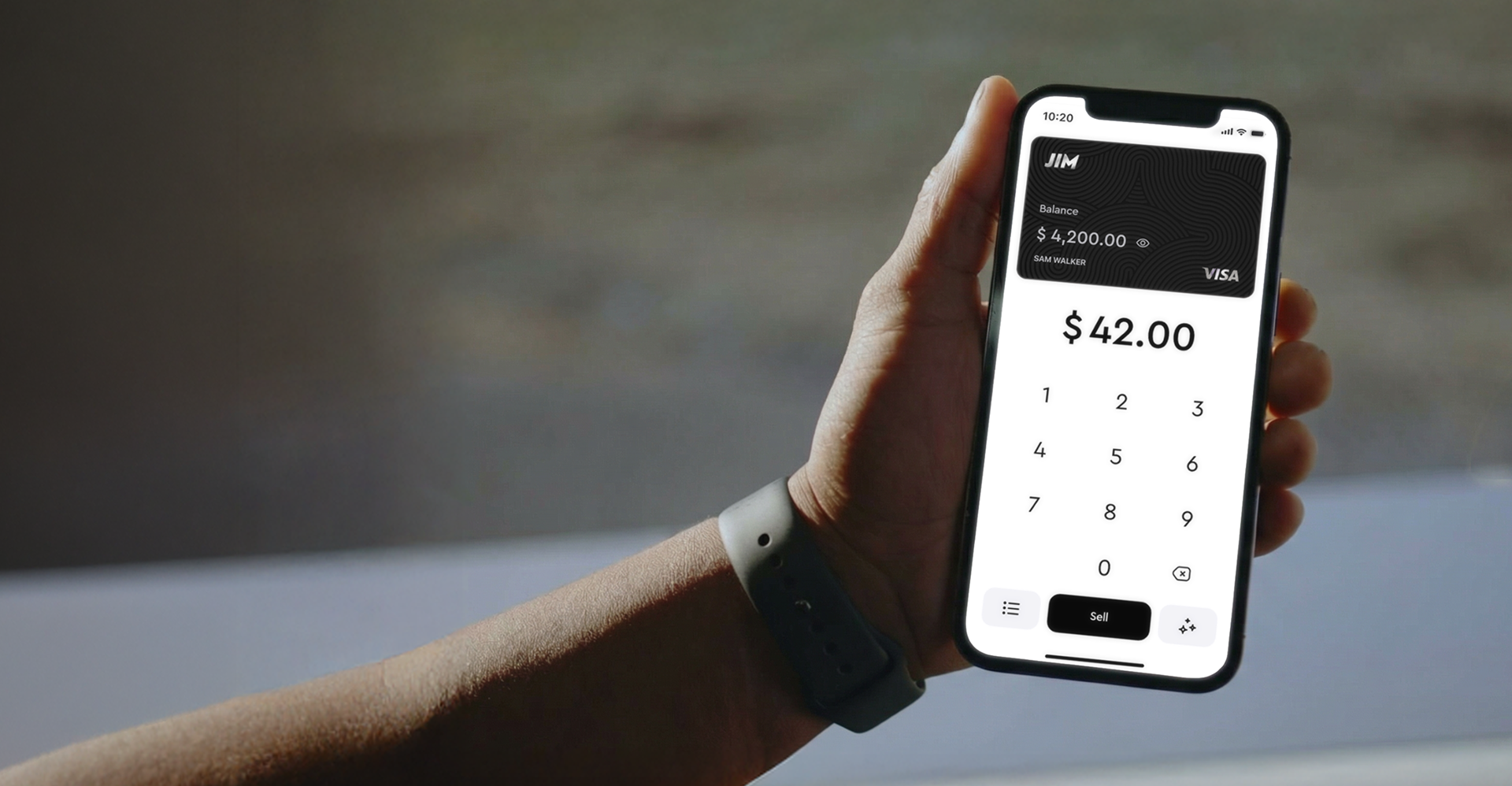
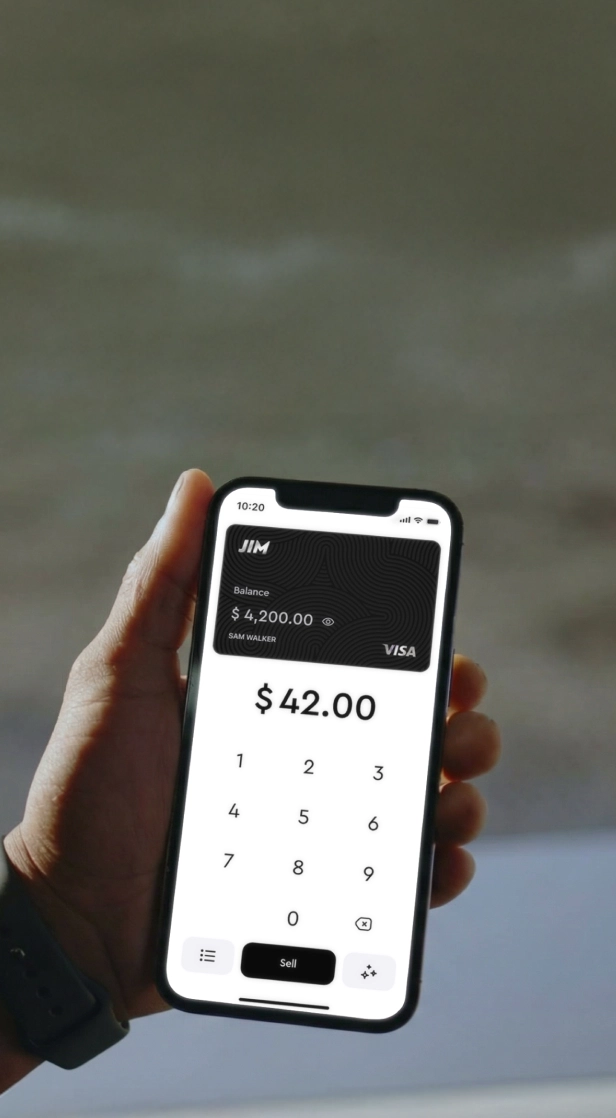
JIM offers dental practice owners a straightforward payment processing solution. The JIM tap-to-pay app transforms your iPhone or Android phone into a payment terminal. It uses NFC technology, so you need no extra hardware to accept payments. You pay a flat 1.99% per transaction with no setup costs, monthly fees, or variable rates for premium cards.
You can also send payment links to patients for 4.99% + $0.30 per sale (ideal for collecting deposits or payments for treatment plans remotely). Funds from your sales become available instantly on your JIM Visa Prepaid Card. You can add this card to Apple Pay or Google Pay for immediate use.
.avif)