MCC 8699 is a code used by the International Organization for Standardization (ISO) to classify "Membership Organizations Not Elsewhere Classified." This category applies to businesses that operate on a membership basis but do not fall into more specific MCCs. Transactions from organizations like historical societies, literary clubs, and other special interest groups typically fall under this code.
Which businesses fall under MCC 8699?
MCC 8699 applies to a broad range of membership-based organizations:
- Professional Associations: These groups unite individuals within a specific profession, like the American Bar Association. They offer networking, continued education, and industry advocacy for their members.
- Political Organizations: Groups such as the Democratic and Republican National Committees use this code for donations and membership fees. Their purpose is to advance specific political agendas and support candidates.
- Alumni Associations: These organizations connect graduates from a specific university or school. They foster a community through events and fundraising, often requiring a membership fee for full benefits.
- Social and Fraternal Organizations: This includes groups like the Elks Lodge or college fraternities. They exist to provide social and community benefits to their members based on shared values or interests.
- Historical Societies: Organizations dedicated to preserving and promoting history, such as a local town historical society, fall here. Memberships often support their preservation efforts and grant special access to exhibits.
- Literary Societies: These clubs cater to enthusiasts of literature, writing, and poetry. Membership fees typically fund events, publications, and gatherings for people with shared literary interests.
Business implications of MCC 8699
Payment networks including Visa, Mastercard, American Express, and Discover use MCC 8699 to categorize transactions, which affects several aspects of business operations. These networks use the code to assess a business's risk profile. For MCC 8699, the risk is typically low, which can result in lower interchange fees for the merchant.
Beyond risk assessment and transaction fees, the MCC code has further operational uses that influence financial management and customer interactions.
Expense tracking
Companies use MCCs to automate the categorization of business expenses on credit card statements. A payment to a professional association under MCC 8699 is automatically logged, which simplifies expense management and can substantiate claims for business-related tax deductions.
Financial analysis
Businesses analyze spending patterns by MCC to better understand their expenditures. Tracking payments under MCC 8699 allows a company to monitor costs associated with memberships, which informs budget creation and helps forecast future expenses more accurately.
Compliance and auditing
Consistent application of MCC 8699 creates a clear audit trail for financial verification. This standardized coding allows auditors to quickly confirm that membership-related expenses are legitimate and align with company policy.
Rewards and customer behavior
Credit card issuers often tie rewards programs to specific MCCs. A cardholder might receive bonus points for payments to organizations under MCC 8699, which can influence their decision to pay for a membership or make a donation using that card.
How to verify your business's MCC
Membership organization owners should confirm their MCC classification to ensure proper transaction processing and avoid customer confusion regarding rewards eligibility. If you find out that your business is incorrectly classified, for example, a professional association coded as a retail store, contact your payment processor immediately to request reclassification.
Here's how to verify if your MCC classification is set up correctly:
- Contact Your Payment Processor: Your merchant services provider assigned the MCC code during account setup. To verify your classification, contact their customer service department or review your merchant agreement documents for the assigned code.
- Review Processing Statements: Your monthly merchant statements typically display the assigned MCC code. Look for a four-digit number in the account information or business profile details section of your statement to find your classification.
- Check with Your Acquirer: Your acquiring bank or financial institution also maintains your MCC code in their system. You can reach out to their merchant support team, who can access your account details and confirm your current classification directly from their records.
- Test Transaction Method: Some merchants process a small test transaction and check how it appears on a personal credit card statement. Note that this method is less reliable than direct confirmation from your processor, as statement descriptions can vary.
How to choose a reliable payment service provider
Your MCC 8699 classification directly influences interchange rates and processing requirements, so the choice of a payment processor matters. Different providers handle these transactions with varied pricing models, settlement speeds, and support levels. These differences can affect your organization's finances and operations, making it important to evaluate several factors.
- Transparent pricing: Look for a processor with a simple, flat-rate pricing model to avoid unpredictable costs from tiered or interchange-plus structures. The JIM tap-to-pay app for iPhone and Android charges 1.99% per transaction with no setup costs, monthly fees, or premium card surcharges.
- Payment method support: Your provider should accept all major credit cards like Visa, Mastercard, and Discover, plus digital wallets such as Apple Pay and Google Pay to accommodate customer preferences.
- Fast fund access: Quick access to funds helps manage cash flow for operational expenses like venue deposits or event planning. A processor that offers fast or instant settlements provides financial flexibility when you need it.
- Security: Processors must protect customer data with features like encryption and tokenization. Tokenization replaces sensitive card numbers with a unique code for each transaction, so the actual data is never stored on your device.
- Reporting: Look for detailed reporting tools for financial analysis. The JIM AI assistant provides sales reports and transaction history through a chat interface, which simplifies bookkeeping.
Streamline payments with JIM
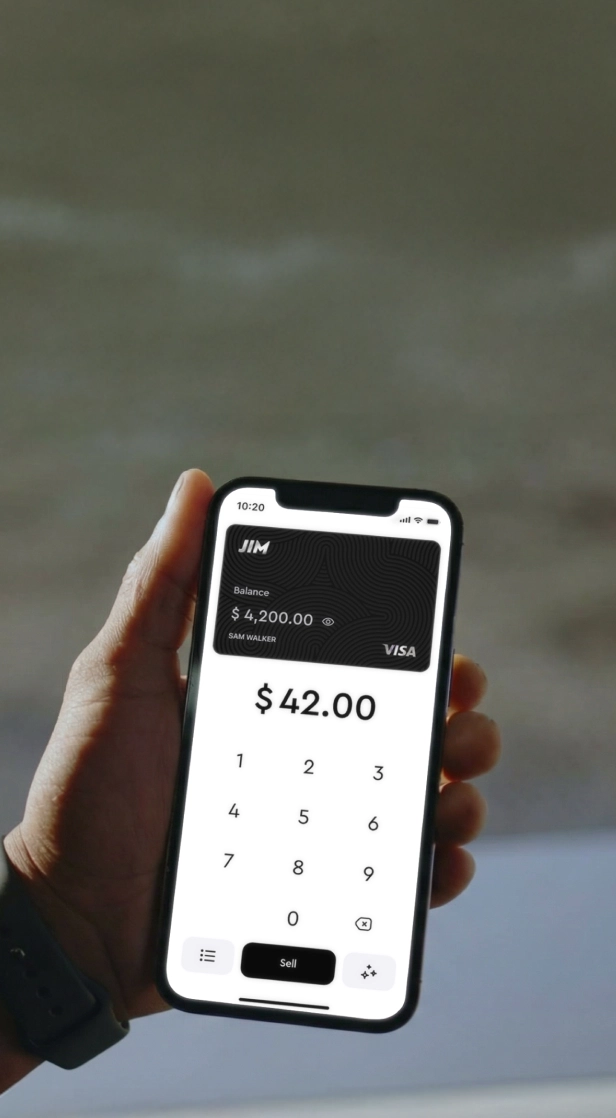
JIM offers membership organization owners a straightforward payment processing solution. The JIM tap-to-pay app transforms your iPhone or Android device into a tap-to-pay terminal, so you need no extra hardware. It uses NFC technology to accept payments directly on your phone. You pay a flat 1.99% per transaction with no setup costs, monthly fees, or variable rates for premium cards. This simple structure makes your expenses predictable.
For remote transactions, you can create payment links for 4.99% + $0.30 per sale (for online membership renewals or event registrations). Once a payment completes, the funds become available instantly on your JIM Visa Prepaid Card. You can add this card to Apple Pay or Google Pay for immediate use. This gives you direct access to your revenue when you need it for your organization's operations.
.avif)