Merchant Category Code (MCC) 8011 is a classification used by the International Organization for Standardization (ISO) for doctors and physicians. This code applies to businesses that provide general medical services from licensed practitioners. Transactions under this category typically include payments for consultations, examinations, and various medical treatments. It covers a wide range of medical professionals who are not classified under more specific specialty codes.
Which businesses fall under MCC 8011?
MCC 8011 applies to a broad range of medical service establishments:
- General practitioner offices: These clinics provide primary care for individuals and families. They handle routine check-ups, diagnose common illnesses, and manage chronic conditions for patients of all ages.
- Pediatric clinics: These practices focus on the health of infants, children, and adolescents. Services include well-child visits, immunizations, and treatment for childhood diseases, like those at a local children's medical center.
- Urgent care centers: Facilities like GoHealth Urgent Care offer immediate medical attention for non-life-threatening conditions. They bridge the gap between a primary care doctor and an emergency room for minor injuries or illnesses.
- Internal medicine practices: Internists specialize in adult medicine, diagnosing and treating complex illnesses. Their practices manage long-term health and preventative care for their adult patient population.
- Specialist physician practices: This includes private practices for specialists like cardiologists, dermatologists, or neurologists. They provide focused care for specific conditions, such as a dermatology clinic treating skin disorders.
- Concierge medicine practices: These membership-based practices offer personalized primary care with enhanced access to a physician. Patients pay a retainer for more direct and comprehensive medical attention from their doctor.
- Telehealth physician services: Platforms that connect patients with licensed doctors for virtual consultations use this code. These services provide remote diagnosis and treatment for a variety of medical concerns.
Business implications of MCC 8011
Payment networks including Visa, Mastercard, American Express, and Discover use MCC 8011 to categorize transactions, which affects several aspects of business operations. These networks use the MCC to deduce the risk level of a business. Since medical services are generally considered low-risk, businesses under MCC 8011 often receive more favorable interchange rates, reducing their transaction costs.
Beyond risk assessment, the MCC code also informs other operational functions. These classifications help streamline financial processes and can even shape customer spending habits, demonstrating the code's broad impact on a medical practice.
Expense tracking
Companies use MCC codes to automatically sort business expenses on credit card statements. This simplifies tracking payments to medical providers under MCC 8011. For businesses, these categorized expenses can also support claims for tax deductions on health-related services where applicable.
Financial analysis
Businesses can analyze spending patterns by filtering transactions by MCC. An insurance company, for instance, might track payments to physicians under MCC 8011 to manage costs, forecast future healthcare expenditures, and refine its budget for provider reimbursements.
Compliance and auditing
Consistent application of MCC 8011 creates a clear audit trail for expense verification. This helps organizations confirm that payments were made to legitimate medical practitioners, which supports internal controls and regulatory compliance.
Rewards and customer behavior
Credit card issuers often tie rewards programs to specific MCCs. A card might offer bonus points for healthcare spending, encouraging cardholders to use it for payments at businesses coded as MCC 8011. This can influence a customer's choice of payment method.
How to verify your business's MCC
Medical practice owners should confirm their MCC classification for proper transaction processing and to avoid customer confusion regarding rewards eligibility. If you find out that your business is incorrectly classified, for example, a general practitioner's office coded as a hospital, contact your payment processor immediately to request reclassification.
Here's how to verify if your MCC classification is set up correctly:
- Contact Your Payment Processor: Your merchant services provider assigned the MCC code when you set up your account. To verify your classification, contact their customer service department or review your original merchant agreement documents for the assigned code.
- Review Processing Statements: Your monthly merchant statements typically display the assigned MCC code. Look for a four-digit number in the account information or business profile details section of your statement to find your current classification.
- Check with Your Acquirer: The acquiring bank or financial institution that processes your transactions maintains the MCC code in their system. Their merchant support team can confirm your current classification upon request, providing another way to check your setup.
- Test Transaction Method: Some merchants process a small test transaction and check how it appears on a personal credit card statement. This method is less reliable than direct confirmation from your processor, as statement descriptions can sometimes be generic.
How to choose a reliable payment service provider
Your MCC 8011 classification affects interchange rates, so your choice of payment processor matters. Providers vary in their pricing models, settlement speeds, and support for this category. These differences accumulate over time, impacting your practice's finances. The following factors can help guide your selection of a payment partner.
- Transparent pricing: Flat-rate pricing offers predictability over complex models that can hide fees. The JIM tap-to-pay app for iPhone and Android charges 1.99% per transaction with no setup costs, monthly fees, or premium card surcharges, which simplifies expense management.
- Payment method support: Your processor should accept major cards like Visa and Mastercard, plus digital wallets such as Apple Pay and Google Pay. This flexibility meets modern patient expectations and prevents payment friction at checkout.
- Fast fund access: Quick access to funds improves cash flow for daily operations. For a medical practice, this means you can cover payroll and pay for medical supplies without delay, maintaining business continuity.
- Security: Providers must protect patient data with encryption and tokenization. JIM uses tokenization for every transaction, so card numbers are never stored on your device, which reduces the risk of data breaches.
- Reporting: Detailed analytics help you track financial performance. The JIM AI assistant provides sales reports and transaction history through a chat interface for quick access to business insights.
Streamline payments with JIM
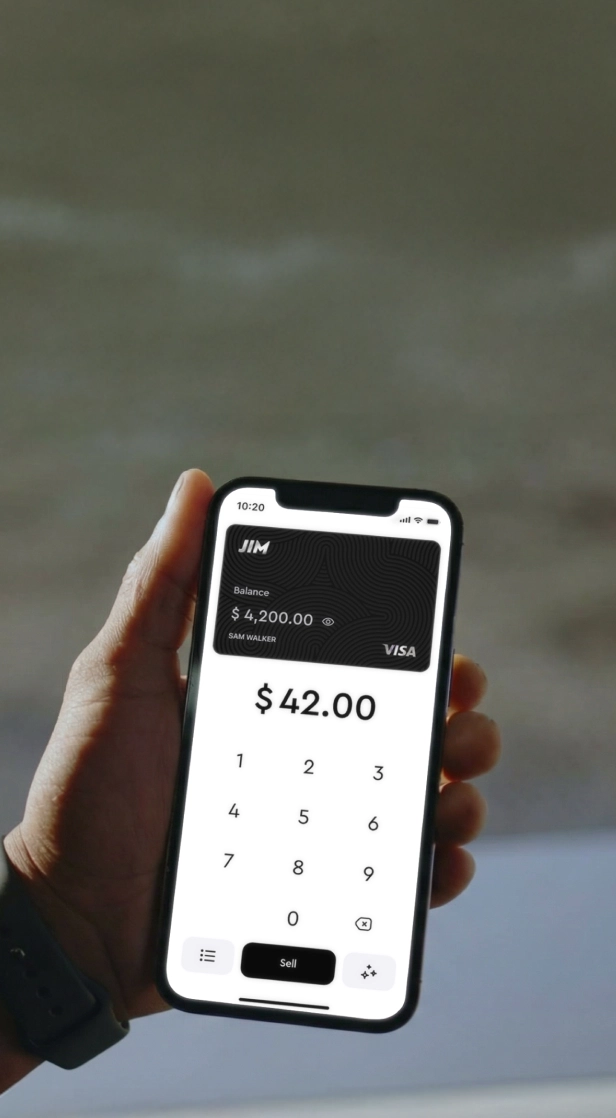
JIM offers medical practice owners a straightforward payment solution. You can transform your iPhone or Android device into a tap-to-pay terminal with the JIM tap-to-pay app. It uses NFC technology, so you do not need extra hardware to accept payments. The price is a flat 1.99% per transaction, with no setup costs, monthly fees, or variable rates for premium cards.
For remote transactions, you can use link payments at a rate of 4.99% + $0.30 per sale, which is ideal for telehealth consultations or appointment prepayments. After a successful transaction, your funds become available instantly on your JIM Visa Prepaid Card. You can add this card to Apple Pay or Google Pay, which allows you to use your earnings for business expenses right away.
.avif)