MCC 8062 is a merchant category code used by the International Organization for Standardization (ISO) to classify hospitals. This code applies to establishments that provide medical services and inpatient care. Transactions covered include payments for surgery, diagnostic services, laboratory tests, and room and board. It generally encompasses all services billed directly by the hospital facility itself, rather than by individual practitioners who may bill separately.
Which businesses fall under MCC 8062?
MCC 8062 applies to a broad range of healthcare establishments:
- General Hospitals: These facilities offer a wide spectrum of medical and surgical services for various conditions. They serve as primary care centers for communities, like the Cleveland Clinic or Massachusetts General Hospital.
- Specialty Hospitals: These institutions concentrate on specific medical fields, such as oncology or orthopedics. For instance, the MD Anderson Cancer Center focuses exclusively on cancer treatment and research.
- Children's Hospitals: Tailored for pediatric care, these hospitals treat illnesses and conditions affecting infants, children, and adolescents. Well-known examples include Boston Children's Hospital and St. Jude Children's Research Hospital.
- Teaching Hospitals: Affiliated with universities, these hospitals combine patient care with medical education and research. Johns Hopkins Hospital is a world-renowned teaching hospital that trains new physicians.
- Psychiatric Hospitals: These centers provide inpatient care for mental health disorders and substance abuse issues. Facilities like McLean Hospital offer specialized therapeutic programs and psychiatric treatment.
- Rehabilitation Hospitals: Patients recovering from severe injuries, strokes, or major surgeries receive intensive therapy here. The Kessler Institute for Rehabilitation is a prominent example of this type of facility.
Business implications of MCC 8062
Payment networks including Visa, Mastercard, American Express, and Discover use MCC 8062 to categorize transactions, which affects several aspects of business operations. These networks assess the risk profile of a business based on its MCC. Hospitals, classified under MCC 8062, are generally considered low-risk, which can lead to more favorable interchange rates.
Beyond risk assessment and transaction fees, this code influences other operational functions. It helps standardize financial reporting and can affect how customers interact with the business, shaping both internal processes and external relationships.
Expense tracking
Companies use MCC codes to automate expense management. Credit card statements with this code allow for the automatic sorting of hospital-related purchases, which simplifies bookkeeping. This clear categorization also helps identify potentially tax-deductible medical expenses for accurate financial reporting.
Financial analysis
Businesses leverage MCC 8062 for detailed financial analysis. By tracking spending under this code, organizations can monitor healthcare costs, develop more accurate budgets, and forecast future medical expenditures. This data provides a clear view of where funds are allocated.
Compliance and auditing
The consistent application of MCC 8062 supports compliance and auditing procedures. The code creates a clear audit trail, which allows for straightforward verification of hospital-related expenses against company policies.
Rewards and customer behavior
Credit card rewards programs often use MCCs to determine eligibility for bonus points or cash back on specific spending categories. A transaction coded as MCC 8062 may qualify for healthcare-related rewards, influencing a cardholder’s choice of payment method.
How to verify your business's MCC
Hospital owners should confirm their MCC classification to ensure proper transaction processing and avoid customer confusion regarding rewards eligibility. Should you find your business is incorrectly classified, for example, a hospital coded as a doctor's office, contact your payment processor immediately to request reclassification.
Here's how to verify if your MCC classification is set up correctly:
- Contact Your Payment Processor: Your merchant services provider assigned the MCC when you opened your account. To confirm your classification, contact their customer service department or review the details in your original merchant agreement documents.
- Review Processing Statements: Your monthly merchant statements usually show your assigned MCC. Look for a four-digit number within the account information or business profile section of the statement to find your code and confirm its accuracy.
- Check with Your Acquirer: The acquiring bank or financial institution that processes your transactions holds your MCC information. You can reach out to their merchant support team, and they can confirm the classification currently on file for your business account.
- Test Transaction Method: Some business owners run a small test transaction on a personal credit card. They then check the statement to see how the purchase is categorized. However, this method is less reliable than direct confirmation from your processor.
How to choose a reliable payment service provider
Your MCC 8062 classification directly influences interchange rates and processing requirements. Since payment processors handle these transactions differently, their pricing models, settlement speeds, and support levels can have a cumulative effect on your hospital's finances. Consider the following factors when you select a provider to manage your payments.
- Transparent pricing: Look for a provider with a clear, flat-rate structure to avoid complex interchange-plus or tiered models that obscure the true cost. The JIM tap-to-pay app for iPhone and Android charges 1.99% per transaction with no setup costs, monthly fees, or premium card surcharges.
- Payment method support: To meet patient expectations, your processor should accept all major credit cards, including Visa, Mastercard, and Discover, as well as popular digital wallets like Apple Pay and Google Pay.
- Fast fund access: Quick access to funds is important to manage a hospital's cash flow. Faster settlement times help you cover immediate operational expenses like supplier payments and payroll without delays.
- Security: A secure processor protects sensitive patient data with features like tokenization and end-to-end encryption. Tokenization replaces card numbers with a unique code for each transaction, so financial details are never stored on your device.
- Reporting: Advanced analytics offer deeper business insights. JIM's AI assistant provides sales reports and transaction history through a chat interface, which simplifies financial oversight.
Streamline payments with JIM
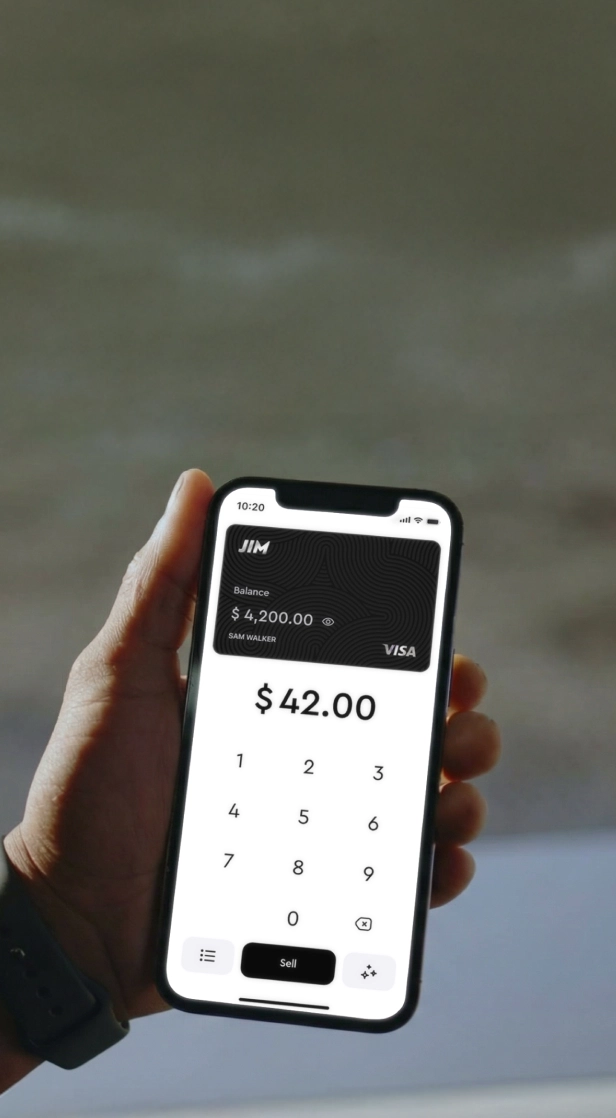
JIM offers hospital owners a straightforward payment solution. The JIM tap-to-pay app converts your iPhone or Android phone into a payment terminal with NFC technology, which eliminates the need for extra hardware. You pay a flat 1.99% per transaction, with no setup costs, monthly fees, or variable rates for premium cards. This simple price structure gives you financial clarity.
You can also send payment links for remote collections (for instance, to take a deposit for a scheduled procedure) for 4.99% + $0.30 per sale. After each transaction, funds become available instantly on your JIM Visa Prepaid Card. Add this card to Apple Pay or Google Pay for immediate use. This quick access to revenue helps you manage your hospital's cash flow.
.avif)