Merchant Category Code (MCC) 5948 is a classification used by the International Organization for Standardization (ISO) for luggage and leather goods stores. This code applies to businesses that primarily sell items like travel luggage, trunks, suitcases, briefcases, and handbags. Retailers specializing in other small personal leather goods, such as wallets, belts, and accessories, also fall under this specific category.
Which businesses fall under MCC 5948?
MCC 5948 applies to a broad range of retail establishments:
- Luggage Stores: These retailers focus on selling suitcases, travel bags, and trunks for personal or business travel. Well-known examples include dedicated Samsonite or Tumi stores that offer a wide selection of travel gear.
- Handbag Boutiques: Shops specializing in women's and men's handbags, from luxury designers to everyday brands, use this code. Think of stores like Coach, Michael Kors, or Kate Spade that primarily feature purses and totes.
- Leather Goods Shops: This category covers stores that sell a variety of items made from leather, including jackets, gloves, and accessories. Wilson's Leather is a classic example of a retailer in this space.
- Briefcase Retailers: These businesses concentrate on professional bags like briefcases, messenger bags, and laptop cases made from leather or other materials. Many high-end luggage stores have sections dedicated to these products.
- Travel Accessory Stores: Retailers that offer items like travel pillows, packing cubes, and passport holders fall under this MCC. Airport shops such as Travel + Leisure often carry these types of goods.
- Wallet and Belt Shops: Specialty stores or mall kiosks that focus on small personal leather goods are included in this classification. These merchants sell wallets, belts, and other small accessories as their main products.
Business implications of MCC 5948
Payment networks including Visa, Mastercard, American Express, and Discover use MCC 5948 to categorize transactions, which affects several aspects of business operations.
These networks use the code to assess a business's risk profile, influencing the interchange rates for each sale. Luggage and leather goods stores generally face standard retail risk levels and fees. The MCC also informs other operational activities, from expense management to customer rewards.
Expense tracking
Companies rely on MCC codes to automatically sort credit card purchases on statements. This simplifies expense reporting when employees buy items like briefcases or luggage for business travel. The clear categorization also helps isolate potentially deductible purchases, which simplifies tax documentation.
Financial analysis
Businesses use MCC data to analyze spending patterns and manage budgets effectively. By tracking expenditures under MCC 5948, a company can monitor costs related to travel gear and accessories, forecast future expenses, and adjust financial plans with greater precision.
Compliance and auditing
The consistent application of MCC 5948 creates a clear audit trail for corporate expenses. This allows finance departments to quickly verify that purchases align with company policy, simplifying internal and external audits.
Rewards and customer behavior
Credit card issuers use MCCs to determine rewards eligibility, which can influence where customers shop. A cardholder might receive extra points for retail purchases, making them more likely to buy from a store coded under MCC 5948 to maximize their benefits.
How to verify your business's MCC
Luggage and leather goods store owners should confirm their MCC classification for proper transaction processing and to prevent customer confusion about rewards eligibility. If you find that your business is incorrectly classified (for example, a handbag boutique coded as a department store), contact your payment processor immediately to request reclassification.
Here's how to verify if your MCC classification is set up correctly:
- Contact Your Payment Processor: Your merchant services provider assigned the MCC during account setup. To confirm your classification, contact their customer service department or review the details in your merchant agreement documents. This is the most direct way to get the information.
- Review Processing Statements: Your monthly merchant statements typically display the assigned MCC. Look for a four-digit number in the account information or business profile section of the document. This code identifies your business category for all processed transactions.
- Check with Your Acquirer: The acquiring bank or financial institution that processes your payments maintains the MCC code in their system. You can reach out to their merchant support team, and they can confirm your current classification upon request.
- Test Transaction Method: Some merchants process a small test transaction and check how it appears on a personal credit card statement. While this can offer a clue, this method is less reliable than direct confirmation from your payment processor.
How to choose a reliable payment service provider
Your MCC 5948 classification directly affects interchange rates and processing requirements. Since payment processors handle these transactions differently, your choice of provider matters. Variations in pricing models, settlement speed, and support can accumulate over time. Consider these factors when you select a payment service for your luggage and leather goods store.
- Transparent pricing: Look for a provider with a simple, flat-rate structure to avoid complex interchange-plus models and hidden fees. The JIM tap-to-pay app for iPhone and Android charges 1.99% per transaction with no setup costs, monthly fees, or premium card surcharges.
- Payment method support: Your processor should accept all major credit cards, including Visa, Mastercard, and Discover. To meet modern customer expectations, support for digital wallets like Apple Pay and Google Pay is also necessary.
- Fast fund access: Quick access to your funds is important for managing cash flow. Instant settlements allow you to cover immediate operational needs, such as restocking inventory, making supplier payments, or meeting payroll without delay.
- Security: A secure processor protects customer data with encryption and tokenization for every transaction. With tokenization, sensitive card numbers are never stored on your device, which reduces your liability in the event of a data breach.
- Reporting: Detailed analytics help you understand sales trends and customer behavior. JIM's AI assistant provides sales reports and transaction history through a chat interface.
Streamline payments with JIM
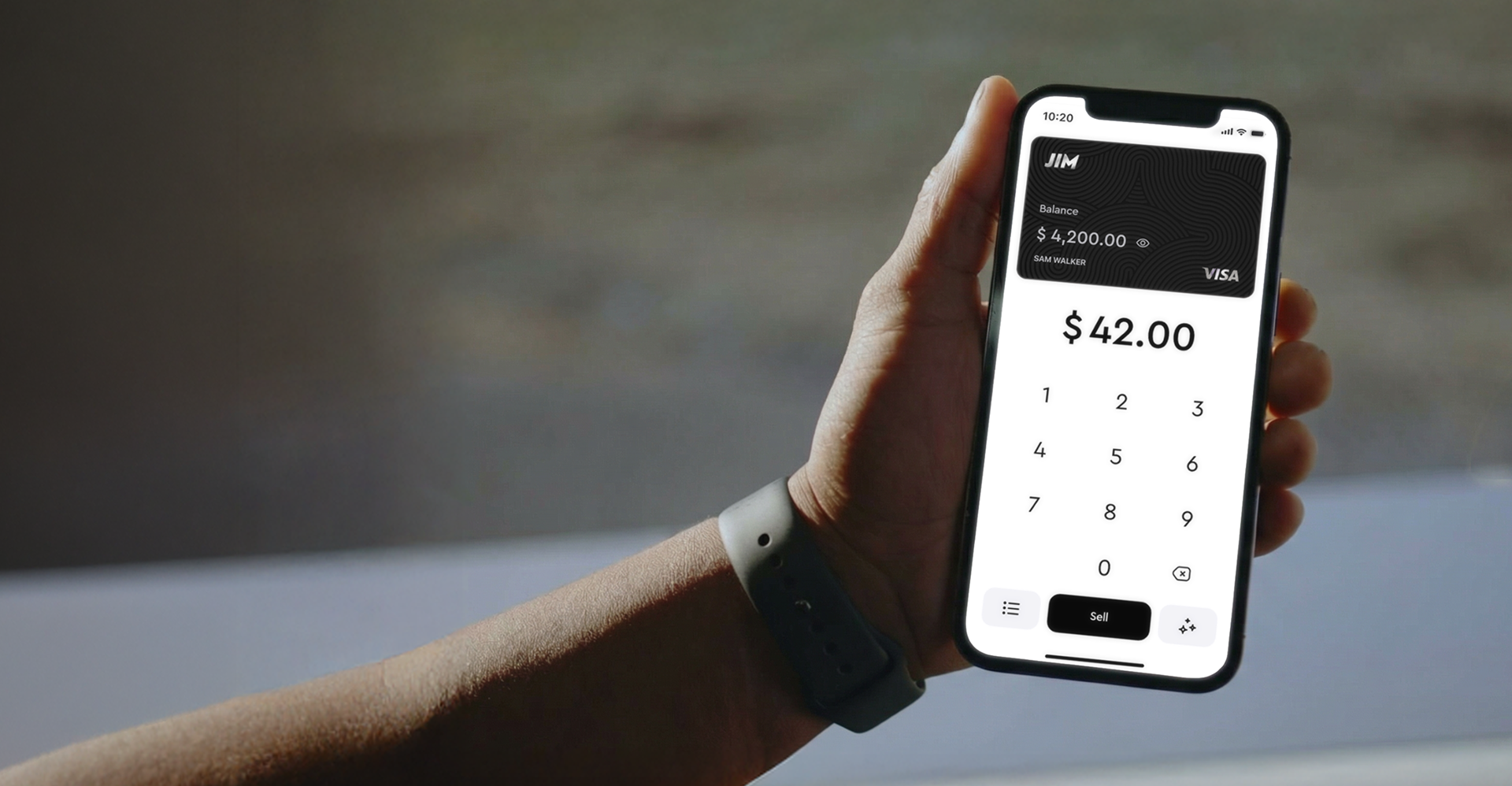
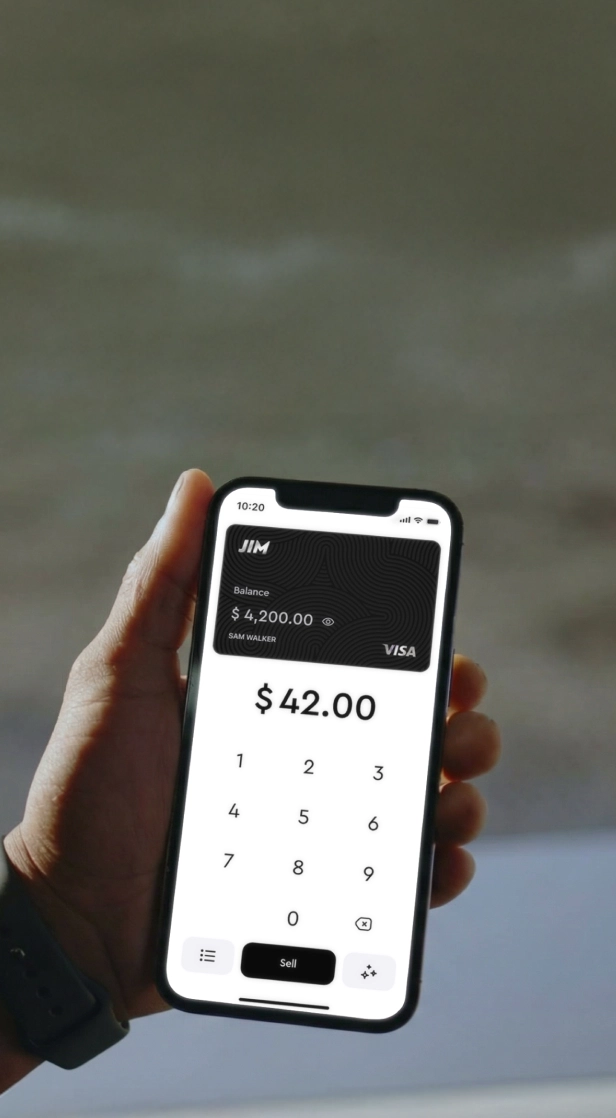
JIM offers luggage and leather goods store owners a straightforward payment processing solution. With the JIM tap-to-pay app, you can turn your iPhone or Android phone into a payment terminal without extra hardware. The app uses NFC technology to accept contactless payments directly on your device. You pay a flat 1.99% per transaction, with no setup costs, monthly fees, or variable rates for premium cards.
For remote transactions, you can create payment links for 4.99% + $0.30 per sale (ideal for custom orders or online sales). After each transaction, your funds become available instantly on your JIM Visa Prepaid Card. You can add this card to Apple Pay or Google Pay, which allows you to use your money right away for business expenses.
.avif)