MCC 5047 is a merchant category code used by the International Organization for Standardization (ISO) to classify businesses that sell medical, dental, ophthalmic, and hospital equipment. This code applies to merchants whose primary business is the sale, rental, or repair of professional healthcare equipment. Transactions covered can include anything from surgical instruments and diagnostic tools to hospital furniture and orthopedic supplies. These businesses supply healthcare providers with the necessary tools for patient care.
Which businesses fall under MCC 5047?
MCC 5047 applies to a broad range of healthcare supply establishments:
- Medical Supply Wholesalers: These companies distribute a wide array of medical products to hospitals, clinics, and other healthcare facilities. They handle everything from basic consumables like gloves to complex diagnostic equipment from companies like McKesson and Cardinal Health.
- Dental Equipment Suppliers: This category covers businesses that sell, rent, or repair equipment specifically for dental practices. Their inventory includes dental chairs, X-ray machines, and sterilization tools from brands like Henry Schein Dental or Patterson Dental.
- Ophthalmic Equipment Vendors: Merchants in this group specialize in tools for eye care professionals. They provide diagnostic instruments like phoropters and tonometers, as well as surgical equipment for ophthalmologists from companies such as Alcon.
- Hospital Furniture Retailers: These businesses focus on selling durable medical furniture designed for clinical environments. Products include hospital beds, examination tables, and patient lifts from manufacturers such as Stryker or Hill-Rom.
- Orthopedic and Prosthetic Suppliers: These suppliers provide devices for patients with musculoskeletal issues, including artificial limbs, braces, and surgical implants. Companies like Zimmer Biomet and DePuy Synthes operate in this specialized market.
- Diagnostic Imaging Equipment Sellers: This classification includes sellers of advanced imaging technology like MRI machines, CT scanners, and ultrasound systems. GE Healthcare and Siemens Healthineers are prominent examples in this high-tech sector.
- Surgical Instrument Specialists: These merchants focus on providing precision tools used in operating rooms. Their catalogs feature scalpels, forceps, and retractors from specialized companies like B. Braun or Karl Storz.
Business implications of MCC 5047
Payment networks including Visa, Mastercard, American Express, and Discover use MCC 5047 to categorize transactions, which affects several aspects of business operations. These networks use the code to assess a business's risk profile. For MCC 5047, the high-value equipment and specialized nature of sales can lead to a moderate risk assessment, which influences the interchange rates charged for processing payments.
Beyond risk and fees, this classification also has implications for other operational functions. The code helps streamline internal financial processes and can shape how customers interact with a business. These factors are explored in more detail below.
Expense tracking
Companies use MCC 5047 to automatically sort credit card purchases, which simplifies expense management. When a healthcare provider buys equipment, the transaction is tagged, making it easy to identify business-related spending. This clear documentation can support claims for tax deductions on capital expenditures.
Financial analysis
Businesses analyze spending data from MCC 5047 to gain financial clarity. By tracking expenditures on medical supplies, organizations can identify cost trends, forecast future equipment needs, and manage departmental budgets more effectively. This data informs strategic purchasing decisions and financial planning.
Compliance and auditing
The consistent application of MCC 5047 creates a clear audit trail for financial verification. This helps organizations confirm that expenses are legitimate and comply with internal purchasing policies or external regulatory requirements.
Rewards and customer behavior
Credit card issuers often tie rewards programs to specific MCCs. A healthcare practice might choose a card that offers bonus points for purchases under MCC 5047. This can influence their choice of supplier, directing business toward merchants with the correct classification.
How to verify your business's MCC
Medical equipment supplier owners should confirm their MCC classification to ensure proper transaction processing and avoid customer confusion regarding rewards eligibility. If you find out that your business is incorrectly classified—for example, a medical supply wholesaler coded as a general office supply store—contact your payment processor immediately to request reclassification.
Here's how to verify is your MCC classification is set up correctly:
- Contact Your Payment Processor: Your merchant services provider assigned the MCC during account setup. To confirm your classification, contact their customer service department or review the details in your merchant agreement documents. This is the most direct way to get the information.
- Review Processing Statements: Your monthly merchant statements typically display the assigned MCC. Look for a four-digit number in the account information or business profile section of the document. This code identifies your business category for payment processing purposes.
- Check with Your Acquirer: The acquiring bank or financial institution that processes your transactions maintains the MCC code in their system. You can reach out to their merchant support team, and they can confirm your current classification upon request.
- Test Transaction Method: Some merchants process a small test transaction and check how it appears on a personal credit card statement. However, this method is less reliable than direct confirmation from your processor, as statement descriptions can sometimes be generic.
How to choose a reliable payment service provider
Your MCC 5047 classification affects interchange rates, making your choice of payment processor a major business decision. Providers handle medical equipment sales with different pricing models, settlement speeds, and support. These variations impact your bottom line. Consider the following factors when you select a payment service.
- Transparent pricing: Flat-rate pricing offers predictability over complex tiered structures that hide fees. This clarity helps you forecast expenses. The JIM tap-to-pay app for iPhone and Android charges 1.99% per transaction with no setup costs, monthly fees, or premium card surcharges.
- Payment method support: Your processor should accept all major credit cards, including Visa, Mastercard, and Discover, plus digital wallets like Apple Pay and Google Pay to meet customer expectations.
- Fast fund access: Quick access to funds is important for managing cash flow. Instant settlements help you cover immediate needs like restocking inventory, supplier payments, and payroll without delay.
- Security: A secure processor protects sensitive data with encryption and tokenization. With tokenization, actual card numbers are never stored on your device, which reduces the risk of a data breach.
- Reporting: Modern processors offer advanced analytics to help you understand your business. The JIM AI assistant provides sales reports and transaction history through a chat interface for quick business insights.
Streamline payments with JIM
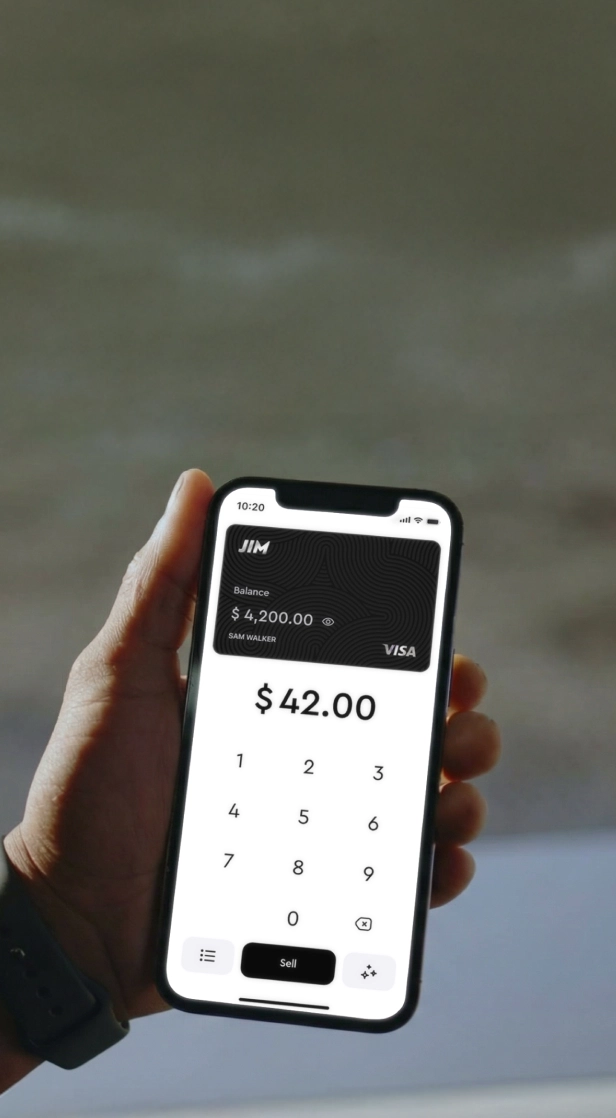
JIM offers medical equipment supplier owners a straightforward payment processing solution. The JIM tap-to-pay app transforms your iPhone or Android into a payment terminal that requires no extra hardware. It uses NFC technology to accept contactless payments directly on your phone. You pay a flat 1.99% per transaction with no setup costs, monthly fees, or variable rates for premium cards, which gives you clear cost predictability.
For remote transactions, create payment links to collect deposits on equipment orders or bill for repairs at a rate of 4.99% + $0.30 per sale. After each transaction, your funds are available instantly on your JIM Visa Prepaid Card. Add this card to Apple Pay or Google Pay to use your revenue immediately for business expenses.
.avif)