MCC 8220 is a code used by the International Organization for Standardization (ISO) to categorize universities, colleges, senior colleges, or professional schools. This classification covers transactions for tuition, fees, and other educational services at these institutions. The code applies to both public and private schools that offer academic courses and grant degrees. Businesses under this code are primarily focused on post-secondary education.
Which businesses fall under MCC 8220?
MCC 8220 applies to a broad range of higher education establishments:
- Universities: These are large, degree-granting institutions that offer both undergraduate and graduate programs. Examples include state systems like the University of California or private institutions like Princeton University.
- Colleges: This category includes community colleges, junior colleges, and four-year liberal arts colleges. City College of New York and Williams College are two distinct examples of businesses in this group.
- Professional Schools: These schools provide specialized training for specific professions, such as law, medicine, or business. Think of institutions like Harvard Law School or the Juilliard School for performing arts.
- Graduate Schools: Focused exclusively on advanced academic studies and research, these schools award master's and doctoral degrees. The Kellogg School of Management at Northwestern University is a well-known example.
- Seminaries and Theological Schools: These institutions specialize in religious education, training students for roles as ministers, priests, or other clergy. Examples include the Dallas Theological Seminary and the Moody Bible Institute.
- Technical and Trade Schools: Post-secondary schools that provide career-focused training in skilled trades or technical fields also use this code. The Universal Technical Institute is a prominent example in this category.
Business implications of MCC 8220
Payment networks including Visa, Mastercard, American Express, and Discover use MCC 8220 to categorize transactions, which affects several aspects of business operations. These networks use the code to deduce a business's risk profile. For educational institutions under MCC 8220, this perceived risk influences the interchange rates applied to card payments, altering the cost to accept them.
Beyond risk assessment and transaction fees, the MCC code serves other operational functions. It helps with financial management and can shape customer spending habits, providing a structured framework for various business activities.
Expense tracking
Companies rely on MCCs to automate expense categorization. Credit card statements automatically sort payments to universities or colleges under MCC 8220. This simplifies tracking educational expenses for employee development, which may qualify for tax deductions, and streamlines reimbursement processes.
Financial analysis
Businesses use MCC data for detailed financial review. By isolating transactions with MCC 8220, a company can analyze its expenditures on education and training. This information helps with budget management, cost forecasting, and strategic decisions about employee development programs.
Compliance and auditing
Consistent MCC application supports compliance efforts. The standardized use of MCC 8220 creates a clear audit trail, which makes it easier for businesses to verify expenses, confirm policy adherence, and provide documentation for audits.
Rewards and customer behavior
MCCs also influence customer rewards and payment choices. Card issuers often offer bonus points or cash back for specific categories, like education. A school coded under MCC 8220 may attract customers who want to maximize rewards on tuition, influencing their payment method.
How to verify your business's MCC
Educational institution owners should confirm their MCC classification for proper transaction processing and to avoid customer confusion regarding rewards eligibility. If you find out that your business is incorrectly classified, for example a university coded as a bookstore, contact your payment processor immediately to request reclassification.
Here's how to verify if your MCC classification is set up correctly:
- Contact Your Payment Processor: Your merchant services provider assigned the MCC code when you set up your account. To verify your classification, contact their customer service department or review the details in your original merchant agreement documents.
- Review Processing Statements: Your monthly merchant statements typically display the assigned MCC code. Look for a four-digit number in the account information or business profile section of the statement to confirm your current classification.
- Check with Your Acquirer: The acquiring bank or financial institution that processes your payments maintains the MCC code in their system. You can reach out to their merchant support team, and they can confirm your business's current classification upon request.
- Test Transaction Method: Some merchants process a small test transaction and then check how it appears on a personal credit card statement. This method is less reliable, however, than direct confirmation from your payment processor or acquiring bank.
How to choose a reliable payment service provider
Your MCC 8220 classification influences interchange rates and processing needs, making your choice of payment processor a major business decision. Providers handle educational transactions differently, and variations in pricing, settlement speed, and support compound over time. Consider these factors when you select a provider for your institution.
- Transparent pricing: Simple, flat-rate pricing models prevent surprise fees common with tiered or interchange-plus structures. This predictability helps with budget management. The JIM tap-to-pay app for iPhone and Android charges 1.99% per transaction with no setup costs, monthly fees, or premium card surcharges.
- Payment method support: Your processor should accept all major credit cards and digital wallets, including Apple Pay, Google Pay, Visa, and Mastercard. This flexibility meets modern customer expectations and prevents lost transactions.
- Fast fund access: Quick access to your funds is necessary for healthy cash flow. Instant or next-day deposits allow you to cover operational costs like payroll, supplier payments, and facility maintenance without delay.
- Security: Top providers protect sensitive data with encryption and tokenization. With tokenization, actual card numbers are never stored on your device or in your system, which greatly reduces the risk of a data breach.
- Reporting: Advanced analytics offer a clear view of your finances. For example, JIM's AI assistant provides sales reports and transaction history through a simple chat interface, which simplifies financial review.
Streamline payments with JIM
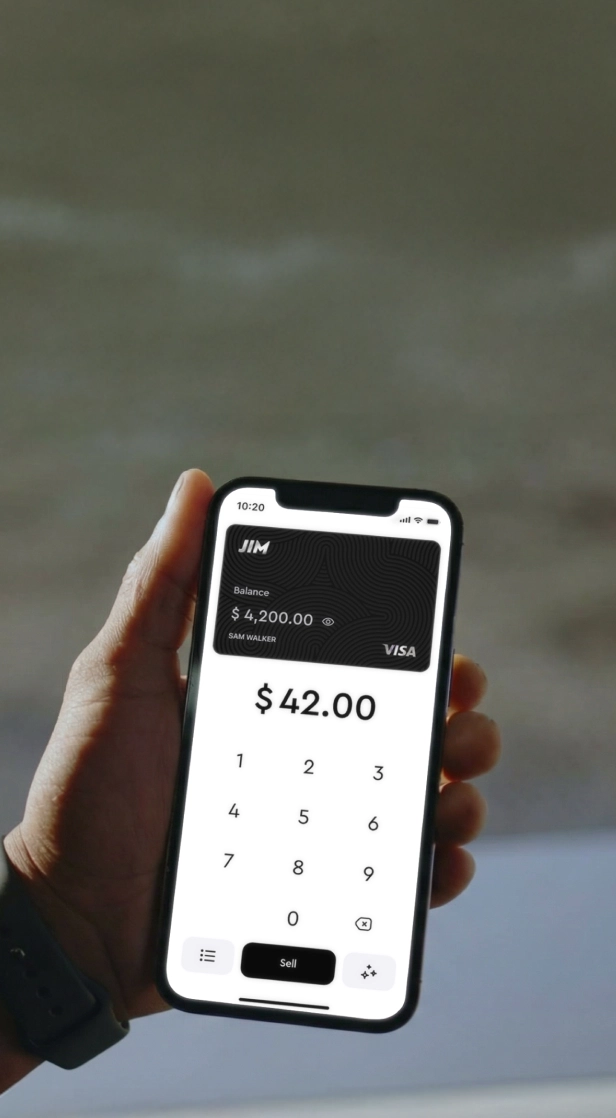
JIM offers educational institution owners a straightforward solution to process payments. The JIM tap-to-pay app transforms your iPhone or Android device into a payment terminal. It uses NFC technology, so you need no extra hardware. You pay a flat 1.99% per transaction with no setup costs, monthly fees, or variable rates for premium cards.
For remote payments, you can use payment links (for tuition installments or registration fees) at 4.99% + $0.30 per sale. Your funds become available instantly on a JIM Visa Prepaid Card. You can add this card to Apple Pay or Google Pay for immediate use.
.avif)