Merchant Category Code (MCC) 8211 is a classification used by the International Organization for Standardization (ISO) for elementary and secondary schools. This code applies to transactions for educational services at institutions from kindergarten through the 12th grade. Businesses with this MCC typically accept payments for tuition, fees, school supplies, and other related educational expenses. The category covers a range of academic institutions, both private and public.
Which businesses fall under MCC 8211?
MCC 8211 applies to a broad range of educational service establishments:
- Public elementary and middle schools: These government-funded institutions serve students from kindergarten through eighth grade. Local district schools use this code to accept payments for school lunches or field trips.
- Public high schools: This category covers secondary schools for grades 9-12 that prepare students for college or careers. A school like Beverly Hills High School uses this code for various student fees.
- Private preparatory schools: These are non-governmental, tuition-based schools focused on college readiness. Well-known examples like Phillips Exeter Academy use this MCC for tuition payments and other associated costs.
- Charter schools: Publicly funded but independently operated, these schools offer alternative education models. The KIPP network of schools falls under this MCC for processing payments for uniforms or after-school programs.
- Parochial schools: These are religious-affiliated private schools that integrate faith-based education with standard curriculum. Institutions like St. John's Preparatory School use this code for tuition and activity fees.
- Boarding schools: These residential schools provide housing and education for students. Establishments such as The Hotchkiss School use MCC 8211 for tuition, room, and board transactions.
- Special education schools: These institutions cater to students with specific learning, emotional, or physical needs. The Churchill School and Center is an example that uses this code for its specialized services.
Business implications of MCC 8211
Payment networks including Visa, Mastercard, American Express, and Discover use MCC 8211 to categorize transactions, which affects several aspects of business operations. These networks use the MCC to assess a business's risk profile. For educational institutions under MCC 8211, this often translates to lower interchange rates because transactions are generally considered low-risk, which can result in reduced processing fees.
Beyond risk assessment and interchange fees, the MCC code influences other operational functions. It provides a standardized way to classify business activities for financial tracking and reporting, which has several downstream benefits for both businesses and their customers.
Expense tracking
Companies and individuals rely on MCCs to automatically sort purchases on credit card statements. For parents paying tuition, this simplifies expense management. While tuition itself is not always tax-deductible, certain educational fees might qualify, and proper categorization helps identify them.
Financial analysis
Businesses use MCC data to analyze spending patterns with educational institutions. This information allows them to track costs related to employee training or dependent care benefits, forecast future expenses, and manage departmental budgets more effectively by understanding where funds are allocated.
Compliance and auditing
Consistent application of MCC 8211 creates a clear audit trail. This helps organizations verify that payments were made to legitimate educational institutions, which supports internal expense policies and simplifies external audits.
Rewards and customer behavior
Credit card issuers often tie rewards programs to specific MCCs. Cardholders may receive bonus points or cash back for educational spending. This can influence a customer's choice of payment method, encouraging them to use a card that rewards MCC 8211 transactions.
How to verify your business's MCC
School owners should confirm their MCC classification to allow for proper transaction processing and avoid customer confusion regarding rewards eligibility. If you find out that your business is incorrectly classified—for example, a high school coded as a daycare center—contact your payment processor immediately to request reclassification.
Here's how to verify is your MCC classification is set up correctly:
- Contact Your Payment Processor: Your merchant services provider assigned the MCC when you set up your account. To confirm your classification, contact their customer service department or review the details in your original merchant agreement documents. This is the most direct method.
- Review Processing Statements: Your monthly merchant statements often display the assigned MCC. Look for a four-digit number, typically located in the account information or business profile section of the document. This provides a regular opportunity to check your code.
- Check with Your Acquirer: The acquiring bank or financial institution that processes your transactions maintains the MCC in their system. You can reach out to their merchant support team, who can access your account details and confirm your current classification over the phone.
- Test Transaction Method: Some merchants run a small test transaction on a personal credit card to see how it appears on the statement. While this can offer a clue, this method is less reliable than direct confirmation from your payment processor or acquirer.
How to choose a reliable payment service provider
Your MCC 8211 classification directly affects interchange rates and processing needs, which makes your choice of payment processor important. Different providers handle these transactions with varied pricing models, settlement speeds, and support levels that can impact your school's finances. Consider these factors when you select a payment service provider.
- Transparent pricing: Look for flat-rate pricing to avoid complex interchange-plus models. The JIM tap-to-pay app for iPhone and Android charges 1.99% per transaction with no setup costs, monthly fees, or premium card surcharges, which simplifies budget forecasts for your institution.
- Payment method support: Your provider should accept all major credit cards like Visa, Mastercard, and Discover, plus digital wallets such as Apple Pay and Google Pay to accommodate parent and student payment preferences.
- Fast fund access: Quick access to funds helps manage cash flow for daily operations. For schools, this means having money available for immediate needs like payroll, supplier payments, or restocking inventory without delay.
- Security: Top providers protect sensitive data with methods like tokenization and end-to-end encryption. Tokenization ensures that actual card numbers are never stored on your device or in your system, which reduces your liability.
- Reporting: Modern processors offer advanced analytics to track sales and manage finances. For example, JIM's AI assistant provides sales reports and transaction history through a simple chat interface, which helps with financial oversight.
Streamline payments with JIM
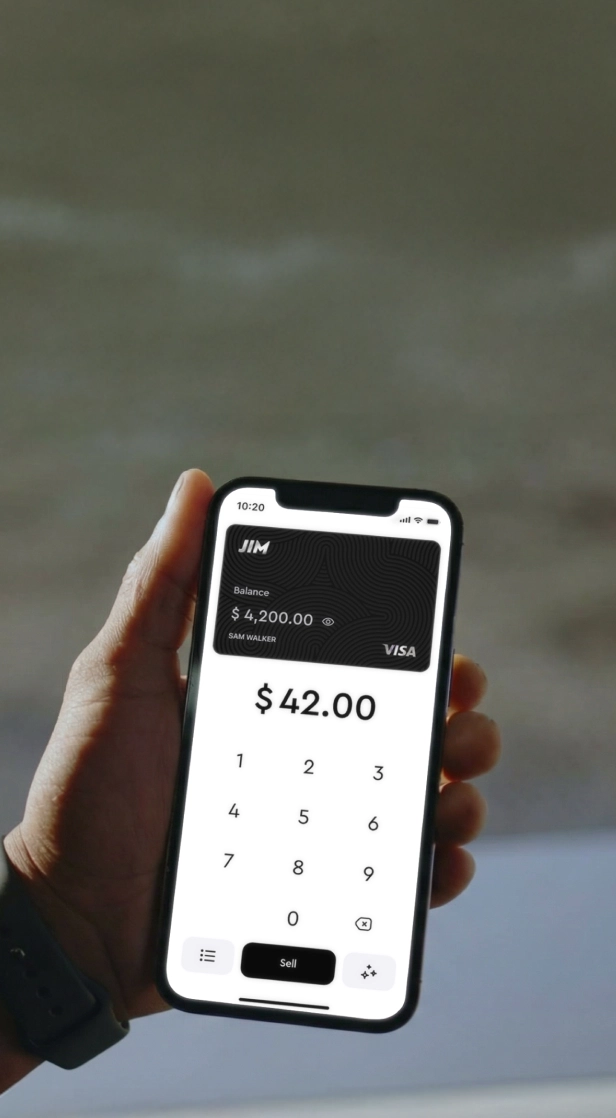
JIM offers school owners a straightforward payment solution. The JIM tap-to-pay app turns your iPhone or Android phone into a terminal that uses NFC technology, so you need no extra hardware. You pay a flat 1.99% per transaction with no setup costs, monthly fees, or variable rates for premium cards.
For remote collections, you can use Payment links for tuition installments or event tickets at 4.99% + $0.30 per sale. Once a parent pays, the funds become available instantly on your JIM Visa Prepaid Card. You can add this card to Apple Pay or Google Pay for immediate use.
.avif)