Merchant Category Code (MCC) 7512 is a classification used by the International Organization for Standardization (ISO) for CAR RENTAL AGENCIES -- NOT LISTED BELOW. This code applies to businesses that primarily rent out passenger vehicles for short-term use. It typically covers transactions with independent or smaller rental companies that do not have their own dedicated merchant code, distinguishing them from larger, specifically coded chains.
Which businesses fall under MCC 7512?
MCC 7512 applies to a broad range of vehicle rental establishments:
- Independent Car Rental Agencies: These are typically local or regional businesses that provide passenger vehicle rentals. They operate outside of the major international chains that have their own specific merchant codes.
- Exotic and Luxury Car Rentals: This category includes companies that offer high-end and performance vehicles for short-term hire. You might rent a sports car for a day or a luxury sedan for a special occasion.
- Peer-to-Peer Car Sharing Platforms: Services like Turo allow private car owners to rent out their personal vehicles to others. The platform facilitates the transaction, which often classifies under this general rental code.
- Classic and Vintage Car Hire: These niche businesses rent out classic automobiles for events like weddings, photo shoots, or parades. They offer a unique experience compared to standard car rentals.
- RV and Campervan Rentals: Companies such as Cruise America or Outdoorsy rent recreational vehicles for travel and camping. This allows customers to experience the RV lifestyle without the commitment of ownership.
- Motorcycle and Scooter Rentals: Businesses like EagleRider or local shops in tourist destinations rent two-wheeled vehicles. They cater to enthusiasts and travelers looking for alternative transportation.
Business implications of MCC 7512
Payment networks including Visa, Mastercard, American Express, and Discover use MCC 7512 to categorize transactions, which affects several aspects of business operations. These networks assess a business's risk profile based on its MCC. For car rentals, this can lead to specific interchange rates due to the higher potential for chargebacks or vehicle damage.
This classification influences more than just fees. The MCC code also has implications for internal financial management, from expense tracking to spending analysis, and even shapes how customers interact with a business through rewards programs.
Expense tracking
Companies rely on MCCs to automate the categorization of business expenses on corporate card statements. For vehicle rentals under MCC 7512, this simplifies tracking travel costs and can help substantiate deductions for business-related transportation expenses on tax returns.
Financial analysis
Businesses analyze spending data sorted by MCC to identify patterns and manage budgets. Tracking expenditures under MCC 7512 allows a company to monitor its vehicle rental costs, forecast future transportation needs, and negotiate better rates with preferred rental agencies.
Compliance and auditing
The consistent application of MCC 7512 creates a clear audit trail. This helps companies verify that employee expenses are legitimate business travel costs, which supports internal compliance policies and simplifies external audits.
Rewards and customer behavior
Credit card issuers often tie bonus rewards, like extra points or cash back, to specific MCCs. A rental transaction coded as 7512 might qualify for a travel bonus, which can influence a customer's choice of payment method or rental company.
How to verify your business's MCC
Car rental agency owners should confirm their MCC classification for proper transaction processing and to avoid customer confusion regarding rewards eligibility. If you find out that your business is incorrectly classified, for example, a car rental agency coded as a car repair shop, contact your payment processor immediately to request reclassification.
Here's how to verify your MCC classification is set up correctly:
- Contact Your Payment Processor: Your merchant services provider assigned the MCC code during account setup. You can verify this classification by contacting their customer service or by checking your merchant agreement documents. This is the most direct method for confirmation.
- Review Processing Statements: Your monthly merchant statements typically display the assigned MCC code. Look for a four-digit number within the account information or business profile section of the statement. This offers a regular way to check your classification is correct.
- Check with Your Acquirer: The acquiring bank or financial institution that processes your payments maintains the MCC code in their system. Their merchant support team can confirm your current classification if you contact them directly. This is another reliable verification source.
- Test Transaction Method: Some merchants run a small test transaction on a personal credit card to see how it appears on the statement. This can sometimes show the MCC, but the method is less reliable than direct confirmation from your processor.
How to choose a reliable payment service provider
Your MCC 7512 classification affects interchange rates and processing requirements. Since payment processors handle these transactions differently, your choice of provider matters. Variations in pricing, settlement speeds, and support impact your business. Consider these factors when you select a payment service provider.
- Transparent pricing: Opt for flat-rate pricing to avoid complex models that obscure costs. The JIM tap-to-pay app for iPhone and Android charges 1.99% per transaction with no setup costs, monthly fees, or premium card surcharges.
- Payment method support: Your processor should accept all major credit cards, like Visa, Mastercard, and Discover, plus digital wallets such as Apple Pay and Google Pay to meet customer expectations.
- Fast fund access: Quick access to funds helps manage cash flow in the rental industry. Faster settlements let you cover operational costs like vehicle maintenance, supplier payments, and payroll without delay.
- Security: A secure processor uses end-to-end encryption and tokenization to protect data. Tokenization replaces sensitive card details with a unique identifier, so card numbers are never stored on your device.
- Reporting: Look for tools that provide clear business insights. The JIM AI assistant, for instance, provides sales reports and transaction history through a simple chat interface.
Streamline payments with JIM
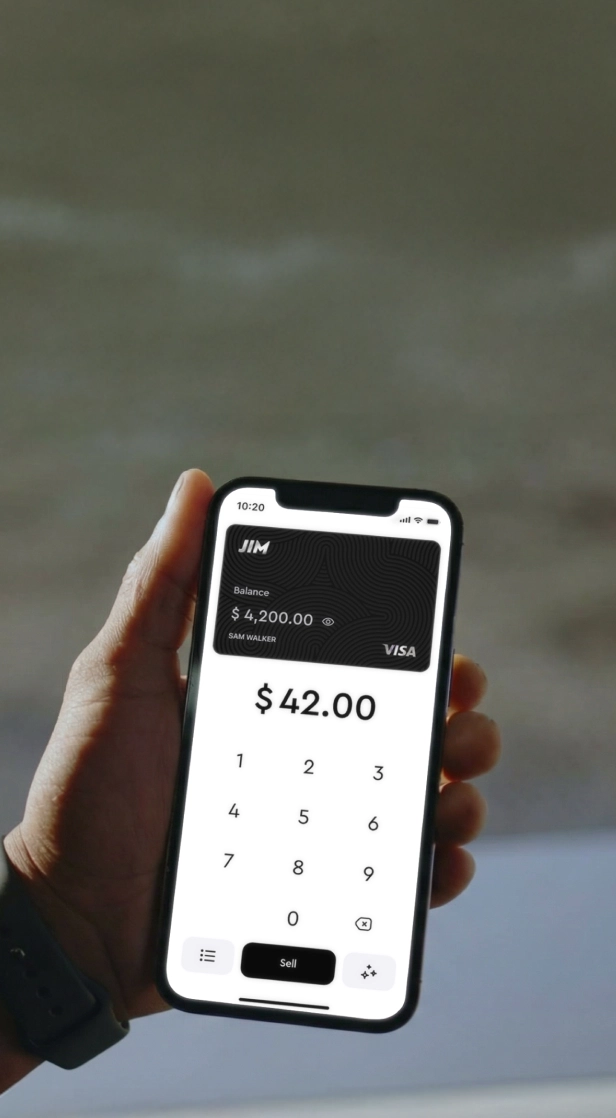
JIM offers car rental agency owners a straightforward solution to process payments. The JIM tap-to-pay app converts your iPhone or Android phone into a payment terminal with NFC technology, which removes the need for extra hardware. You pay a flat 1.99% per transaction with no setup costs, monthly fees, or variable rates for premium cards. You can also use payment links (to take a security deposit before a customer arrives) for 4.99% + $0.30 per sale.
Your funds become available instantly on a JIM Visa Prepaid Card. You can add this card to Apple Pay or Google Pay for immediate use. This direct access to your revenue lets you cover operational expenses without delay.
.avif)