MCC 5085 is a merchant category code used to classify industrial supplies not elsewhere classified (NEC) by the International Organization for Standardization (ISO). This code applies to businesses that sell a variety of industrial materials and equipment. Transactions under this category could include the sale of items like abrasives, mechanical sponges, technical equipment, and safety gear. It covers suppliers whose primary business does not fit into a more specific industrial category.
Which businesses fall under MCC 5085?
MCC 5085 applies to a broad range of industrial supply establishments:
- General MRO suppliers: These businesses provide a wide array of maintenance, repair, and operations products. They serve various industries with items from tools and hardware to safety equipment, with examples like Grainger and MSC Industrial Supply Co.
- Fastener and industrial vending suppliers: This category includes companies that specialize in fasteners like nuts and bolts, often through industrial vending solutions. Fastenal is a prominent example of a business in this space.
- Shipping and packaging materials suppliers: Businesses in this group sell materials for packing and shipping, such as boxes, tape, and bubble wrap. Uline is a well-known company that operates under this classification.
- Safety equipment distributors: These suppliers focus on personal protective equipment and workplace safety gear. Major MRO suppliers like Grainger often have extensive safety product lines that fall into this category.
- Janitorial and sanitation suppliers: This includes wholesalers of cleaning chemicals, paper products, and commercial cleaning equipment. Companies like SupplyWorks or local janitorial supply houses fit this description.
- Welding equipment and industrial gas suppliers: Companies that provide welding machinery, accessories, and industrial gases use this code. Airgas, an Air Liquide company, is a primary example in this specialized market.
- Abrasives and finishing product suppliers: This niche covers sellers of abrasives like sandpaper, grinding wheels, and polishing compounds. Distributors for major manufacturers like 3M would fall under this MCC code.
Business implications of MCC 5085
Payment networks including Visa, Mastercard, American Express, and Discover use MCC 5085 to categorize transactions, which affects several aspects of business operations. These networks assess a business's risk level based on its MCC. For MCC 5085, which covers B2B sales, the risk is generally considered moderate, influencing the interchange rates charged for transactions.
Beyond risk assessment and pricing, the MCC code serves other operational functions. It helps with expense management and financial analysis, providing a standardized way to classify business expenditures.
Expense tracking
Companies use MCC codes to automatically categorize purchases on credit card statements. This simplifies expense reporting for industrial supplies. The clear classification also helps businesses identify and substantiate tax-deductible purchases, which streamlines financial records and compliance.
Financial analysis
Businesses analyze spending patterns through MCC data to better understand their expenditures. Tracking costs under MCC 5085 allows for more accurate expense forecasting, budget management, and identification of potential savings with specific industrial suppliers.
Compliance and auditing
Consistent application of MCC 5085 creates a clear audit trail. This standardized data simplifies the verification of business expenses, supporting internal controls and satisfying external auditor requirements for financial transparency.
Rewards and customer behavior
Credit card issuers often tie rewards programs to specific MCCs. Business customers may receive bonus points or cash back for purchases in industrial supply categories, which can influence their choice of supplier to maximize their benefits.
How to verify your business's MCC
Industrial supply business owners should confirm their MCC classification for proper transaction processing and to avoid customer confusion regarding rewards eligibility. If you find that your business is incorrectly classified, for example, an industrial supply distributor coded as a hardware store, contact your payment processor immediately to request reclassification.
Here's how to verify if your MCC classification is set up correctly:
- Contact Your Payment Processor: Your merchant services provider assigned the MCC code during account setup. To verify your classification, contact their customer service department or review the details in your original merchant agreement documents.
- Review Processing Statements: Your monthly merchant statements typically display the assigned MCC code. Look for the four-digit number in the account information or business profile details section of your statement to confirm the code.
- Check with Your Acquirer: The acquiring bank or financial institution that processes your transactions also maintains the MCC code in their system. Their merchant support team can confirm your business's current classification upon request.
- Test Transaction Method: Some merchants process a small test transaction on a personal credit card and then check how it appears on the statement. This method is less reliable than direct confirmation from your processor or acquirer.
How to choose a reliable payment service provider
Your MCC 5085 classification affects interchange rates and processing requirements. Since payment processors handle these transactions differently, your choice of provider matters. Variations in pricing, settlement speeds, and support have a cumulative effect on your business. Consider these factors when you select a payment service provider.
- Transparent pricing: Look for flat-rate pricing to avoid complex models that obscure the true cost per transaction. The JIM tap-to-pay app for iPhone and Android charges 1.99% per transaction with no setup costs, monthly fees, or premium card surcharges.
- Payment method support: Your processor should accept all major credit cards, like Visa, Mastercard, and Discover. To meet customer expectations, support for digital wallets like Apple Pay and Google Pay is also a standard requirement.
- Fast fund access: Quick access to funds improves cash flow for industrial suppliers. Instant settlements allow you to cover immediate expenses, such as restocking inventory, making supplier payments, or meeting payroll without delay.
- Security: A secure processor protects customer data with encryption and tokenization. Tokenization replaces sensitive card details with a unique identifier, so actual card numbers are never stored on your device or servers.
- Reporting: Detailed analytics help you understand sales trends and manage finances. For example, JIM's AI assistant provides sales reports and transaction history through a chat interface, which simplifies business analysis.
Streamline payments with JIM
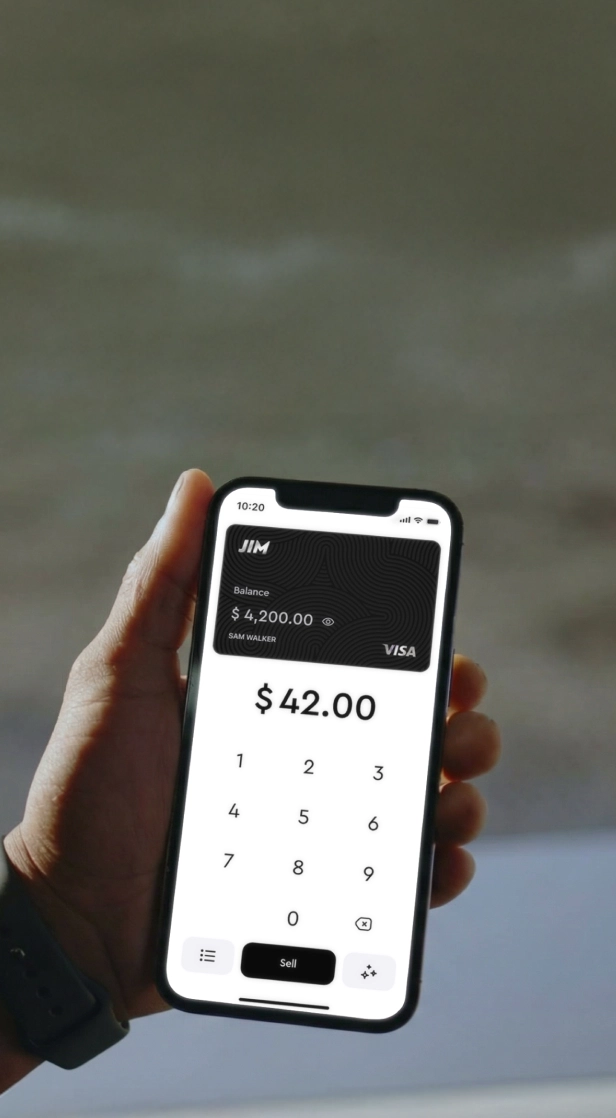
JIM offers industrial supply owners a straightforward payment processing solution. The JIM tap-to-pay app converts your iPhone or Android device into a mobile payment terminal with no extra hardware. It uses NFC technology to accept contactless payments directly on your phone. You pay a flat 1.99% per transaction. There are no setup costs, monthly fees, or variable rates for premium cards, which simplifies your payment expenses.
For remote transactions, you can create payment links for 4.99% + $0.30 per sale (to invoice for bulk purchases or take deposits). JIM provides instant access to your funds through the JIM Visa Prepaid Card. You can add this card to Apple Pay or Google Pay, so your revenue is available for immediate use. This quick fund availability helps you manage cash flow and cover operational costs without delay.
.avif)