The International Organization for Standardization (ISO) uses Merchant Category Code (MCC) 7278 to classify buying or shopping services clubs. This category covers businesses that offer members discounts on goods or services in return for a membership fee. These transactions often involve subscription models where consumers pay for access to special deals and benefits from a group of affiliated merchants.
Which businesses fall under MCC 7278?
MCC 7278 applies to a broad range of membership service establishments:
- Wholesale Clubs: These businesses offer bulk products at discounted prices to members who pay an annual fee. Well-known examples include Costco and Sam's Club, which operate large warehouse-style stores.
- Paid Loyalty Programs: Many retailers offer premium programs that provide special benefits like free shipping or exclusive access for a fee. Amazon Prime and the Barnes & Noble Premium Membership are prominent examples.
- Subscription Box Services: Companies in this category curate and deliver boxes of products to subscribers on a recurring schedule. Examples range from grooming products like Dollar Shave Club to lifestyle boxes like FabFitFun.
- Online Grocery Clubs: These e-commerce platforms provide members access to specialty or discounted groceries for a recurring subscription. Thrive Market, which focuses on organic and healthy foods, operates under this model.
- Travel Discount Clubs: These clubs provide members with exclusive access to discounted travel packages, flights, and accommodations for a membership fee. They cater to frequent travelers looking for special deals.
- Wine and Food Clubs: These services deliver curated selections of wine, gourmet foods, or meal kits directly to members. Companies like Winc and Goldbelly fall into this specialized shopping club category.
Business implications of MCC 7278
Payment networks including Visa, Mastercard, American Express, and Discover use MCC 7278 to categorize transactions, which affects several aspects of business operations. These networks use the MCC to deduce the risk level of a business. Since MCC 7278 often involves recurring billing, it can be associated with higher chargeback rates, potentially leading to higher interchange fees for merchants.
Beyond risk assessment and fee structures, this code influences other operational functions. It provides a standardized way to classify transactions for both internal and external purposes, which has further implications for financial management and customer relations.
Expense tracking
Companies use MCC codes to automatically sort business purchases on credit card statements. This simplifies expense management by grouping all shopping club fees under one category, which can help identify eligible business-related tax deductions more easily.
Financial analysis
Businesses analyze spending patterns through MCC data to better understand their expenditures. Tracking costs associated with MCC 7278 allows finance teams to forecast future subscription expenses, manage departmental budgets, and identify opportunities for cost savings on memberships.
Compliance and auditing
The consistent application of MCC 7278 creates a clear audit trail. This standardized data helps companies verify expenses, confirm policy compliance, and provide documentation during internal or external audits.
Rewards and customer behavior
Credit card issuers use MCCs to determine rewards eligibility. A transaction under MCC 7278 might earn bonus points in a "shopping" category, which can influence a customer's decision to use a particular card or subscribe to a service.
How to verify your business's MCC
Shopping club owners should confirm their MCC classification to ensure proper transaction processing and avoid customer confusion regarding rewards eligibility. If you find out that your business is incorrectly classified, for example, a wholesale club coded as a grocery store, contact your payment processor immediately to request reclassification.
Here's how to verify is your MCC classification is set up correctly:
- Contact Your Payment Processor: Your merchant services provider assigned the MCC code during account setup. To verify your classification, contact their customer service department or review the details outlined in your original merchant agreement documents.
- Review Processing Statements: Your monthly merchant statements typically display the assigned MCC code. Look for a four-digit number listed in the account information or business profile details section to confirm your current code.
- Check with Your Acquirer: The acquiring bank or financial institution that processes your transactions maintains the MCC code in their system. You can call their merchant support team, and they can confirm your current classification over the phone.
- Test Transaction Method: Some merchants process a small test transaction on a personal credit card. They then check the statement to see how the purchase appears. This method is less reliable than direct confirmation from your processor.
How to choose a reliable payment service provider
Your MCC 7278 classification influences interchange rates and processing requirements. Payment processors handle this category differently, with variations in pricing, settlement speed, and support that affect your bottom line. Consider these factors when you select a provider to manage your transactions effectively.
- Transparent pricing: A simple, flat-rate structure avoids complex models that obscure the true cost. The JIM tap-to-pay app for iPhone and Android charges 1.99% per transaction with no setup costs, monthly fees, or premium card surcharges.
- Payment method support: Your processor should accept major cards like Visa, Mastercard, and Discover, plus digital wallets such as Apple Pay and Google Pay, to meet customer expectations.
- Fast fund access: Quick access to funds is necessary for healthy cash flow. It allows you to cover immediate expenses common for MCC 7278 businesses, like restocking inventory, paying suppliers, and meeting payroll.
- Security: A secure processor uses tokenization and encryption to protect data. Tokenization replaces sensitive card numbers with a unique code, so they are never stored on your device, which reduces your liability.
- Reporting: Modern processors offer advanced analytics. For example, JIM's AI assistant provides sales reports and transaction history through a chat interface to help you track performance.
Streamline payments with JIM
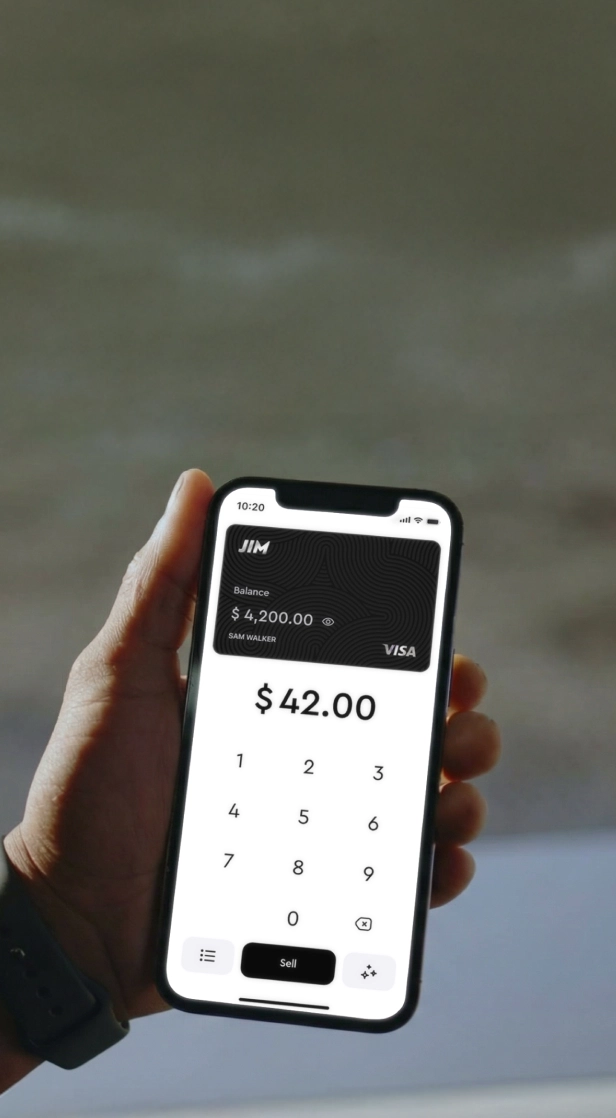
JIM offers shopping club owners a straightforward payment solution. The JIM tap-to-pay app turns your iPhone or Android phone into a payment terminal with NFC technology, so you require no extra hardware. You pay a flat 1.99% per transaction. This rate comes with no setup costs, monthly fees, or variable rates for premium cards, which gives you predictable expenses.
You can also create payment links for remote sales at 4.99% + $0.30 per sale (ideal for online membership fees). After a transaction, your funds become available instantly on a JIM Visa Prepaid Card. You can add this card to Apple Pay or Google Pay for immediate use. This instant availability of funds helps you manage your cash flow effectively.
.avif)