MCC 5137 is a code the International Organization for Standardization (ISO) uses to classify businesses that sell men's, women's, and children's uniforms. This category applies to merchants whose primary business is the wholesale distribution of commercial clothing and uniforms. Transactions for workwear, school uniforms, or other specialized professional apparel will be categorized under this code when processed by these suppliers.
Which businesses fall under MCC 5137?
MCC 5137 applies to a broad range of commercial apparel establishments:
- School uniform distributors: These businesses contract with educational institutions to supply standardized apparel for students. Companies like French Toast or Lands' End School Uniforms operate within this classification.
- Medical uniform wholesalers: This includes suppliers of scrubs, lab coats, and other healthcare garments to hospitals, clinics, and private practices. Many local and national medical supply companies fall into this category.
- Corporate apparel suppliers: These merchants provide branded clothing and uniforms for businesses across various industries. Large-scale providers such as Cintas and Aramark are prime examples of this business type.
- Hospitality uniform providers: This category covers suppliers of specialized attire for hotels, restaurants, and food service staff. Businesses like Chef Works equip culinary and front-of-house teams with professional garments.
- Industrial workwear suppliers: These companies distribute durable and protective clothing for trades like construction and manufacturing. Brands such as Red Kap and Carhartt's business-to-business division serve this market.
- Public safety uniform wholesalers: These are specialized suppliers that provide uniforms and gear for police, fire, and EMS departments. Companies like Galls are a common example in this sector.
Business implications of MCC 5137
Payment networks including Visa, Mastercard, American Express, and Discover use MCC 5137 to categorize transactions, which affects several aspects of business operations. These networks evaluate the risk profile of a business based on its MCC. For uniform suppliers under MCC 5137, this classification influences the interchange rates charged for processing credit card payments.
Because these transactions are often business-to-business, they may have different risk factors and interchange fee structures compared to direct-to-consumer sales. Beyond risk assessment, the MCC code also serves other functions in financial management and reporting.
Expense tracking
Companies use MCC 5137 to automate the categorization of uniform and workwear purchases on their credit card statements. This simplifies expense management by automatically sorting these expenditures, which can support accurate accounting and potential tax deductions for business-related apparel.
Financial analysis
Businesses analyze spending data associated with MCC 5137 to identify patterns and control costs. This information allows finance teams to track departmental uniform expenses, forecast future apparel needs, and manage budgets more effectively by understanding where money is spent.
Compliance and auditing
The consistent application of MCC 5137 creates a clear audit trail for business expenses. This helps companies verify that uniform purchases are legitimate business expenditures, which supports internal controls and simplifies external audits.
Rewards and customer behavior
Credit card issuers may offer special rewards for purchases in specific business-related categories. MCC 5137 can make transactions eligible for these promotions, potentially influencing a company's choice of supplier to maximize its card benefits on corporate accounts.
How to verify your business's MCC
Uniform supplier owners should confirm their MCC classification for proper transaction processing and to avoid customer confusion about rewards eligibility. If you discover your business is incorrectly classified, for example, a uniform supplier coded as a general apparel retailer, contact your payment processor immediately to request reclassification.
Here's how to verify if your MCC classification is set up correctly:
- Contact Your Payment Processor: Your merchant services provider assigned the MCC code during account setup. To verify your classification, contact their customer service department or review the details outlined in your original merchant agreement documents.
- Review Processing Statements: Your monthly merchant statements typically display the assigned MCC code. Look for a four-digit number located in the account information or business profile details section of the document to find your current classification.
- Check with Your Acquirer: The acquiring bank or financial institution that processes your transactions maintains the MCC code in their system. Their merchant support team can confirm your current classification upon request and provide additional details about your account setup.
- Test Transaction Method: Some merchants process a small test transaction on a personal credit card and then check how the purchase appears on the statement. This method is less reliable than direct confirmation from your processor and may not always show the code.
How to choose a reliable payment service provider
Your MCC 5137 classification directly affects interchange rates and processing requirements, making your choice of payment processor a major business decision. Providers handle these B2B transactions differently, with variations in pricing models, settlement speeds, and support that can impact your bottom line. Consider these factors when selecting a partner.
- Transparent pricing: Flat-rate pricing models offer predictability over complex interchange-plus or tiered structures that can hide fees. The JIM tap-to-pay app for iPhone and Android charges 1.99% per transaction with no setup costs, monthly fees, or premium card surcharges.
- Payment method support: To meet modern customer expectations, your processor should accept all major credit cards like Visa, Mastercard, and Discover, along with popular digital wallets such as Apple Pay and Google Pay.
- Fast fund access: Instant access to funds is important for uniform suppliers who need consistent cash flow. Quick settlements allow you to restock inventory, cover supplier payments, and manage payroll without delays.
- Security: Top processors protect customer data with methods like encryption and tokenization. JIM uses tokenization for every transaction, so card numbers are never stored on your device.
- Reporting: Look for a provider that offers clear, accessible analytics. JIM’s AI assistant provides sales reports and transaction history through a simple chat interface, which helps with business analysis.
Streamline payments with JIM
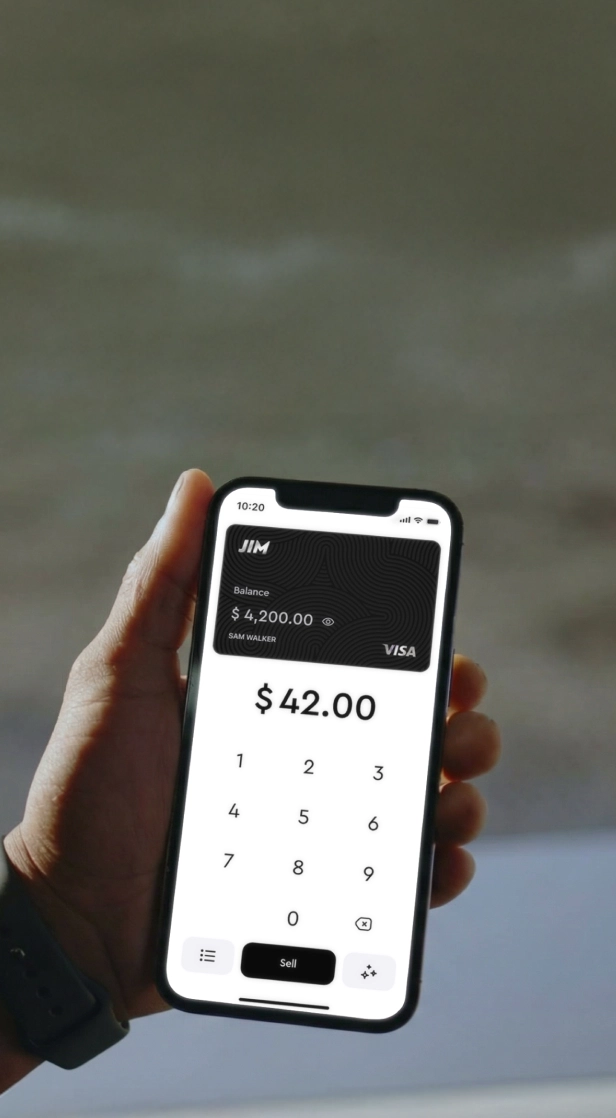
JIM offers uniform supplier owners a straightforward payment processing solution. The JIM tap-to-pay app transforms your iPhone or Android device into a payment terminal with no extra hardware. It uses NFC technology to accept payments directly on your phone. You pay a flat 1.99% per transaction. There are no setup costs, monthly fees, or variable rates for premium cards, so your expenses remain predictable.
For remote transactions, you can create payment links for 4.99% + $0.30 per sale (ideal for invoices to schools or corporate clients). After a sale, funds become available instantly on your JIM Visa Prepaid Card. You can add this card to Apple Pay or Google Pay, which allows you to use your money right away for business purchases.
.avif)