MCC 1711 is a classification used by the International Organization for Standardization (ISO) to categorize A/C, heating, or plumbing contractors for sales and installation. This code applies to businesses that sell and set up these systems for both homes and commercial buildings. It covers transactions for new unit installations and system replacements, distinguishing these contractors from businesses that only offer repair services.
Which businesses fall under MCC 1711?
MCC 1711 applies to a broad range of HVAC and plumbing establishments:
- Heating and air conditioning contractors: These businesses sell and install climate control systems like furnaces and central air units. Local authorized dealers for brands like Carrier or Trane are common examples of this business type.
- Plumbing contractors: This category covers companies that install new pipes, fixtures, and drainage systems for buildings. They often work on new construction projects or handle major home renovations and system replacements.
- Ventilation system installers: These specialists focus on the sale and installation of ductwork and air circulation systems. Their work improves indoor air quality in both residential and commercial settings.
- Water heater sales and installation: Businesses in this niche sell and set up new water heating units, including both tank and tankless models. Many local plumbers offer this specialized service for brands like Rheem or A. O. Smith.
- Boiler installation and service: These contractors specialize in selling and installing boilers for hydronic heating systems. They frequently work in regions with older housing stock or on large commercial properties.
- Geothermal system installers: A more specialized field, these companies install ground-source heat pumps for heating and cooling. This approach provides an alternative to traditional HVAC systems by using the earth's stable temperature.
Business implications of MCC 1711
Payment networks including Visa, Mastercard, American Express, and Discover use MCC 1711 to categorize transactions, which affects several aspects of business operations. These networks use the code to deduce the risk level associated with a business. For contractors under MCC 1711, this classification can influence interchange rates, as higher-risk industries sometimes face higher fees due to increased chargeback potential from large project costs.
Beyond risk assessment, the MCC code informs other operational functions. It helps with expense management, financial planning, and even customer purchasing habits. These factors demonstrate how a simple four-digit code extends beyond payment processing to shape business strategy.
Expense tracking
Companies use MCC 1711 to automatically sort business expenses on credit card statements. This simplifies bookkeeping and helps identify tax-deductible purchases for equipment or materials, which streamlines the process of filing accurate returns for contractors and related businesses.
Financial analysis
Businesses analyze spending patterns through MCC data to better understand their expenditures. This information allows contractors to track project costs with greater precision, forecast future expenses more accurately, and develop more effective budgets for upcoming jobs or fiscal periods.
Compliance and auditing
Consistent application of MCC 1711 creates a clear audit trail for financial reviews. This standardized categorization allows for straightforward verification of business expenses, which supports internal controls and simplifies external audits.
Rewards and customer behavior
MCC coding determines eligibility for credit card rewards, such as extra points on home improvement spending. Customers may choose a contractor based on whether the purchase qualifies for their card’s bonus categories, influencing their selection of one business over another.
How to verify your business's MCC
HVAC and plumbing contractor owners should confirm their MCC classification for proper transaction processing and to avoid customer confusion regarding rewards eligibility. If you find out that your business is incorrectly classified—for example, a plumbing contractor coded as a repair service—contact your payment processor immediately to request reclassification.
Here's how to verify if your MCC classification is set up correctly:
- Contact Your Payment Processor: Your merchant services provider assigned the MCC code when you opened your account. To confirm your classification, you can contact their customer service department or review the details outlined in your original merchant agreement documents.
- Review Processing Statements: Monthly merchant statements typically display the assigned MCC code for your business. Look for a four-digit number, often located in the account information or business profile section of the document, to find your current classification.
- Check with Your Acquirer: The acquiring bank or financial institution that processes your transactions also maintains your MCC code in their system. You can reach out to their merchant support team, and they can confirm the classification currently on file for your account.
- Test Transaction Method: Some merchants run a small test transaction on a personal credit card and then check how the purchase appears on the statement. This method is less reliable than direct confirmation from your processor, as statement details can sometimes be generic.
How to choose a reliable payment service provider
Since MCC 1711 affects interchange rates, your choice of payment processor matters. Providers handle contractor transactions differently, with variations in pricing, settlement speed, and support that compound over time. Consider these factors when you select a payment service for your business.
- Transparent pricing: Look for flat-rate pricing to avoid complex models that obscure the true cost per transaction. The JIM tap-to-pay app for iPhone and Android charges 1.99% per transaction with no setup costs, monthly fees, or premium card surcharges.
- Payment method support: A good processor accepts all major credit cards and digital wallets like Apple Pay and Google Pay. This flexibility meets modern customer expectations and simplifies the payment experience.
- Fast fund access: Quick access to funds improves cash flow. Instant settlements allow you to cover immediate costs like payroll, supplier payments, and inventory without delay, which keeps projects on schedule.
- Security: A secure processor uses tokenization and encryption to protect customer data. Tokenization replaces sensitive card numbers with a unique code for each transaction, so the original data is never stored on your device.
- Business insights: Modern processors offer more than payment acceptance. JIM's AI assistant provides sales reports and transaction history through a chat interface, which helps you track performance and make informed decisions.
Streamline payments with JIM
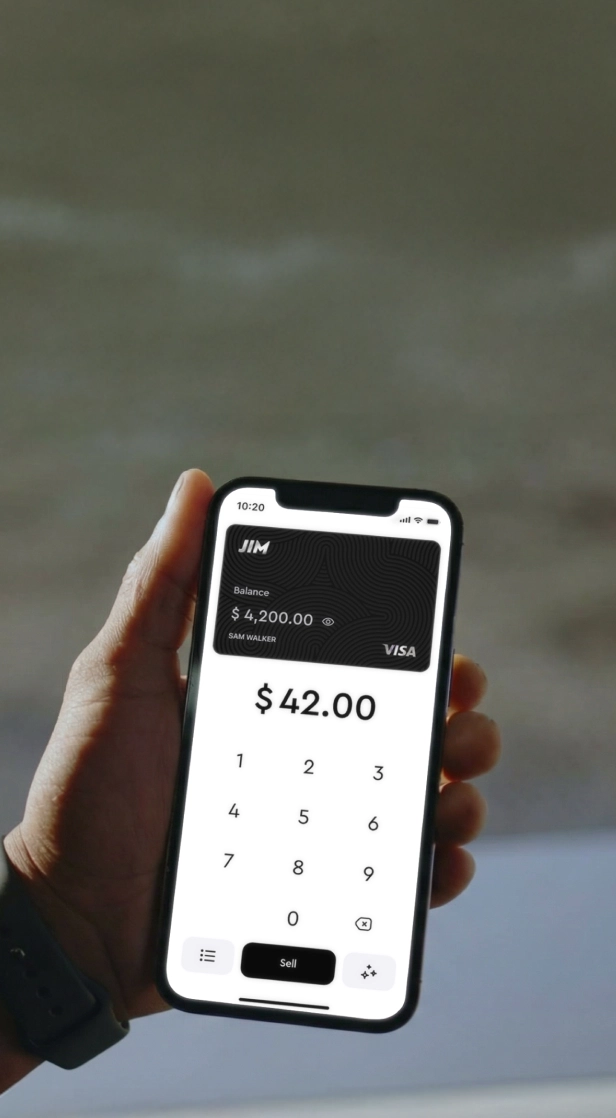
JIM offers HVAC and plumbing contractor owners a straightforward payment processing solution. The JIM tap-to-pay app transforms your iPhone or Android into a payment terminal with NFC technology, so you can accept payments on-site without extra hardware. Pricing is a flat 1.99% per transaction, with no setup costs, monthly fees, or variable rates for premium cards.
You can also use link payments (to collect deposits before a job starts), which cost 4.99% + $0.30 per sale. Your funds become available instantly on a JIM Visa Prepaid Card. You can add this card to Apple Pay or Google Pay for immediate use, which helps you manage cash flow and cover business expenses without delay.
.avif)