Payment methods: A complete guide for small business owners

See article summary
- Payment methods are the ways customers transfer money to your business, from cash to cards to digital wallets.
- Cards cost 1.5% to 3.5% per transaction; ACH runs $0.25 to $1.00; cash carries hidden handling costs.
- Accept cards, digital wallets, and contactless payments as a baseline, then add methods based on demand.
- Match payment methods to how you sell: in-person, online, mobile, or B2B.
- JIM accepts cards and contactless payments at a flat 1.99% fee with instant fund access.
You are setting up your online store, and the checkout screen presents a wall of options: credit cards, debit cards, Apple Pay, Google Pay, PayPal, buy now pay later, and ACH transfers. Your food truck needs to accept payments at the farmers' market this weekend. Your salon client wants to split a $200 service between two cards. Each scenario demands different payment methods, and the wrong choices cost you sales or eat into your margins.
Why Your Payment Method Strategy Matters
The payment methods you accept directly affect your bottom line. A customer who reaches checkout and does not see their preferred way to pay will often abandon the purchase entirely. According to the Baymard Institute's cart abandonment rate benchmark, the average documented online cart abandonment rate sits at 70.19%, with limited payment options cited as a top contributing factor.
Your payment method choices also shape customer perception of your business. Customers want to tap their phone at your counter, split payments online, or use buy now pay later for larger purchases. Meeting those expectations builds trust and encourages repeat business. When you accept credit card payments alongside digital wallets and contactless options, you remove the barriers that cost you sales.
Accepting multiple payment methods has become simpler. Solutions consolidate card payments, digital wallets, and contactless transactions into a single platform, often with minimal setup and predictable fees.
What Are Payment Methods?
Payment methods are the ways customers transfer money to your business in exchange for goods or services. When someone buys a coffee from your shop, books an appointment at your salon, or orders a product from your website, they need a way to pay you. That mechanism is a payment method.
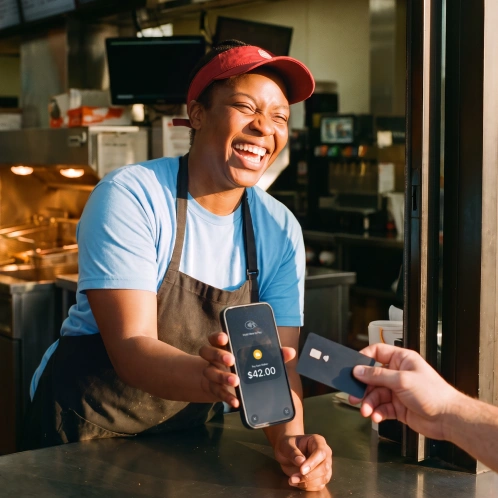
The concept spans everything from physical cash exchanged across a counter to a digital wallet transaction completed through a smartphone. A food truck accepting a tap from an Apple Watch uses a different payment method than an online store processing a credit card through a checkout page, but both accomplish the same goal: completing a sale.
Traditional payment methods include cash, checks, and money orders. Modern payment methods encompass credit and debit cards, digital wallets, bank transfers, and emerging options like cryptocurrency. Most businesses today need a mix of both traditional and digital payment methods to serve their full customer base.
What Are the Different Payment Methods?
The main payment methods are cash, cards, digital wallets, bank transfers and ACH, and buy now pay later. Each category works differently at the counter and carries different costs. The breakdown below covers the most common payment methods small businesses encounter today, from traditional options to newer digital and mobile-first ways to get paid.
Traditional Payment Methods
Cash remains the most straightforward payment method. No processing fees, no chargebacks, and immediate access to funds. The downsides include security risks, the need to make change, and the inability to accept cash for online purchases or remote transactions.
Checks still have a place in B2B transactions and certain service industries. They carry a risk of bouncing, require manual deposit, and can take several business days to clear. For most consumer-facing businesses, check acceptance has declined significantly.
Money orders function like prepaid checks and are sometimes used when buyers lack bank accounts. They are uncommon in retail but appear in specific situations like rent payments or large purchases where the buyer prefers not to use cash.
Card-Based Payment Methods
Credit cards from networks like Visa, Mastercard, American Express, and Discover represent the backbone of modern commerce. They offer fraud protection for cardholders, rewards programs, and widespread acceptance. For businesses, credit card processing means fees typically ranging from 1.5% to 3.5% per transaction, set by the card networks' interchange schedules. Source: Visa interchange rates and fees.
Debit cards pull funds directly from a customer's bank account. Processing fees are often lower than credit cards, and settlement can be faster. Customers may prefer debit cards to avoid credit card debt or because their bank account balance is more accessible.
Prepaid cards work like debit cards but are not linked to a bank account. Gift cards fall into this category. They are popular for budgeting, gifts, and situations where customers lack traditional banking relationships.
Digital Payment Methods
Digital wallets like Apple Pay, Google Pay, and Samsung Pay store card information on smartphones and wearables. Customers authenticate with biometrics or a PIN, then tap their device to pay. These wallets offer speed, convenience, and an added layer of security through tokenization, which replaces card numbers with unique codes during transactions.
Mobile payment apps such as Venmo, PayPal, and Cash App enable peer-to-peer transfers that some businesses now accept. They are popular with younger demographics and useful for informal transactions.
Contactless and tap-to-pay methods use NFC (near-field communication) technology to complete transactions with a simple tap. Whether the customer uses a contactless card or a digital wallet, the process is fast and reduces physical contact at checkout. Understanding how tap to pay works helps you evaluate whether it fits your business.
QR code payments allow customers to scan a code with their phone to initiate payment. This method gained popularity in Asia and saw increased adoption globally during the pandemic. It works well for mobile businesses and situations where traditional POS hardware is impractical.
Online Payment Methods
Payment gateways process online transactions by securely transmitting payment information between your website and the payment processor. They handle the technical complexity of accepting credit card payments online.
Buy now, pay later (BNPL) services like Afterpay and Klarna let customers split purchases into installments. For merchants, BNPL can increase average order value and conversion rates, though fees are typically higher than standard card processing.
Bank transfers and ACH move money directly between bank accounts. ACH transfers are common for recurring billing, subscription services, and B2B payments. They have lower fees than cards but take one to three business days to settle.
Cryptocurrency acceptance remains niche for most small businesses. Volatility, technical complexity, and limited customer demand make it a lower priority for most merchants, though some industries see higher demand.
Payment Methods for Different Business Contexts
The right payment setup depends on how and where you sell. A brick-and-mortar shop, an online store, and a mobile business each face different constraints around speed, hardware, connectivity, and cash flow.
In-Person Payment Methods
Physical retail and service businesses need to accept payments face-to-face. Cash remains an option, though handling it requires security measures, bank deposits, and the ability to make change.
Traditional point of sale (POS) terminals and card readers process chip and contactless cards. These range from basic card readers that connect to your phone to full POS systems with inventory management and receipt printing.
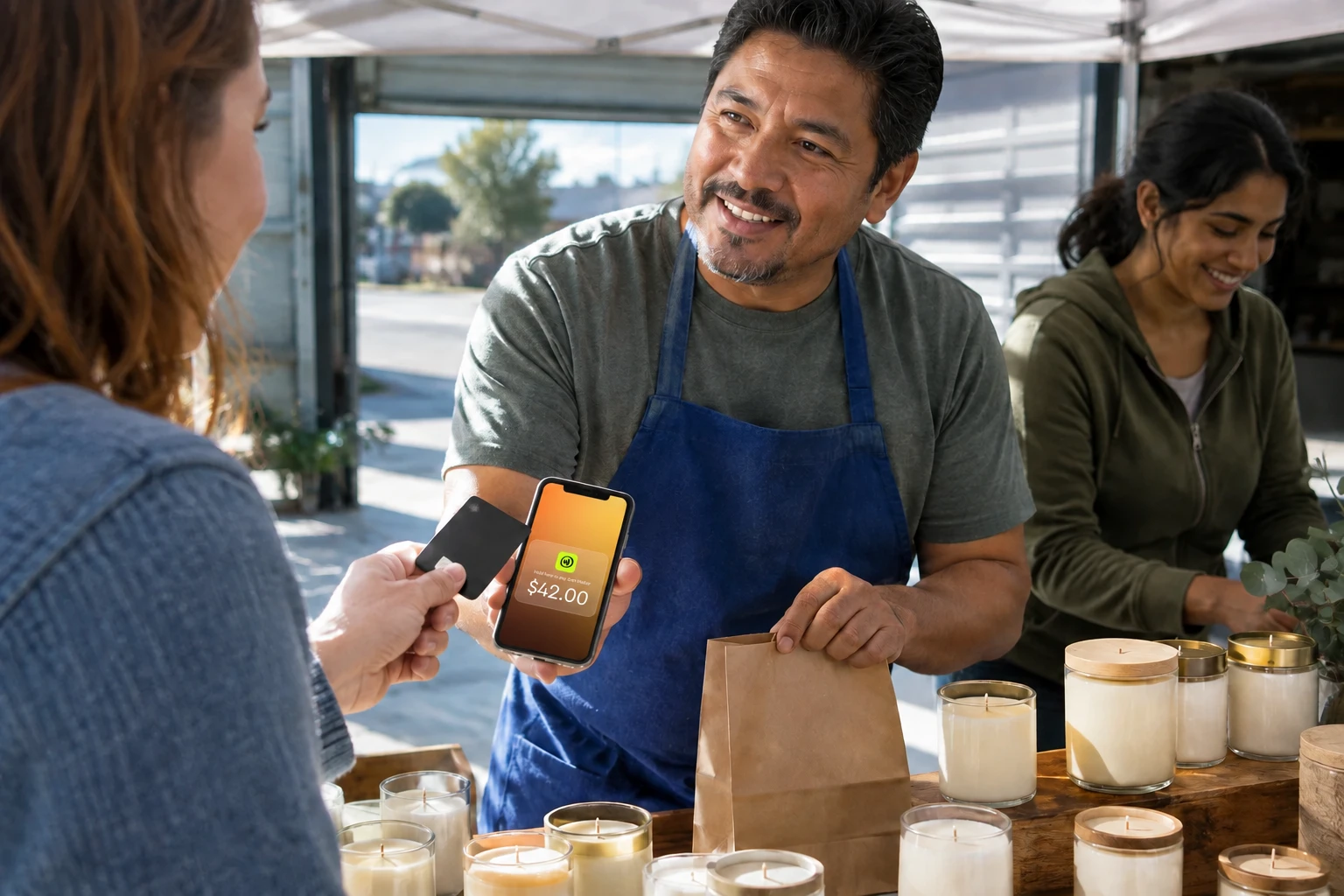
Tap to Pay on smartphone solutions eliminate the need for separate hardware. Using NFC technology built into modern phones, these apps accept contactless cards and digital wallets directly. This approach works particularly well for mobile businesses, delivery drivers, and service providers who visit customer locations.
Digital wallet acceptance at point of sale is increasingly expected by customers. According to the 2025 Federal Reserve Diary of Consumer Payment Choice, credit card usage, remote payments, and payments made with mobile devices all increased in 2024, driving overall payment volume growth.
Online Payment Methods
E-commerce requires payment gateway integration to process cards and digital payments securely. Your gateway handles the encryption, authorization, and settlement of online transactions.
Guest checkout versus saved preferred payment methods affects conversion rates. Forcing account creation drives some customers away, while saved payment methods enable faster repeat purchases. The right balance depends on your business model and customer expectations.
One-click payment options through digital wallets or stored card details reduce friction for repeat customers. The fewer steps between "add to cart" and "order complete," the more likely customers are to finish their purchase.
Security requirements for online payment methods include SSL certificates, PCI compliance, and fraud detection tools. These protect both your customers and your business from data breaches and fraudulent transactions.
Mobile Business Payment Methods
Food trucks, farmers market vendors, and pop-up shops face unique challenges. They need portable solutions that work without reliable power or internet connections.
Phone-based payment acceptance addresses this need. Apps that turn smartphones into payment terminals offer mobility without the bulk of traditional POS equipment. Battery life, cellular connectivity, and ease of use become the key factors.
QR code payments provide an alternative for mobile businesses. Customers scan a code, enter the amount, and complete payment through their phone. This method requires no hardware on the merchant side and works well for low-volume transactions.
Understanding Payment Method Costs
Each payment method carries costs, though they vary significantly in structure and amount. The table below compares the main methods on typical fee, settlement time, and best use case.
| Method | Typical fee | Settlement time | Best for |
|---|---|---|---|
| Cash | No processing fee; hidden handling costs | Immediate | In-person, low-ticket sales |
| Credit and debit cards | 1.5% to 3.5% per transaction | 1 to 3 business days | Most retail and service sales |
| Digital wallets | Same rate as underlying card | 1 to 3 business days | Fast, contactless checkout |
| ACH transfer | $0.25 to $1.00 flat fee | 1 to 3 business days | Recurring billing, B2B, large payments |
| Bank wire transfer | $15 to $35 per transfer | Same business day | Urgent, high-value payments |
| BNPL | 2% to 8% of transaction value | Upfront to merchant | Higher-ticket online sales |
Cash has no processing fees but incurs costs for secure storage, bank deposits, and the risk of theft or counterfeit bills. Employee time spent counting and reconciling cash adds hidden labor costs.
Card payments typically cost 1.5% to 3.5% per transaction, depending on the card type, network, and your processing agreement. Premium rewards cards often carry higher interchange fees. Many processors add a per-transaction flat fee (often $0.10 to $0.30) on top of the percentage. Source: Visa interchange rates and fees.
Digital wallet transactions generally process at the same rates as the underlying card, though some processors offer lower rates for wallet payments due to reduced fraud risk.
ACH transfers cost significantly less per transaction than cards. A Nacha survey found the median cost of initiating and receiving an ACH payment to be between $0.26 and $0.50 per transaction. Source: Nacha ACH cost survey. Bank wire transfers are a different product: they cost $15 to $35 per outgoing domestic transfer and settle the same business day, making them suitable for urgent, high-value payments rather than routine transactions.
BNPL services charge merchants higher transaction fees than cards, typically 2% to 8% of the transaction value. The CFPB notes that merchants accept these higher fees because BNPL increases conversion rates and average order values. Source: CFPB Buy Now, Pay Later market report.
For comparison, JIM accepts credit and debit cards, Apple Pay, Google Pay, and other contactless payments at a flat 1.99% fee, which sits below the typical 1.5% to 3.5% card processing range once you factor in per-transaction add-ons from traditional processors.
Hidden fees to watch for include monthly minimums, PCI compliance fees, statement fees, batch processing fees, and early termination penalties. Always calculate the total cost of payment acceptance, not just the advertised per-transaction rate.
What Is the Best Payment Method?
The best payment method depends on your business type and how you sell. Here is a concrete recommendation per context:
- Food trucks and mobile vendors: Tap to Pay plus cash. No hardware, fast checkout, and you cover customers who still carry cash.
- Salons and service businesses: Cards and digital wallets, with BNPL for higher-ticket services. Split payment support handles multi-card clients.
- E-commerce stores: Card gateway, digital wallets, and BNPL. Offer guest checkout to avoid losing first-time buyers.
- B2B services: ACH transfers and card payments. ACH keeps costs low on large invoices; cards cover clients who prefer them.
For speed and convenience, contactless payments and digital wallets win. Transactions complete in seconds, reducing checkout lines and improving customer experience.
For low transaction costs, cash and ACH transfers keep more money in your pocket, though they are not appropriate for every sale or business type.
For customer preference, credit cards and digital wallets dominate. Most customers expect to pay with their preferred card or phone, and limiting options means losing sales.
For cash flow, instant settlement beats the traditional one-to-three business day wait. Immediate access to funds helps small businesses manage expenses and payroll.
The practical answer: accept multiple payment methods to cover the majority of customer preferences, then optimize based on actual usage data. If 80% of your customers pay with cards and digital wallets, focus your attention there.
Choosing Which Payment Methods to Accept
Start with the payment methods most customers already carry, then add options based on actual demand from your customers. Customer behavior, not industry trends, should drive your stack.
A brick-and-mortar shop, an online store, and a mobile business each face different constraints around speed, hardware, connectivity, and cash flow.
Card Payments and Chargebacks
Card payments offer broad acceptance and fast authorization, but they expose you to chargebacks. A chargeback occurs when a customer disputes a transaction with their bank, and the bank reverses the payment. To minimize chargebacks, use clear billing descriptors, deliver receipts, respond to disputes promptly, and maintain delivery records for online orders.
PCI Compliance Basics
Any business that accepts cards must meet PCI DSS (Payment Card Industry Data Security Standard) requirements. PCI compliance protects cardholder data and reduces your liability in a breach. Requirements scale with your transaction volume, but every merchant must complete an annual self-assessment questionnaire and maintain secure network configurations. Many processors charge a monthly PCI compliance fee, so ask whether it is included.
Handling Refunds
Refund flows matter as much as acceptance. Decide whether you issue refunds to the original payment method or offer store credit, and document the policy at checkout. Card refunds typically take three to five business days to reach the customer's account. ACH refunds can take longer. Plan your cash flow around the possibility of returns, especially during peak seasons.
International Payments
If you sell to customers outside the U.S., consider currency conversion fees, cross-border processing rates, and local payment preferences. International card transactions often carry an additional 1% to 2% cross-border fee on top of standard processing rates. Some markets prefer local payment methods over cards, so research your target region before expanding.
Switching Processors
If your current processor charges hidden fees or slow settlement, switching can improve your margins. Review your contract for early termination penalties, request a full fee schedule from any new provider, and compare the total cost, not just the headline rate. Test the new setup with a small batch of transactions before fully migrating.
For most small businesses, the baseline today includes:
- Credit and debit cards
- Digital wallets like Apple Pay and Google Pay
- Contactless payments for in-person sales
Beyond that baseline, additional payment methods for small businesses should be driven by actual customer demand and business needs. If clients regularly request ACH invoicing, it makes sense to add it. If higher-value purchases benefit from installments, BNPL can be useful. If a method is never requested, it likely does not need to be prioritized.
Customer demographics also play a role. Younger customers tend to favor mobile wallets, B2B clients often prefer bank transfers, and high-volume, low-ticket businesses benefit most from fast, contactless checkout. As your business changes, your payment setup should evolve with it.
How to Simplify How You Accept Payments
Choosing the right payment methods is ultimately about reducing friction for both you and your customers. The businesses that get this right focus on flexibility, predictable costs, and checkout experiences that do not slow sales down.
This is where JIM fits naturally into the picture. JIM lets you accept in-person payments directly on your iPhone using Tap to Pay, without additional hardware, monthly fees, or complex setup. You can take credit and debit cards, Apple Pay, Google Pay, and other contactless payments at a flat 1.99% fee, with instant access to funds on your JIM Visa Prepaid Card. You saw that traditional card processing runs 1.5% to 3.5% per transaction plus per-transaction add-ons. JIM's flat 1.99% rate, with no monthly fees and instant settlement, removes that unpredictability.
If accepting modern payment methods without added complexity matters to your business, JIM is worth considering. You can explore how it works and review pricing when you are ready.
Frequently Asked Questions
What are the four methods of payment?
What is the best payment method for a small business?
How do chargebacks work with card payments?
What is PCI compliance and does it apply to my business?
How long does it take to receive funds from different payment methods?


Sell and get paid in seconds with Jim