Small Business Ideas: 30 Low-Cost Ideas to Start Now
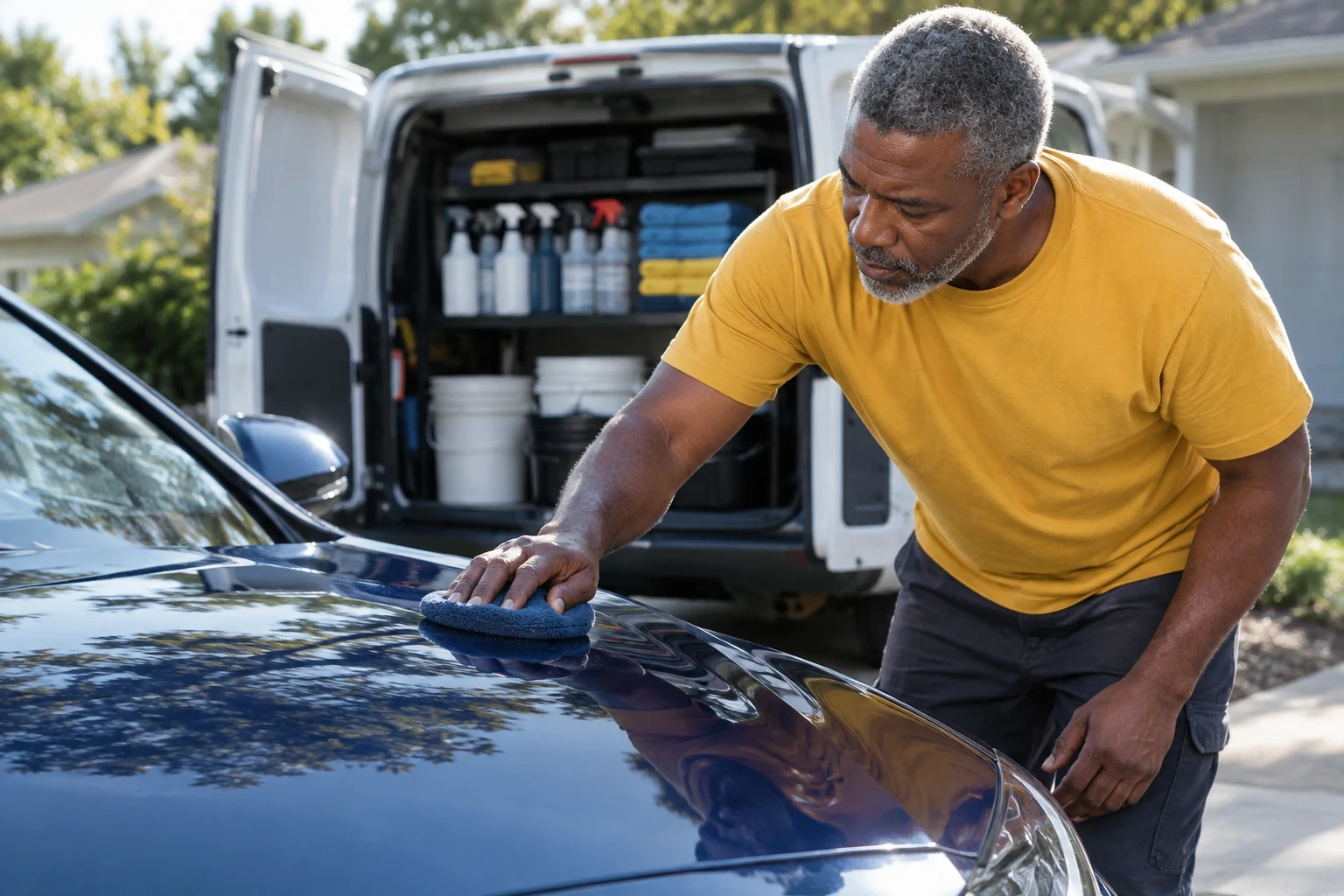
The best small business ideas for most people are services you can start with skills and tools you already have: cleaning, detailing, tutoring, baking. You don't need a storefront or a team. According to the SBA Office of Advocacy, 82.3% of the 36.2 million small businesses in the U.S. have no employees.
So the real question is which idea you can sell this month, by yourself, at a price that leaves money after supplies.
What makes a small business idea worth starting?
Pick an idea that passes four tests. Service businesses pass them more often than product businesses, so start there unless you already make something people buy.
Which service business ideas can you start this month?
These 10 services need little more than tools, a car and a phone. Most get paid in person right after the job, which keeps your cash flowing from week one.
| Idea | What you need | How you usually get paid |
|---|---|---|
| House cleaning | Cleaning supplies and a reliable car | In person after each visit |
| Mobile car detailing | Vacuum, pressure washer, detailing supplies | In person when the car is done |
| Lawn care | Mower, trimmer and a way to haul them | In person, weekly or monthly |
| Dog walking | Leashes, a pet first aid kit, insurance | Weekly packages by link |
| Trash can cleaning | Pressure washer, water tank, truck | Monthly plan by link |
| Clean-outs and junk hauling | Truck or trailer, dump fees | Upfront payment by link, rest on-site |
| Mobile mechanic | Tools, diagnostic scanner, certification | In person after the repair |
| Knife sharpening | Sharpening system, a market booth | In person, per knife |
| Solar panel cleaning | Water-fed pole, safety gear, insurance | In person or by link |
| Mobile massage | State massage license, portable table | In person at the session |
Licensed trades, like massage and some mechanic work, take longer to launch because of state requirements. If you want income in weeks, pick one of the unlicensed services at the top of the table.
What small business ideas can you start from home?
Home businesses trade travel time for production time: you make or manage something at your kitchen table and sell it at markets, online or to local businesses.
| Idea | Where you sell | Watch out for |
|---|---|---|
| Cookies and baked goods | Farmers markets, pop-ups, local orders | Your state's cottage food rules |
| Press-on nails | Social media, markets, your website | Sizing returns and photo quality |
| Gift baskets | Local businesses, holidays, events | Seasonal demand spikes |
| Stationery | Craft fairs, online, local shops | Printing costs per unit |
| Clothing resale | Pop-ups, online marketplaces | Sourcing time per item |
| Bookkeeping | Local small businesses, remote clients | Training and software subscriptions |
For product ideas, set your price from your real costs before your first market. The guide on how to price a product walks through the math.
What food business ideas work for beginners?
Start with food you can make at home under your state's cottage food law, then move up to a cart or truck once you have repeat buyers. Rules change by state. In Texas, for example, the Department of State Health Services says cottage food operators don't need a state license or permit, but they must complete a food handler course and label products as made in a private residence that is not subject to governmental licensing or inspection. Local examples, not nationwide rules: check your own state health department.
What are good small business ideas for teens?
Teens do best with ideas that sell to neighbors and fit around school. Ask a parent or guardian to set up the payment account and handle any permits.
| Idea | Why it works for teens |
|---|---|
| Lemonade stand | Low cost, teaches pricing and cash handling |
| Tutoring | Sells a skill you already have, like math or a language |
| Dog walking | Repeat weekly customers on your own street |
| Slime | Cheap ingredients, sells well online and at school events |
| Tie-dye shirts | Custom orders for teams, camps and clubs |
What business ideas work in a small town?
In a small town, go mobile or go rental. You can't wait for foot traffic, so bring the service to the customer or rent out something people need a few times a year.
| Idea | Who buys it |
|---|---|
| Bounce house rental | Birthday parties, churches, school fairs |
| Firewood delivery | Homeowners every fall and winter |
| Face painting | Festivals, parties, sports events |
| Trailer rental | Movers, landscapers, weekend projects |
| Estate sales | Families clearing a home |
Which small business ideas are the most profitable?
The most profitable ideas have a high price per job, low supply costs and customers who come back. Mobile services tend to win on all three. Suppose a mobile detailer charges $160 for a full detail and spends $20 on supplies:

At 15 jobs a week, that example leaves $2,052.30 before gas, insurance and taxes. If the same customer paid through an online payment link instead, the fee at 4.99% + $0.30 would be $8.28 rather than $3.18, so take payment in person when you're already on-site.
How do you choose the right small business idea?
Start from what you can sell now, not from what sounds exciting. If you have a skill people already pay for, sell that first. If not, pick between making a product at home and running a mobile service.

Then test it cheaply. Sell to five paying customers before you buy expensive equipment or sign a lease. The stakes are real: the SBA Office of Advocacy reports that 49.2% of new employer establishments survived five years, on average, from 1994 to 2022. Ideas you test small cost little if they don't work.
If you plan to keep your day job at first, the guide on how to start a side hustle business covers taxes and time management.
What do you need before your first sale?
Four steps get most small businesses ready to sell. You won't be alone: Americans filed 531,728 business applications in August 2026, according to the Census Bureau.
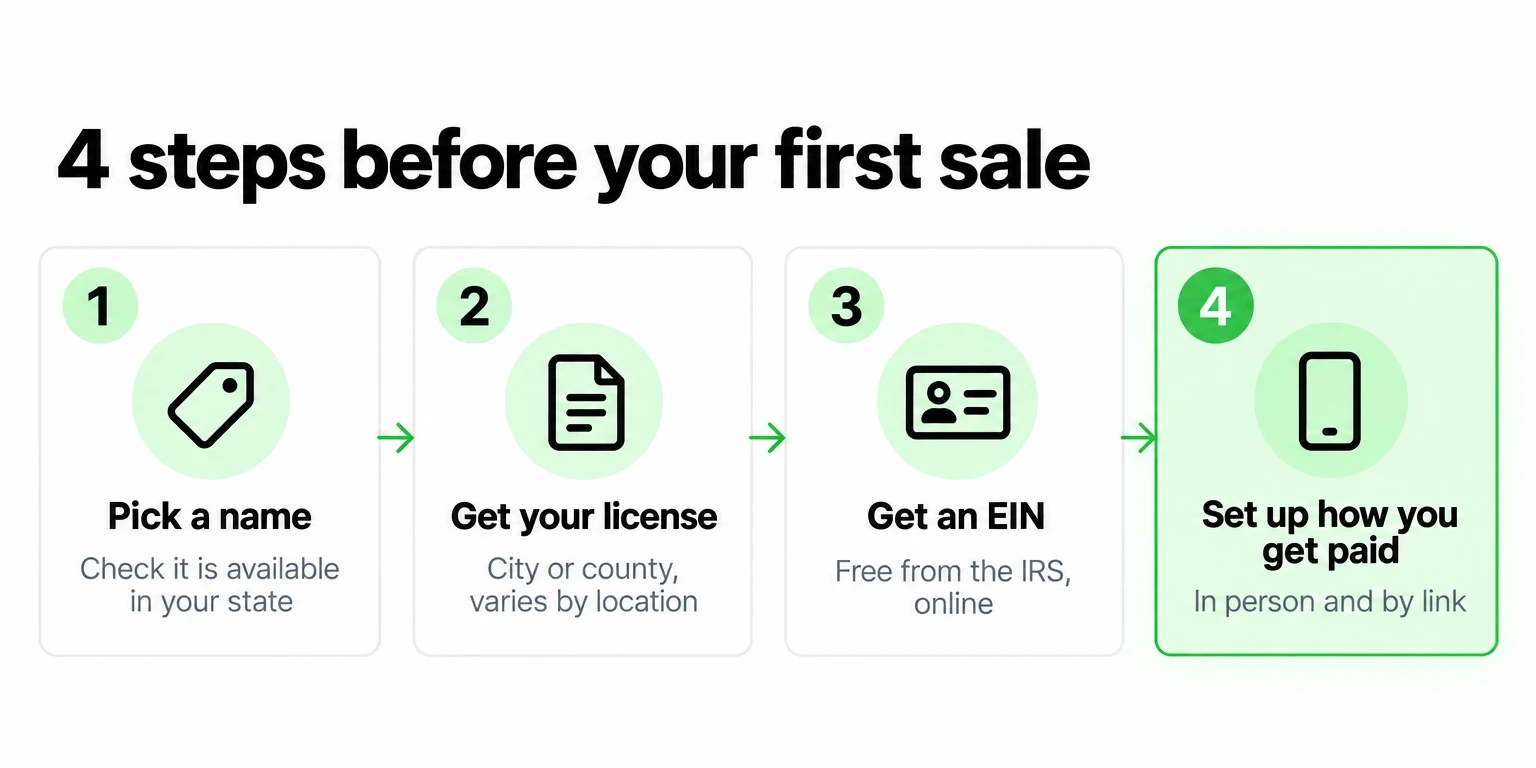
You don't need an LLC to start. Compare the options in LLC vs. sole proprietorship, and use the full checklist in how to start a small business when you're ready to make it official.
Remember the detailing example: $3.18 of a $160 job went to the card fee. JIM's Tap to Pay charges 1.99% per sale on your phone, with no monthly fee and no card reader to buy, and the money lands on your JIM Card right after the sale. For deposits and remote orders, a JIM payment link costs 4.99% + $0.30.



Sell and get paid in seconds with Jim