Street Vendor License: What You Need and How to Apply
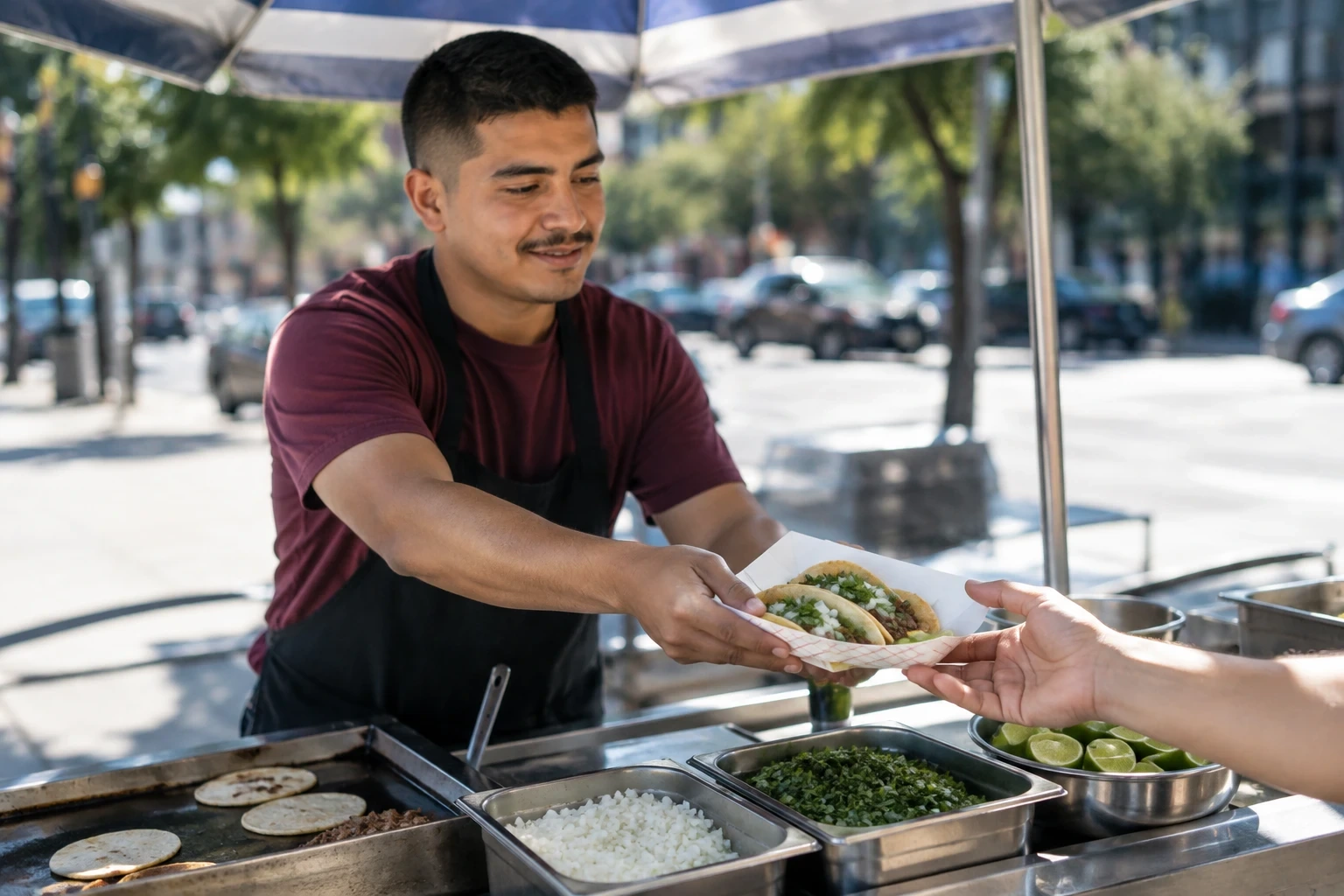
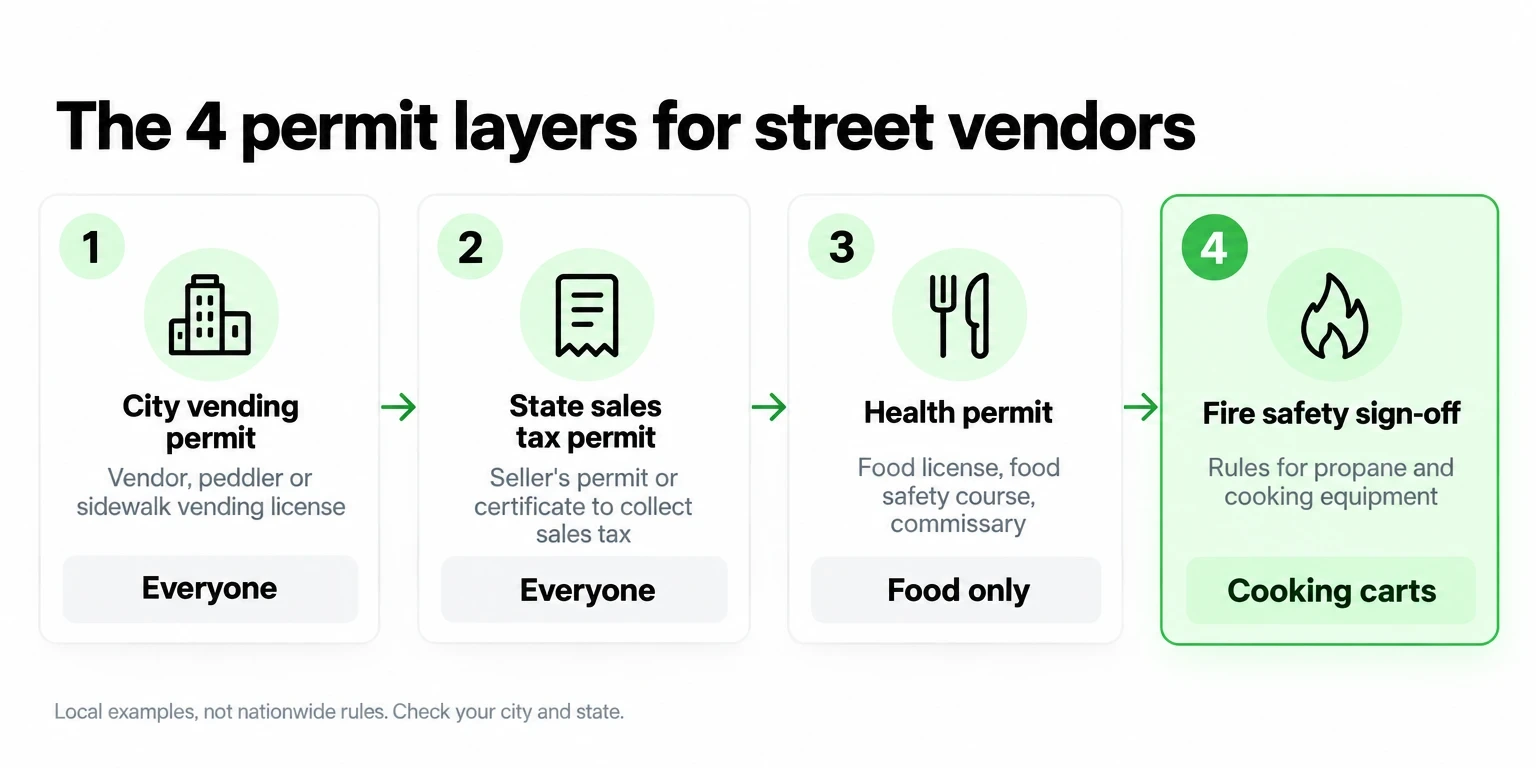
To sell on the street legally, you need a vending or peddler permit from your city, and in most places a state sales tax permit before that. Food adds a health permit, and a cart that cooks with propane adds fire safety rules.
The U.S. Small Business Administration (SBA) says the licenses you need depend on your business activities and location, so there is no single national street vendor license. Every city example here comes from an official page, read in September 2026.
Do you need a permit to sell on the street?
Yes, in every large city covered here. New York City requires a General Vendor license to sell goods or services in a public place that is not a store. Los Angeles requires a permit for anyone who sells food or merchandise on city sidewalks and in city parks.
A few products sit outside the general license. In New York City, books, newspapers, and artwork like paintings and photographs don't need a General Vendor license, and food goes through the Health Department instead. So your first question is what you sell, because that decides which office issues your permit.
What licenses does a street vendor need?
Count on two layers for everyone and up to two more for food. Each one comes from a different office, so start them at the same time:
How much does a street vendor license cost in major cities?
Expect anywhere from about $28 a year to $330 a year for the vending permit alone, before health or tax fees. Here is what each city posts on its official site:
| City | License | Issued by | Fee as posted |
|---|---|---|---|
| New York City | General Vendor license | Department of Consumer and Worker Protection | $50 to $250, set by when you file; free for eligible veterans |
| New York City | Mobile Food Vending License | NYC Health Department | $50 for two years, plus $53 for the food protection course |
| Los Angeles | Sidewalk and Park Vending Permit | StreetsLA (Bureau of Street Services) | $27.51 a year since July 28, 2024 |
| Chicago | Peddler License | Business Affairs and Consumer Protection | $100 for two years; $50 for seniors 65+, veterans, and people with disabilities |
| Chicago | Mobile Prepared Food Vendor | Business Affairs and Consumer Protection | $100 |
| Philadelphia | Sidewalk Sales License | Department of Licenses and Inspections | $330 per location each year |
Source: official city websites, accessed September 2026. The Los Angeles fee comes from a City Council District 4 release dated June 28, 2024, which cut the annual fee from $541. StreetsLA's own pages don't list the amount, so confirm it when you book your appointment.
If you plan to sell food from a cart, read the hot dog cart business guide for equipment and startup costs. A truck follows a separate path, covered in how to start a food truck.
Is there a cap or waitlist for street vendor licenses?
New York City has both, and it is the one to plan around. The city limits General Vendor licenses for non-veterans to 853, and that waiting list is closed. Relief is coming: under Local Law 54 of 2026, the city will add 10,500 General Vendor licenses starting January 15, 2027.
California works the other way. Senate Bill 946, the state's 2018 sidewalk vending law, bars cities from limiting the overall number of sidewalk vendors unless the limit ties to objective health, safety, or welfare concerns. If you vend in Los Angeles, the permit itself has no lottery. The Chicago and Philadelphia license pages don't mention a cap.
How do you apply for a street vendor license?
Get your state sales tax permit first, because the city application asks for it and it takes the longest. In New York, the city says to allow four to six weeks for the Certificate of Authority.
What documents do you need for a vendor license?
Bring a photo ID, proof of address, and your sales tax certificate to every application. The rest depends on the city:
Where and when can street vendors sell?
Your permit comes with placement rules, and breaking them costs as much as having no permit at all. These are the ones that trip up new vendors most:
| City | Placement rules from the official page |
|---|---|
| New York City (food carts) | At least 20 feet from a building entrance, 10 feet from a crosswalk, driveway, or subway entrance, and never on a sidewalk under 12 feet wide |
| Los Angeles | Keep 3 feet clear for pedestrians, stay 5 feet from fire hydrants, and skip bus stops and permitted farmers' markets |
| Chicago | No selling in No Peddling Zones, and non-motorized food carts must keep moving and can't use propane |
| Philadelphia | Some streets ban vending, and special vending districts need an extra license |
Hours vary too. California lets cities limit vending hours, but in nonresidential areas the limits can't be stricter than those for other businesses on the same street. If you want a set spot with a host instead of the public sidewalk, a pop-up follows different rules, covered in how to open a pop-up shop.
What happens if you sell without a vendor license?
You get fined, and the fines climb with each repeat. StreetsLA says vendors are fined $250 to $1,000 for not having a proper license or permit. California's SB 946 caps those fines statewide and says unpaid fines can't be charged as a crime.

In practice, the permit pays for itself the first time you'd get stopped in Los Angeles: a full year costs $27.51, while one first-offense fine for vending without a permit can reach $250. In New York City, old fines follow you. You must pay any outstanding fines before you can apply for a food vending license.
How do you take card payments at a street stand?
Use your phone. A sidewalk stand has no counter for a terminal and often no outlet, so a phone that takes contactless cards covers most customers. JIM's Tap to Pay works on an iPhone or Android phone with NFC, charges 1.99% per sale, and needs no card reader.
For more hardware-free options, see how to accept credit card payments without a machine. Selling from a truck with a jingle instead? The ice cream truck guide covers that setup. Full setup steps live in the JIM Help Center. Instant settlements subject to terms. JIM is a financial technology company, not a bank; banking services are provided by Lead Bank, Member FDIC.
You saw the range: $27.51 a year in Los Angeles, $100 for two years in Chicago, and $330 a year in Philadelphia, plus a closed waitlist in New York City until 2027. Once your permit is on the cart, a $540 day on JIM costs $10.75 in fees, and tips ride on the same tap. Set up Tap to Pay on my phone.




Sell and get paid in seconds with Jim