What Is Link Payment? Stripe Link Guide for Small Businesses (2026)

See article summary
- Link payment is a one-click checkout network that securely saves customer payment details across participating merchants.
- It speeds up checkout by autofilling saved card and shipping info after a one-time email verification code.
- There is no separate fee; you pay your standard card processing rate, the same as any online card transaction.
- It is safe by design, using tokenization, encryption, and PCI-compliant storage handled by the payment platform.
- Small businesses benefit most on mobile checkout and repeat orders, where saved details cut the most steps.
Link payment is a one-click checkout network that securely saves a customer's payment details and reuses them across participating merchants. The term almost always refers to Link by Stripe, a digital wallet that autofills card and shipping information so a returning shopper can pay in seconds after a one-time email and phone verification. This guide explains what Link payment is, how it works, what it costs, and when it makes sense for a small business.
Why Link Payment Matters Right Now
Link matters now because mobile checkout abandonment is high and any step you remove from the payment form raises conversion. The Baymard Institute has tracked the global average cart abandonment rate for 14 years, and it currently sits at 70.19%, with long or complex checkout named as a top reason shoppers leave before paying. On mobile, where typing a 16-digit card number feels like work, that friction costs the most sales.
Link sits in the category of payment methods that reduce steps. It lets a customer save their card once and reuse it across every Link-enabled site, app, and payment link. For small businesses selling through ecommerce, social media, or payment links sent by email or text, that means fewer abandoned carts without changing how you operate day to day.
What Is Link Payment?
Link payment is Stripe's one-click checkout network, a digital wallet that stores customer payment information securely and autofills it at checkout across hundreds of thousands of Link-enabled businesses. Once a customer enters their card details the first time, Link recognizes them on future visits to any participating merchant.
A customer shopping online sees a Link option at checkout. They confirm their email, receive a one-time code by SMS to verify the device, and complete the purchase in seconds. On the next site that accepts Link, the same customer pays just as quickly without re-entering card details. For the shopper it feels like one-click payment; for the business it functions as part of the standard card payment flow, sitting alongside other online payment methods rather than replacing them.
Link is built into Stripe Checkout and Stripe Payment Links, and is available in 40-plus countries. It can also be added to a custom payment page through Stripe's Payment Element. Source: Stripe's official website, accessed August 2026.
What Is the Link Payment Method and How Does It Work?
The Link payment method stores payment details once and reuses them securely across future online transactions.
From the Customer Side
- A customer chooses Link at checkout on a secure payment page.
- They enter their email and payment information one time.
- Link encrypts and stores that information in a PCI-compliant vault.
- On future purchases, the customer authenticates with a one-time code and pays without re-entering card details.
This process works across ecommerce sites, payment requests, and payment links shared through messaging platforms or social media.
From the Merchant Side
Businesses accept Link through their payment gateway or payment provider. The merchant never stores card details directly. Link handles authentication, tokenization, and payment information storage within the payment platform.
When you see "Link payment" on a bank statement, it indicates the transaction used Link as the checkout method, not a separate service provider or bank account. The charge still belongs to the merchant listed on the statement.
For Merchants
- Integration requirements: Link is enabled through your payment gateway or API. No separate app installation is required.
- Setup process: Most platforms activate Link alongside other online payment options with minimal configuration.
- Customer data handling: Sensitive card details stay with the payment service. Your systems only receive confirmation and transaction data.
- Settlement timeline: Funds follow the same payout schedule as other online payments processed through your payment provider.
Is Link Payment Safe?
Security is the deciding factor for any payment method, and Link relies on the same standards used across digital payments.
Key protections include encryption, tokenization, and PCI compliance. Tokenization replaces actual card numbers with secure tokens that have no value outside the payment system. Encryption protects data while it moves between the customer, payment gateway, and payment processors. The payment platform, not your business, holds the stored card details in a PCI-compliant vault.
The PCI Security Standards Council sets out how payment platforms must protect cardholder data under the Payment Card Industry Data Security Standard, and those requirements apply to Link transactions the same way they apply to any other secure card payment. For merchants, this structure reduces exposure because you never handle raw card details. For customers, authentication and secure storage protect payment information across online transactions.
What Is the Link Payment App Experience?
Link does not function as a traditional standalone app. Instead, it delivers an app-like experience inside mobile browsers and payment pages.
On mobile devices, Link optimizes checkout flows so customers can authenticate and pay quickly without switching apps. This design supports integration with digital wallet behavior while remaining browser-based. Customers can start a payment on one device and complete it on another, maintaining consistency across phones, tablets, and desktops. That cross-device functionality fits modern shopping behavior, where research and checkout often happen on different screens.
Advantages of the Link Payment Method
Link payment delivers benefits that go beyond simple checkout speed. For small businesses, it addresses three practical problems at once: reducing friction during online transactions, protecting sensitive payment information, and making repeat purchases easier without adding operational complexity.
- Faster checkout: Fewer steps reduce friction and help prevent abandoned carts. Stripe reports Link users check out up to three times faster than non-Link customers, and that over 35% of transactions on its platform are processed through Link.
- Improved mobile experience: Saved details are optimized for small screens and touch input, where manual entry causes the most drop-off.
- Secure payment handling: Card details remain tokenized within the payment system, never on your servers.
- Cross-merchant convenience: Customers reuse saved payment information at any Link-enabled business.
- Lower friction for repeat purchases: Returning buyers move through checkout in seconds.
- Useful insights: Merchants gain clearer data on checkout completion and customer behavior.
These advantages matter most for ecommerce brands, startups, and small businesses selling through payment links or social media channels.
Link Payment on a Bank Statement: What It Means
When customers review their bank or credit card statement, Link transactions usually appear with the merchant name plus a reference to Link payment. This entry indicates the checkout method used, not a separate charge. Customers sometimes mistake it for an unfamiliar vendor, which can trigger questions or support requests.
Clear receipts and order confirmation emails reduce confusion. If a customer asks, the explanation is simple: Link handled the checkout, and the charge belongs to the merchant listed on the statement. If the customer still does not recognize the charge after checking their records, they can dispute it through their card issuer under standard card network dispute rules.
Link Payment vs Other Payment Methods
Understanding where Link fits among other payment methods helps you decide when it adds real value and when another option may make more sense.
| Method | Speed | Cross-device | Cross-merchant | Best for |
|---|---|---|---|---|
| Link by Stripe | One-click after first save | Yes, browser-based | Yes, across Link-enabled sites | Returning online shoppers on mobile |
| Digital wallets (Apple Pay, Google Pay) | One-tap with device auth | Tied to a device | Limited to wallet acceptance | In-person and mobile-native checkout |
| Manual card entry | Slowest, most error-prone | Anywhere a form exists | N/A | First-time or one-time buyers |
Link vs Digital Wallets
Digital wallets like Apple Pay and Google Pay rely on device-level authentication and hardware features. Link focuses on browser-based checkout that works across devices. Digital wallets excel for in-person payments and mobile-native experiences. Link shines in online transactions where customers want speed without switching apps. Acceptance often depends on customer preference and device usage.
Link vs Traditional Card Entry
Manual card entry remains universal but introduces friction. Typing card details slows checkout and increases errors, especially on mobile. Link improves speed and security by removing repeated data entry. Traditional entry still makes sense for first-time buyers or one-time payments, where saved details add little value.
Link Payment on Uber and Other Platforms
On rideshare and delivery platforms, Link can appear as a checkout option tied to saved payment details. Uber, for example, partners with Stripe and uses Link as part of its checkout optimizations, alongside more than 40 other payment methods. Source: Stripe's official website, accessed August 2026. Frequent users benefit from faster checkout and fewer authentication steps.
Setup usually happens inside the platform's payment settings. Once enabled, Link handles payment requests automatically during future transactions. Other platforms that support payment links, recurring payments, or online marketplaces may also integrate Link as part of their payment system.
Should I Link My Debit Card or Bank Account?
Linking a card rather than a bank account limits risk and simplifies authentication, because card transactions carry clearer fraud protection and dispute mechanisms.
Link typically works with debit cards and credit cards rather than direct bank account access. Debit card transactions fall under Regulation E, the federal rule that implements the Electronic Fund Transfer Act and limits a consumer's liability for unauthorized electronic transfers. Under Regulation E, a consumer's liability is capped at $50 if they report a lost or stolen access device within two business days, and at $500 if reported later but within 60 days of the statement. Bank account transfers can expose users to longer dispute resolution timelines and weaker consumer protections. That principle applies across digital payments, not just Link.
Implementing Link Payment for Your Business
Once you understand how Link works and where it fits among other payment methods, the next step is deciding how to implement it in your own payment flow. For most small businesses, adoption is straightforward and does not require rebuilding checkout or changing how funds settle.
Here is what to consider before enabling Link for your business.
Technical Requirements
To accept Link, your website or platform needs a compatible payment gateway. Most modern ecommerce platforms support Link through standard integrations or APIs. Testing is straightforward: enable Link, run test transactions, confirm receipts, and verify settlement behavior before going live.
Cost Considerations
Link adds no separate fee. You pay your standard online card processing rate, which for domestic cards typically sits around 2.9% plus $0.30 per transaction. Source: Stripe's official website, accessed August 2026. The return on investment shows up through higher conversion rates, faster checkout, and fewer abandoned carts. Businesses selling online, through payment requests, or via social media often see the strongest impact.
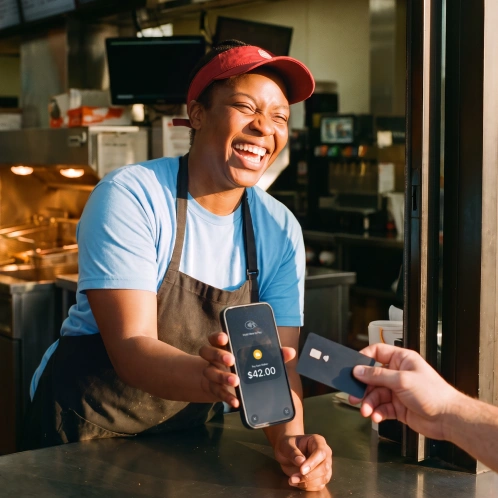
If you sell in person as well as online, you can pair a Link-enabled checkout with a contactless payment method like Tap to Pay, which lets you accept cards on your phone with no extra hardware and instant access to your funds.
When Should Small Businesses Enable Link Payment?
Enable Link payment when your checkout is online, mobile-heavy, or built around repeat customers. If you sell through a website, send payment links by text or email, or run social-media-driven sales, Link removes the steps where mobile shoppers drop off most.
Skip it if you only take payments in person, or if your customers pay once and rarely return, because saved details add little value on a single transaction. For those sellers, a simple Tap to Pay setup covers the full payment flow at a lower per-sale cost.
If you want a checkout that handles both remote and in-person sales, you can review JIM's payment processing pricing to see how a flat-rate Tap to Pay rate and a payment link fit together. To learn how disputes and chargebacks work once you start accepting cards, see JIM's guide to credit card chargebacks.
Frequently Asked Questions
How much does Link payment cost?
Is Link payment safe?
What happens if a customer disputes a Link charge?
How do I disable Link at checkout?
How do I identify a Link charge on a bank statement?
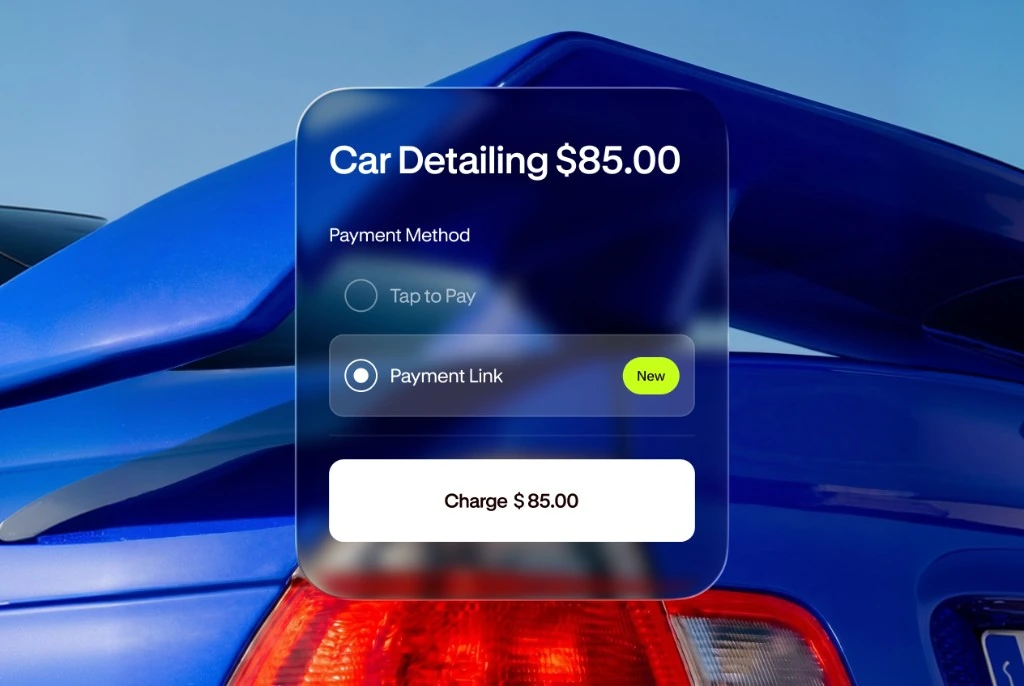



Sell and get paid in seconds with Jim