Business credit score: ranges, how to check it and how to build it

A business credit score rates how likely your company is to pay its bills on time. On the two most common scales, Dun & Bradstreet PAYDEX and Experian Intelliscore Plus, aim for 80 or higher.
The score carries weight: 30% of small employers denied financing cited a low credit score, according to the Federal Reserve's 2026 Small Business Credit Survey.
What is a business credit score?
A business credit score is a rating built from your company's credit file, not from your Social Security number. Three bureaus keep those files in the US: Dun & Bradstreet (D&B), Experian and Equifax. Vendors, lenders and card issuers report how your business pays, and each bureau turns that history into its own score.
Two differences from personal credit catch owners off guard. First, no federal law covers business credit reporting the way the Fair Credit Reporting Act (FCRA) covers consumers, as the Federal Trade Commission (FTC) pointed out when it opened an inquiry into the industry. Second, business scores are public. Experian states that anyone can view your business credit score, for any reason.
That is how a supplier can check you before offering 30-day terms. The FTC adds that some owners only learn a report exists when a supplier turns them down.
What are the business credit score ranges?
Compare each score only against its own scale. Every bureau uses a different range, but on all of them a higher number means lower risk.
| Score | Bureau | Range | Low risk | What it measures |
|---|---|---|---|---|
| PAYDEX | Dun & Bradstreet | 1 to 100 | 80 to 100 | How early or late you pay vendors, over 24 months |
| Intelliscore Plus | Experian | 1 to 100 | 76 to 100 | Odds of serious delinquency in the next 12 months |
| Payment Index | Equifax | 0 to 100 | 90 and up | How closely you pay as agreed |
| Credit Risk Score | Equifax | 101 to 992 | Higher is safer | Overall credit risk |
| Business Failure Score | Equifax | 1,000 to 1,880 | Higher is safer | Odds the business fails |
| FICO SBSS | FICO, using bureau and personal data | 0 to 300 | Set by each lender | Blended business and owner risk |
Sources: D&B, Experian, Equifax sample report and myFICO.
PAYDEX is the easiest score to move because it only tracks timing. A score of 80 means you pay on the due date, 70 means about 15 days late and 90 means about 20 days early, according to D&B.
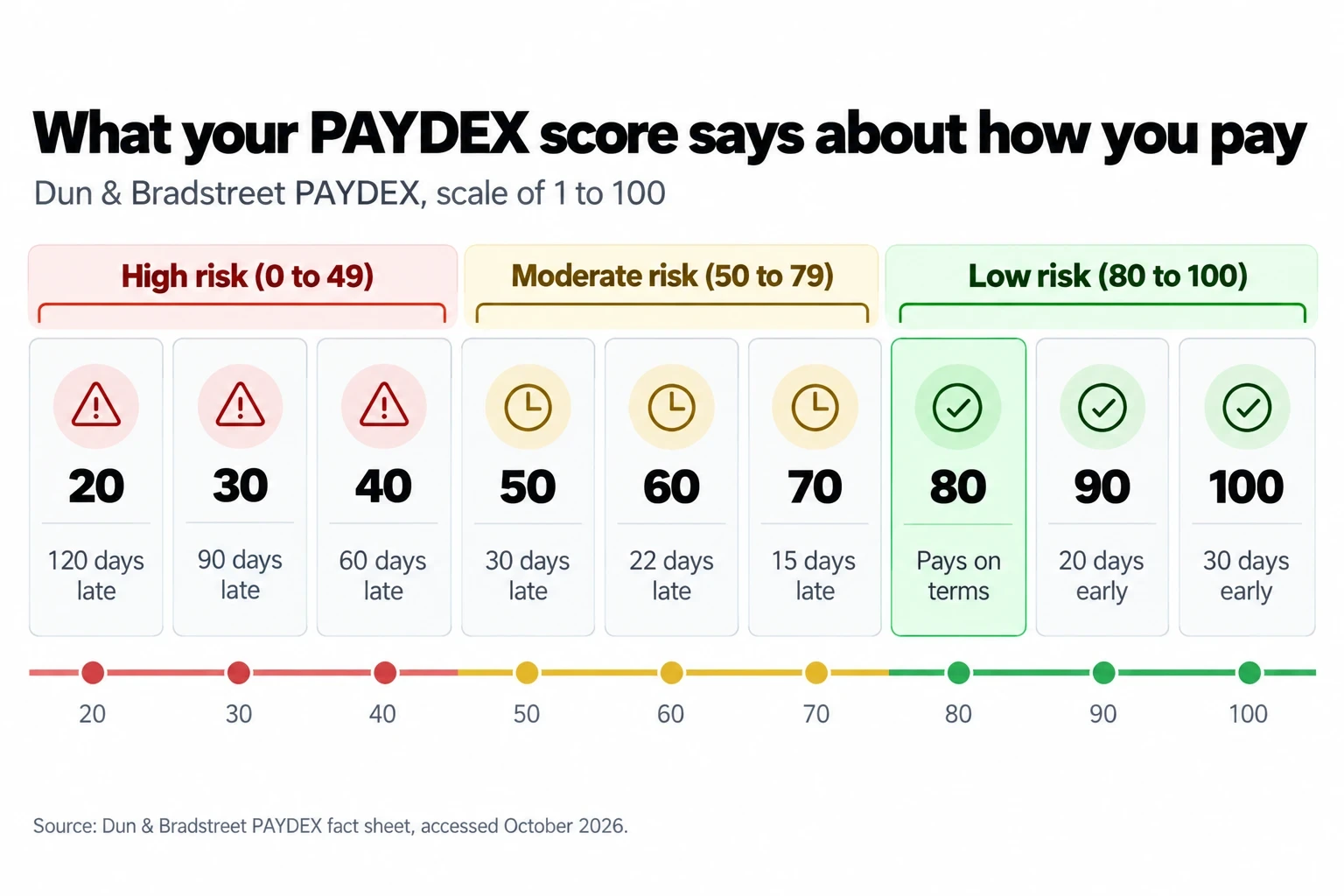
PAYDEX only counts payments a vendor reports. If a supplier doesn't report to D&B, paying it early won't change your score, so ask each vendor whether it reports before you count on that account.
What is a good business credit score?
A good business credit score is 80 or higher on a 1 to 100 scale. The Federal Reserve draws the same line: it treats a business score of 80 to 100, or a personal score of 720 or more, as low credit risk. A business score of 50 to 79 counts as medium risk, and 1 to 49 as high risk.
On Experian Intelliscore Plus, 76 or more lands in the lowest risk class. On the Equifax Payment Index, 90 or more means your bills are paid as agreed.
Lenders set their own cutoffs, and most look past the business score. myFICO notes that many lenders still check each owner's personal credit and may ask for a personal guarantee, which makes you responsible for the debt if the business can't pay.
How do you check your business credit score for free?
Start with the free D&B tier, then pay for a one-time report only before you apply for credit. No law gives you a free business report, unlike the personal reports you can pull every week at AnnualCreditReport.com, as the FTC explains.
| Where to check | What you get | Cost |
|---|---|---|
| D&B Credit Insights Free | Risk ranges for four D&B scores and alerts when they change | Free |
| Experian CreditScore Report | Your Intelliscore Plus and a summary of your file | $59.95, one time |
| Experian Business Credit Advantage | A yearly subscription to your Experian business report and score | $199 per year |
| AnnualCreditReport.com | Your personal reports from Equifax, Experian and TransUnion | Free, weekly |
Read the full report, not only the number. Look for vendors that are missing, late payments you made on time, a wrong address and old liens. Since no federal dispute process applies, you send corrections to each bureau directly.
How do you build business credit?
Build business credit by giving the bureaus a file to read, then filling it with payments made on time. Follow these steps in order:
- Form a limited liability company (LLC) or corporation and get a free Employer Identification Number (EIN) from the IRS. This guide on how to start a business covers the filing.
- Request a free D-U-N-S Number from D&B. Standard processing takes up to 30 business days.
- Open a business bank account and run every sale and bill through it. Here is how to separate business and personal finances.
- Open two or three vendor accounts with net-30 terms that report to the business bureaus.
- Pay on or before the due date. Paying on terms earns a PAYDEX of 80, and paying 20 days early moves you toward 90.
- Keep balances low compared with your limits, since Experian weighs credit utilization.
- Pull your reports every few months and fix errors before you apply for credit.
A business credit card that reports to the business bureaus adds another trade line. See how business credit card pre-approval works before you apply.
Do lenders still use FICO SBSS for SBA loans?
Not for SBA 7(a) Small loans, which go up to $350,000. The Small Business Administration (SBA) stopped screening those applications with the FICO Small Business Scoring Service (SBSS) score on March 1, 2026. SBA Express loans are not affected.
Lenders now run their own commercial credit analysis. The SBA's supplemental notice asks for a debt service coverage ratio (DSCR) of at least 1.10 and a review of your two most recent months of business bank activity. Lenders can still use a scoring model, but not one that relies only on consumer credit scores.
DSCR divides your operating cash flow by the payments due on all your business debt, including the new loan. Suppose your shop clears $6,000 a month and your loan payments would total $5,000. Your DSCR is 1.20, above the 1.10 minimum, and the most you could carry at that cash flow is $5,454.55 a month.
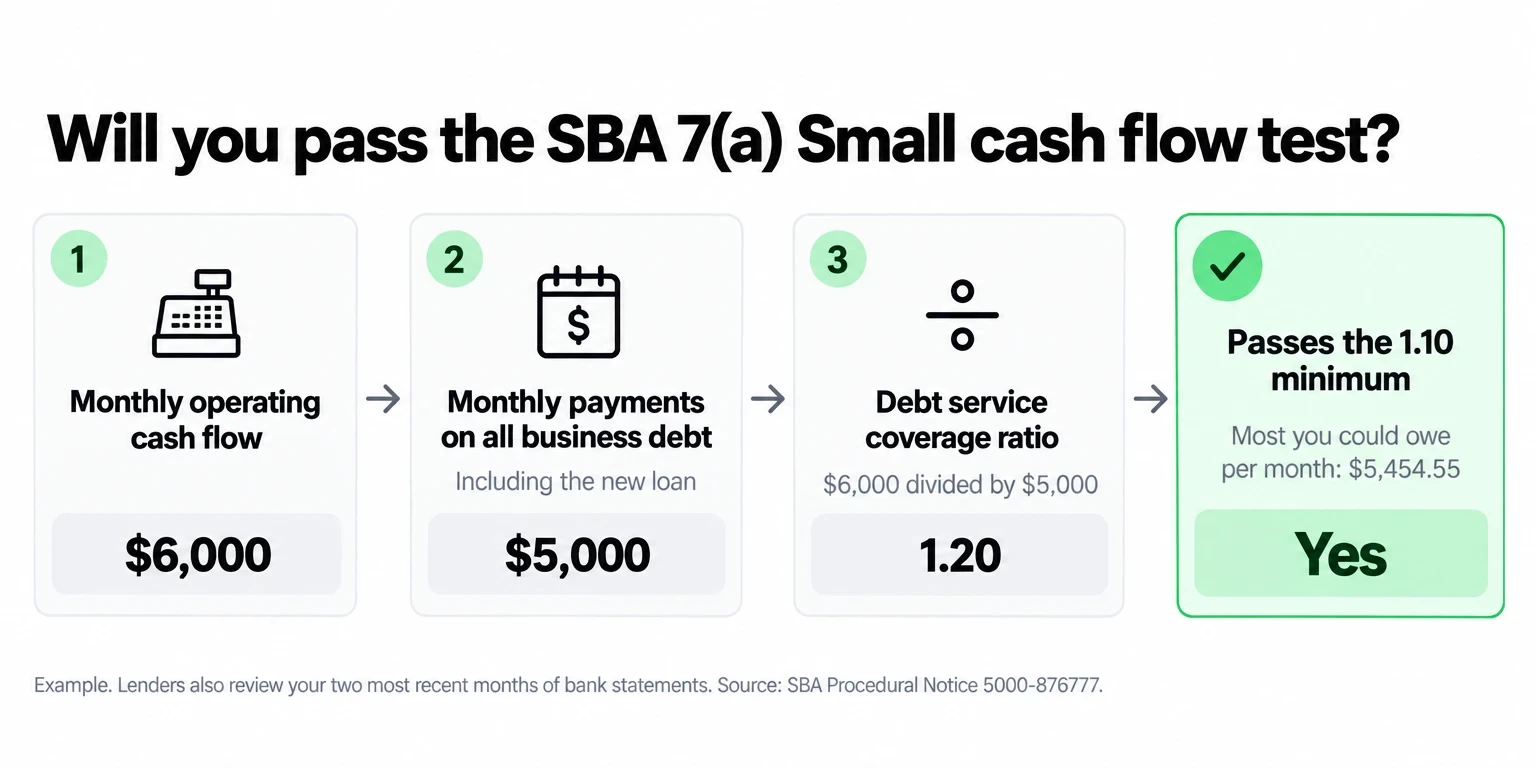
The JIM Card is a prepaid card, not a line of credit, so it won't add trade lines to your business credit file. Where JIM helps is the cash side those two months of statements show: you accept cards with Tap to Pay on iPhone at 1.99% per sale, and each sale is available in seconds, so your deposits keep pace with the work you do.
Is a business credit score different from a personal credit score?
Yes. A personal score follows your Social Security number, while a business score follows your company's name and EIN. They use different bureaus, different scales and different privacy rules.
| Personal credit | Business credit | |
|---|---|---|
| Scale | 300 to 850 on FICO | 1 to 100 on most scores, up to 1,880 at Equifax |
| Bureaus | Equifax, Experian, TransUnion | Dun & Bradstreet, Experian, Equifax |
| Free report | Weekly at AnnualCreditReport.com | No free report required by law |
| Who can see it | Only those with a permissible purpose under the FCRA | Anyone, for any reason |
Keep the two files apart with separate accounts, so each one reflects the right history. With a PAYDEX of 80 as your target, start by asking your three biggest suppliers whether they report your payments.

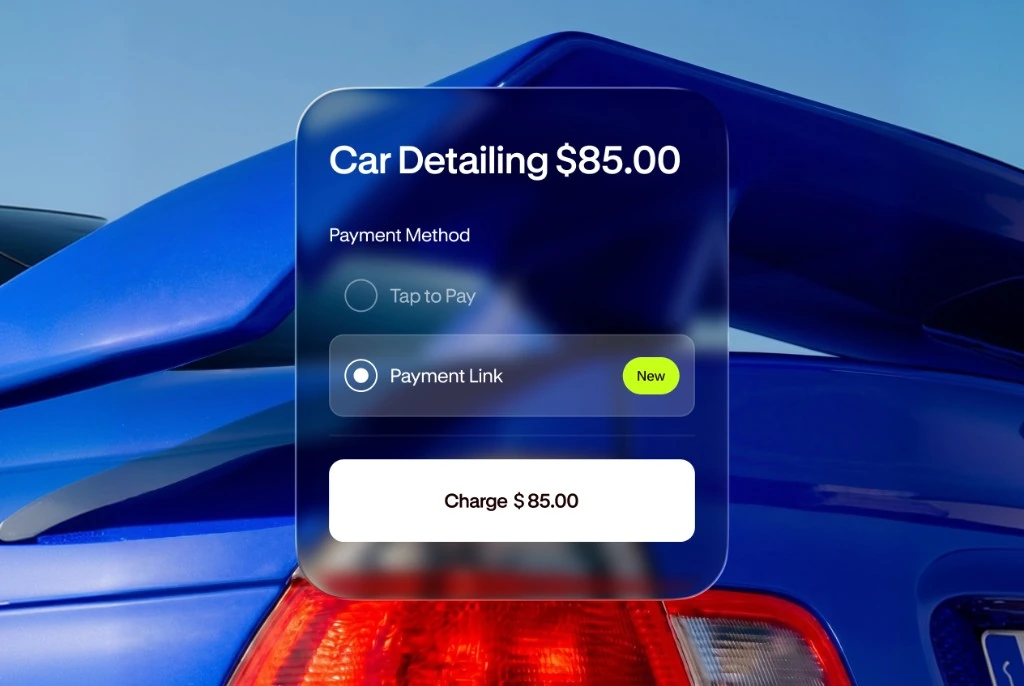


Sell and get paid in seconds with Jim