What are quick service restaurants? A practical guide to the model
See article summary
- What are quick service restaurants? Customers order and collect quickly; fast casual often adds customization.
- What should operations measure? Nearly 75% of all restaurant traffic happens away from dining rooms; track handoff time and accuracy by channel.
- What protects customer value? Match price with portion, quality, convenience, prep workload, and labor costs before expanding the menu.
- What payment setup fits? Payment acceptance takes payments; JIM says high-volume drive-throughs may need integrated restaurant software for kitchen displays.
- What next? Review one representative week of order mix, handoff delays, prep demands, and costs before changing operations.
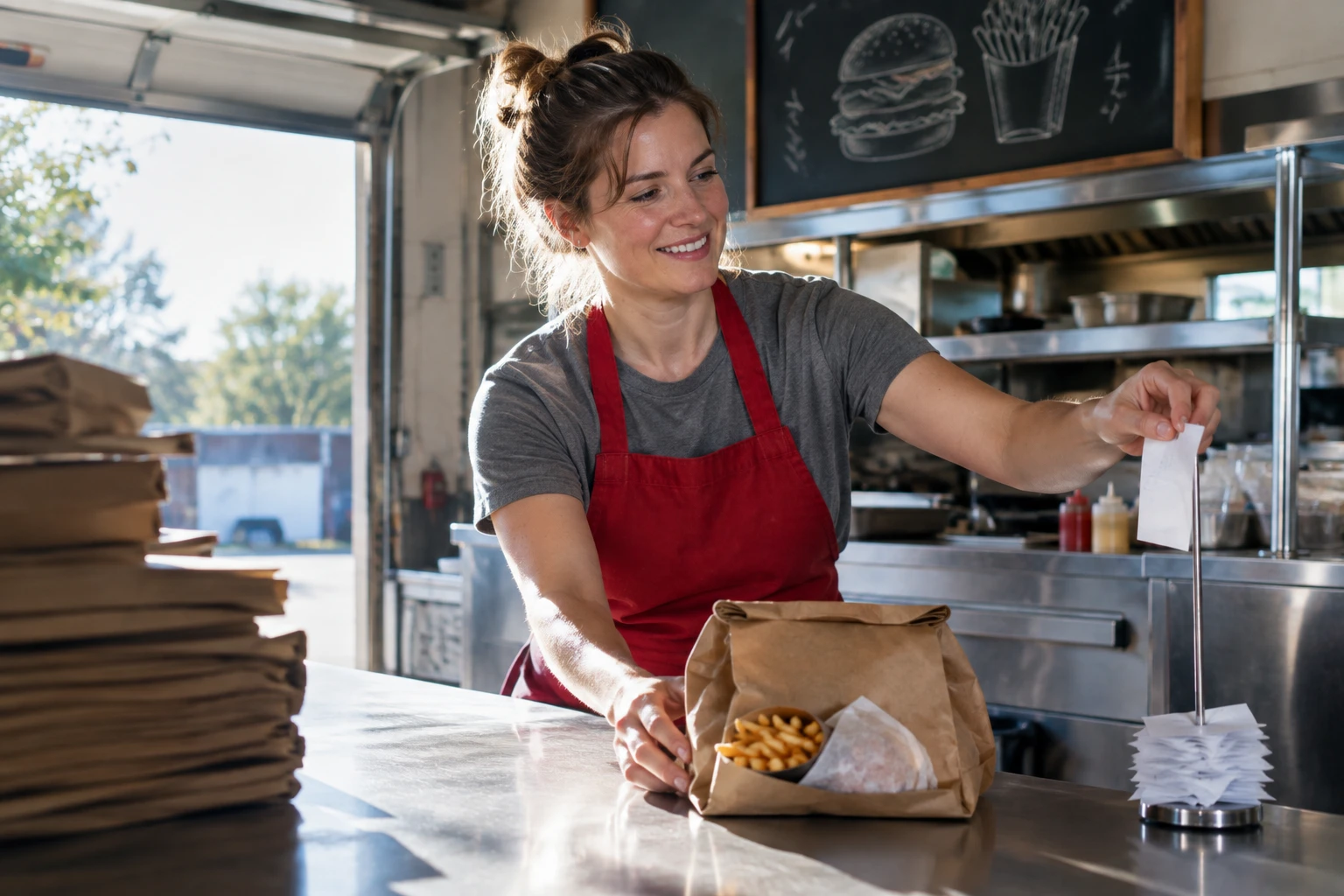
A quick-service restaurant (QSR) is a limited-service restaurant built around a fast, repeatable order-to-handoff: customers order and collect food rather than receive full table service.
For a U.S. owner, the practical question is whether this handoff fits the concept and which choices around ordering, preparation, staffing, customer value, and costs deserve attention.
What defines a quick-service restaurant?
What counts as quick service?
A useful distinction is the amount of service and made-to-order work, not the menu price. Fast casual is a limited-service style that often adds more customization and a more relaxed dine-in experience. Both formats may offer counter ordering and takeout.
Quick service vs. fast casual
Here, off-premises means takeout, pickup, or delivery eaten away from the dining room. Treat these differences as operating tendencies, not requirements for every restaurant.
| Dimension | Quick service | Fast casual |
|---|---|---|
| Order and handoff | Order at a counter or drive-through, then collect it or receive it at a window. | Order at a counter, then collect it or have it brought to a table. |
| Menu and prep | Often uses a shorter, repeatable prep sequence. | May involve more made-to-order steps or combinations. |
| Customization | Often offers fewer choices or standard modifications. | May offer more ingredient swaps or build-your-own choices. |
| Dining experience | Seating may prioritize a quick, functional visit. | The setting may invite a more relaxed dine-in visit. |
| Off-premises convenience | Pickup, drive-through, or takeout may shape the workflow. | Pickup and delivery can coexist with a stronger dine-in focus. |
A counter-service meal with a short, repeatable menu is a common quick-service example. A made-to-order bowl or sandwich with several combinations and relaxed seating is a fast-casual example. A concept can blend features, so classify it by its actual handoff, preparation, and dining experience rather than price alone.
For an operator, the practical question is whether those choices keep the intended pace workable as orders move from preparation to pickup.
How the QSR promise shapes daily operations
With the service-format distinction settled, the next question is what slows actual orders or weakens value. A quick-service restaurant’s operations connect order mix, handoff, menu work, staffing, and costs, so diagnose the constraint before adding a channel, item, or tool.
Speed depends on the handoff
Measure the whole path from order placement to pickup or delivery, and note accuracy as well as elapsed time. The National Restaurant Association reports that 94% of all consumers consider speed critical; that figure describes consumers overall, not QSR customers alone.
Off-premises demand changes the workflow
Off-premises dining means customers eat away from the restaurant. Takeout, delivery, drive-through, and pickup can draw on the same kitchen but create different queues, packaging work, and handoffs. The National Restaurant Association says nearly 75% of all restaurant traffic happens off-premises, not that share of QSR traffic specifically.
Value, menu scope, labor, and cost move together
A price feels worthwhile when the portion, quality, and convenience support it. Bank of America’s restaurant-industry report describes casual-dining traffic growth alongside declining QSR foot traffic, as rising QSR prices shift perceptions of value. That market signal does not show that price alone caused the change; compare your own guest feedback and order patterns.
Menu breadth changes prep steps and staffing needs. More choices can add separate ingredients or station work, while overlapping ingredients may support variety with less added prep. Check whether the extra work creates enough customer value to justify its food and labor pressure.
The National Restaurant Association reports that food costs were 34% above pre-pandemic levels six years earlier, while 94% of limited-service operators cited elevated food costs as their primary concern. Those figures describe restaurants and limited-service operators, not QSRs alone.
Check the model before changing it
Use this five-check sequence to find the constraint before changing the service model:
- Map speed and accuracy. Follow orders from placement through handoff. Note where waits, missing items, or remakes occur, and whether the pinch point is ordering, preparation, or pickup.
- Separate the order mix. Review dine-in, takeout, delivery, drive-through, and pickup orders. Identify which channels create distinct queues, packaging steps, or handoff delays instead of assuming one channel explains every slowdown.
- Test perceived value. Compare prices with portion, quality, and convenience. Use customer comments and repeat-order patterns to see whether the experience supports the price, rather than reaching first for discounts or price changes.
- Check menu and labor demands. Trace the prep steps and staff attention each item requires. Look for ingredients, equipment, or station work that only serve a small part of the menu, then weigh that workload against customer value.
- Compare food and labor pressure. Review ingredient costs, waste, staffing coverage, and prep workload together. Choose the change that addresses the observed constraint, then check whether it improves the handoff without creating a new burden elsewhere.
Illustrative scenario: A neighborhood counter gets pickup orders while dine-in tickets wait at the same prep station. Before opening another ordering channel, the operator checks which handoff is delayed and whether shared prep work is slowing both groups.
When the bottleneck points to checkout, distinguish payment acceptance from software that coordinates broader restaurant workflows.
Does a QSR need payment acceptance or a full POS?
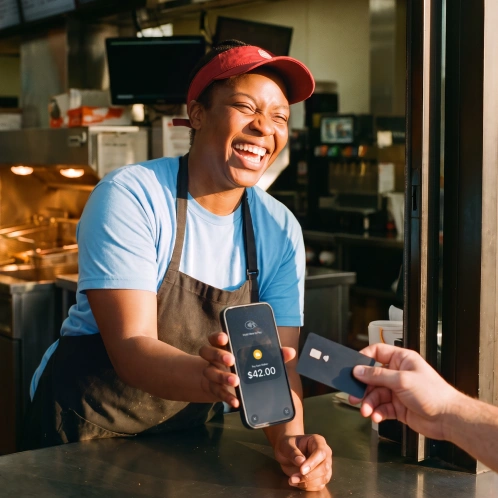
Payment acceptance lets a restaurant take a customer's payment; restaurant point-of-sale (POS) software can support broader workflows such as kitchen display or inventory. JIM's payment setup for a fast-food business guidance says high-volume drive-throughs may call for an integrated restaurant POS.
Choose for the workflow you need, not the QSR label alone.
Review your order mix before making a change
Set aside a representative recent week and compare its order mix with handoff delays, prep demands, and cost pressures. Pick one pattern to investigate before changing the operation, rather than relying on a generic assumption about quick-service restaurants.
Frequently Asked Questions
Is quick service the same as fast food?
What are common types of quick-service restaurants?
Can a quick-service restaurant offer dine-in?
Does every quick-service restaurant have a drive-through?


Sell and get paid in seconds with Jim