Hosted Payment Gateway: How It Works and Why Businesses Need It

See article summary
- A hosted payment gateway redirects customers to a provider's secure payment page, keeping card data off your servers.
- The provider handles PCI DSS compliance, encryption, and tokenization, shrinking your security scope.
- Hosted gateways trade checkout customization for faster setup and lower compliance costs.
- Redirect, iFrame, and API-hosted options balance integration ease against checkout experience control.
- Match the gateway to your sales channels, volume, and payment method needs.
You're ready to launch your online store, but then comes the compliance paperwork. PCI DSS audits, encryption protocols, and security certifications. For most business owners, building payment infrastructure from scratch means months of development before a single sale.
A hosted payment gateway handles this complexity by redirecting customers to a secure, third-party payment page where all sensitive data processing happens off your servers. The global payment gateway market reached $27 billion in 2024, projected to hit $106 billion by 2033. Hosted gateways accounted for more than half of global market revenue, making them the dominant choice for businesses seeking simplified payment processing.
What Is a Hosted Payment Gateway?
A hosted payment gateway is a third-party service that processes online payments by redirecting customers away from your website to a secure payment page managed by the provider. The provider handles all sensitive payment data, encryption, and storage on their servers. You never touch cardholder information directly. For a deeper look at how a credit card gateway fits into the broader payment flow, see this guide to credit card gateways for small business.
Using a hosted gateway shifts your PCI DSS compliance scope from SAQ D (the longest, most demanding self-assessment questionnaire, covering full card data storage) down to SAQ A (the shortest, applies when all cardholder data is fully outsourced). That scope reduction is the core practical benefit: your audit checklist shrinks from roughly 330 requirements to about 13, and your security liability drops with it. You connect to the provider's system through a simple API integration or plugin. Customers click "pay," move to the provider's secure environment to enter their credit card or debit card details, then return to your site after the transaction completes.
A self-hosted payment gateway works differently: you build and control the payment form on your own website, manage all security responsibilities, maintain PCI DSS compliance independently, and store customer data on your servers. The trade-off is full control over the checkout experience versus a significantly reduced compliance burden.
What Security Features Do Hosted Payment Gateways Offer?
Hosted gateways deliver enterprise-grade payment security by processing transactions on external servers, eliminating the need for you to build security infrastructure yourself. The provider maintains and pays for the certifications, audits, and tools that protect every transaction.
- Encryption (SSL/TLS): All payment data is transmitted using secure sockets layer protocols, protecting information in transit.
- Tokenization: Sensitive card numbers convert into unique tokens with no exploitable value.
- PCI DSS compliance: The provider maintains Level 1 certification and handles annual audits. Your compliance scope shrinks considerably.
- 3D Secure authentication: Additional verification layers confirm cardholder identity during online payments.
- Fraud detection tools: Providers apply risk-scoring models that flag unusual patterns based on velocity, geolocation, device fingerprinting, and cardholder history in real time.
- Data redundancy: Automatic backups protect against data loss from system failures.
- Access controls: Limited personnel access to payment data reduces internal risks.
These security measures work together to protect transactions at every step.
Hosted vs. Self-Hosted Gateway
The decision between hosted and self-hosted payment gateways comes down to your technical resources, security capabilities, and user experience priorities. Here is how they compare across key factors.
| Feature | Hosted Gateway | Self-Hosted Gateway |
|---|---|---|
| Payment page location | Provider's secure server | Merchant's website |
| PCI DSS burden | Provider handles compliance | Merchant fully responsible |
| Setup complexity | Simple API integration | Complex in-house development |
| Customization | Limited branding options | Full control over experience |
| Security responsibility | Outsourced to a provider | The merchant manages entirely |
| Development time | Days to weeks | Months |
| Ongoing maintenance | Provider handles updates | Internal team required |
With hosted gateways, customers see a redirect to the provider's checkout page or an embedded iFrame within your site. The iFrame approach keeps customers on your domain visually while the provider still handles the secure payment form behind the scenes.
Self-hosted gateways give you complete control over the checkout process and payment form design. You can optimize every element for conversions. The cost is real: you assume full responsibility for encrypting payment information, maintaining PCI DSS compliance, and securing customer data against breaches.
How Do Hosted Payment Gateways Work?
A hosted gateway redirects the shopper to the provider's secure page, encrypts card data, requests bank authorization, and returns a success or fail signal to your site, usually in under three seconds. The full process involves eight steps from checkout to settlement.
The Transaction Process
- Customer initiates checkout: The customer selects items, reviews their cart, and clicks the pay button on your website.
- Redirect to payment page: Your site sends the customer to the provider's secure hosted payment page. This may appear as a full page redirect, a pop-up window, or an embedded iFrame depending on your configuration.
- Payment information collection: The customer enters their card details, billing information, and any required authentication data on the provider's secure payment form.
- Data encryption: The payment gateway encrypts all customer payment data using tokenization and SSL protocols before transmission.
- Authorization request: The gateway sends encrypted transaction details through card networks to the payment processor and the customer's issuing bank.
- Bank verification: The acquiring bank and issuing bank communicate in real-time. The customer's bank checks available funds, fraud indicators, and transaction legitimacy before approving or declining.
- Response and redirect: The gateway receives the authorization response and redirects the customer back to your website with a success or failure message.
- Settlement: Approved funds transfer from the customer's bank account to your acquiring bank. Traditional card payment settlement takes one to three business days. For ACH transfers, Nacha rules require most debits to settle within one banking day.
The entire authorization process typically completes in seconds. For businesses exploring how modern contactless transactions compare, how tap to pay works explains the in-person equivalent of this digital process.
Types of Hosted Payment Solutions
Hosted gateways come in three implementation styles, each balancing ease of integration against checkout experience control. The option you choose affects both your development resources and your customers' checkout experience, and each carries different conversion implications.
Redirect-Based Payment Pages
The simplest hosted gateway implementation sends customers to the provider's URL entirely. They leave your website, complete payment on the gateway's branded page, then return after the transaction. Redirects introduce a visible context switch that can increase cart abandonment, as customers may feel uncertain leaving your site during the critical payment moment. Use this approach when your priority is the fastest possible setup with minimal development resources.
iFrame-Embedded Pages
For businesses that want customers to stay on their domain visually, iFrames offer a middle ground. An iFrame embeds the provider's payment form directly within your checkout page. Customers stay on your domain visually, though the payment fields load from the provider's servers. This method reduces the disruption of a full redirect while maintaining security advantages. You can style the surrounding page to match your brand, creating a more consistent user experience. According to Baymard Institute's cart abandonment research, the average online cart abandonment rate sits around 70%, and reducing checkout friction is one of the most impactful ways to recover those lost sales.
API-Hosted Solutions
Businesses with development resources can access deeper customization through API integration. Lightweight API calls connect your checkout to the provider's servers with more flexibility than standard hosted options. You gain additional customization capabilities while the provider still manages sensitive payment information. This approach requires more technical resources than pure hosted solutions but gives you the most control over the checkout experience without taking on full PCI DSS scope.
Advantages of Hosted Payment Gateways
For merchants without dedicated payment infrastructure teams, hosted gateways solve specific operational and security pain points. The benefits extend beyond just easier setup to ongoing cost and compliance advantages.
- Simplified PCI DSS compliance: The provider manages security standards, reducing your audit scope and compliance costs. Fewer than half of organizations maintain full PCI DSS compliance year over year, according to Verizon's 2024 Payment Security Report. A hosted gateway shifts that burden to the provider.
- Reduced security responsibility: Encryption, tokenization, and secure payment data storage happen on provider servers. You never store cardholder data.
- Faster implementation: Simple plugin or API integration takes days or weeks versus months building custom payment solutions.
- Lower upfront costs: No need for extensive development teams or security infrastructure investments.
- Automatic updates: Providers maintain and update security measures, fraud prevention tools, and compliance certifications continuously.
- Built-in fraud detection: Access advanced fraud prevention without developing in-house capabilities.
- Multiple payment methods: Offer credit card, debit card, digital wallets, and global payments through a single integration.
- Recurring payments support: Providers handle subscription billing and payment details storage with proper tokenization.
- Scalability: Handle transaction volume spikes without infrastructure investments.
Most providers support credit card, debit card, digital wallet, and global payment methods through a single integration. For more detail, see how to accept credit card payments alongside your other in-person and online options.
Disadvantages and Trade-Offs
Hosted gateways simplify payment processing, but they carry specific limitations. Redirects interrupt the checkout flow at a critical moment. With the average online cart abandonment rate around 70% per Baymard Institute, any friction during payment can cost you sales. The iFrame approach reduces this problem but doesn't eliminate it entirely.
You also give up control. The payment form looks like the provider's design, not yours. You can't track customer payment behavior as closely as you could with a self-hosted gateway. And your ability to accept payments depends entirely on the provider's uptime and policy decisions.
Transaction fees present another consideration. Per-transaction pricing works well for lower volumes, but costs compound as you scale. High-volume businesses may eventually find a one-time infrastructure investment more economical than ongoing percentage-based fees.
How to Choose the Right Hosted Payment Gateway
Selecting a payment gateway provider means matching capabilities to your business model. The decision affects conversions, costs, and operational complexity. Use this weighted scoring rubric to evaluate providers against the factors that matter most for your situation.
| Criterion | Weight | What to evaluate |
|---|---|---|
| Fees | 30% | Per-transaction rate, monthly fees, chargeback fees, setup costs |
| Payment method coverage | 25% | Card networks, digital wallets, ACH, international methods |
| Integration quality | 20% | API documentation, ecommerce plugins, mobile SDKs |
| Geographic reach | 15% | Supported currencies, cross-border acquiring, regional compliance |
| Feature depth | 10% | Recurring billing, refund workflows, reporting dashboards |
Score each provider from 1 to 5 on each criterion, multiply by the weight, and sum the results. A provider scoring 4 on fees (30%), 3 on payment methods (25%), 5 on integration (20%), 2 on geographic reach (15%), and 4 on features (10%) totals 3.55 out of 5.
- Pricing: Transaction fees for traditional gateways typically run 2.5% to 3.5% of the transaction amount. That total includes interchange fees set by card networks plus the processor's markup. The Federal Reserve's Regulation II interchange fee data covers the regulated debit card component. Ask about volume discounts if you expect growth.
- Payment method coverage: Card payments from Visa, Mastercard, and American Express form the baseline. Digital wallets like PayPal, Apple Pay, and Google Pay speed checkout for mobile users. International sellers need local payment options and ACH or bank transfer support for recurring billing.
- Integration quality: Evaluate API documentation, plugin availability for your ecommerce platform, and SDK support for mobile apps. Good technical support during setup prevents costly delays.
- Geographic reach: Check supported currencies, international acquiring capabilities, and compliance with regional regulations before committing.
- Feature depth: Compare recurring payment tools, mobile optimization, refund workflows, chargeback handling, and reporting dashboards. The right feature set depends on whether you're running a one-time purchase store, a subscription business, or a hybrid model.
For a broader comparison of payment solutions, review the best credit card processing for small business options across different business models.
What Does a Hosted Payment Gateway Cost?
The total cost of a hosted payment gateway breaks down into several components layered on top of each other. Understanding each layer helps you compare providers accurately and avoid surprise charges.
| Cost component | Typical range | What it covers |
|---|---|---|
| Per-transaction fee | 2.5% to 3.5% of transaction | Interchange plus processor markup |
| Fixed per-transaction fee | $0.10 to $0.30 per sale | Network and processing overhead |
| Monthly gateway fee | $0 to $25 | Account maintenance, dashboard access |
| PCI compliance fee | $0 to $15 per month | Annual compliance program |
| Chargeback fee | $15 to $25 per dispute | Dispute handling and resolution |
A $100 online sale at 2.9% plus $0.30 costs you $3.20 in processing fees. At 1,000 transactions per month, that adds up to $3,200 in processing costs alone. Monthly gateway fees, PCI charges, and chargeback costs stack on top. For a detailed breakdown of how these fees affect small businesses, see this guide to credit card processing fees.
Hosted Payment Gateways for Specific Business Types
Different business models have unique payment acceptance needs. The right solution depends on where and how you sell.
Ecommerce and Online Retail
Online stores benefit from hosted gateways that support multiple payment methods and global payments. Look for recurring payment functionality if you offer subscriptions. Cart abandonment remains a key metric, so consider iFrame implementations that minimize checkout disruption. Integration with shopping cart platforms through plugins simplifies setup.
Mobile and On-the-Go Businesses
Traditional hosted gateways designed for web checkout create friction for businesses operating primarily in-person. Redirects make little sense when customers stand in front of you at a market stall or service appointment.
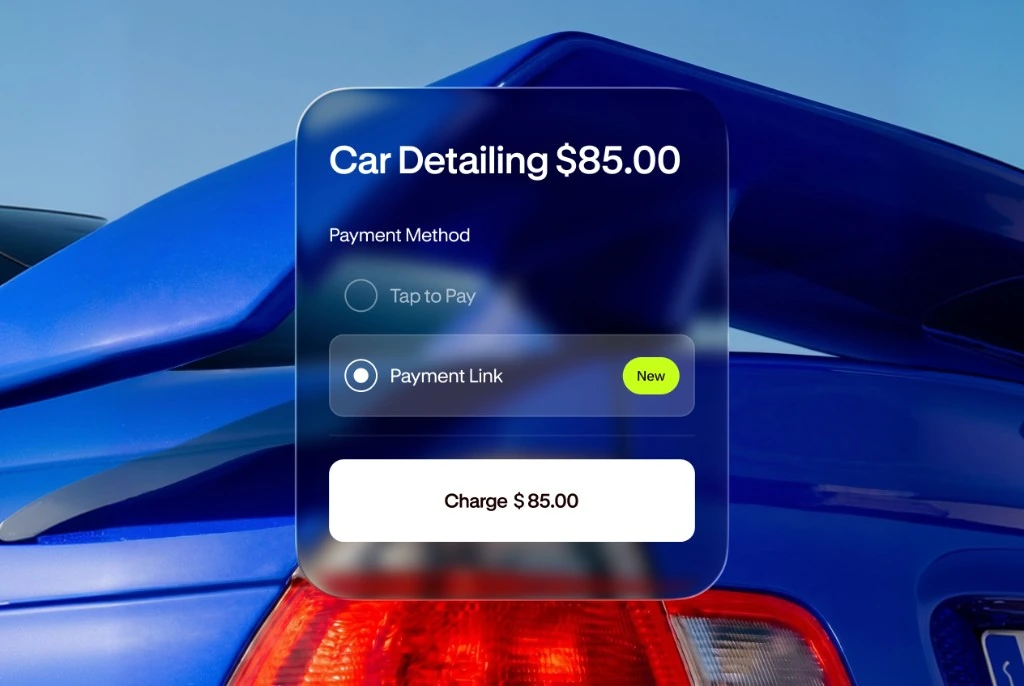
JIM offers a different approach for businesses operating in person with mobile needs. JIM's Tap to Pay turns your iPhone into a contactless payment terminal with no redirect needed. You get a flat 1.99% fee versus typical 2.5% to 3.5% rates, instant settlement instead of one to three day delays, and no hardware costs. Payments complete on your device with funds available immediately on your JIM Visa Prepaid Card.
This model complements or replaces traditional hosted gateways depending on your sales channels. Explore mobile POS solutions for businesses like food trucks and pop-up shops that need payment flexibility beyond web checkout.
Service Businesses
Service providers benefit from hosted gateways with strong invoicing and payment link capabilities. Recurring billing matters for retainer arrangements and subscription services. Look for straightforward pricing that scales predictably and responsive customer support when payment issues arise. Lower transaction volumes make per-transaction pricing models more practical than large infrastructure investments.
Choose the Payment Solution That Grows with Your Business
Hosted payment gateways balance security, compliance, and ease of setup for businesses that want to accept online payments without building payment infrastructure from scratch. They reduce PCI DSS burden, provide enterprise-grade security, and get you accepting payments faster than self-hosted alternatives.
For businesses seeking ultimate mobility and instant cash flow, JIM's tap-to-pay solution eliminates typical hosted gateway redirect friction while maintaining security benefits. With a flat 1.99% fee and instant payouts to your JIM Visa Prepaid Card, you keep more of each sale and access your money immediately. No hardware purchases, no settlement delays, no hidden costs.
Ready to accept payments anywhere? Download JIM and start processing contactless payments in minutes.
Frequently Asked Questions
What is a hosted payment gateway?
What is the difference between a hosted and non-hosted gateway?
What is the difference between an integrated and hosted payment gateway?
What are the four types of payment gateways?
Are hosted payments safe?
What are the top 5 best payment gateways?
Can I create my own payment gateway?
What are the three types of payment systems?



Sell and get paid in seconds with Jim