You're closing out the register, and the numbers don't match again. Your POS says one thing, your accounting software says another, and somewhere between manual data entry and reconciliation, the afternoon disappeared. For many business owners, juggling disconnected systems creates bottlenecks that drain time, introduce human error, and delay access to cash flow.
Integrated payment solutions connect your payment processing directly with your business systems so transactions, inventory, and financial data update automatically. According to PYMNTS research, 81% of SMBs using multiple systems are open to adopting integrated payment solutions to reduce this friction.
This guide explains how integrated payment systems work, their benefits, and how to choose one that fits your business needs.
What Are Integrated Payment Solutions?
Grasping what integrated payment solutions actually do helps you evaluate whether they fit your operations. At their core, these solutions eliminate the disconnect between accepting payments and managing your business.
Integrated payment solutions embed payment processing directly into your business software through APIs. Instead of using a standalone terminal that requires you to manually enter transaction data into separate systems, integrated solutions automatically sync every sale with your inventory, accounting software, and CRM in real-time.
The key components include a payment gateway that securely captures payment information, a payment processor that routes transactions through card networks, and direct connections to your business systems. This setup supports credit card and debit cards, digital wallets, and ACH transfers without requiring you to touch the data twice.
Where standalone systems create information silos, integrated payment systems keep everything in one flow. Your staff spends less time on reconciliation and more time serving customers.
How Does Payment Integration Work?
Payment integration might sound technical, but the process follows a logical path from the moment your customer decides to buy. Knowing how these steps connect helps you troubleshoot issues and choose the right payment platform for your workflows.
Here's what happens during a typical transaction:
- Customer initiates payment. At checkout, your customer selects their preferred payment method, whether in-store with a tap, online through your e-commerce checkout, or via mobile device.
- The payment gateway encrypts data. The gateway uses tokenization to replace sensitive payment information with a secure token, protecting customer data and maintaining data security standards.
- Payment processor routes the transaction. Your payment processor communicates with card networks and the customer's bank to authorize the sale, typically in seconds.
- Real-time data sync. Once approved, transaction data automatically flows to your ERP, accounting software, and CRM. Inventory updates, financial records adjust, and customer profiles reflect the purchase without manual data entry.
- Settlement. Funds move to your account. Traditional processors take 1-3 business days; solutions like JIM provide instant settlement directly to your JIM Visa® Prepaid Card.
This automation helps streamline operations and removes the friction that introduces errors.
Why Integrated Payments Matter Now
Small businesses, on average, have 2 systems to manage daily operations, and that fragmentation creates real problems. Manual data entry between your checkout, CRM, and financial systems leads to errors, delays cash flow visibility, and frustrates customers expecting smooth experiences.
Modern buyers want quick checkout, whether they're shopping in-store, on your e-commerce site, or through a mobile device. According to McKinsey's Global Payments Report, payments revenue continues to grow as businesses demand simpler interfaces and faster settlement. Integrated systems make that possible while giving you real-time insight into business operations.
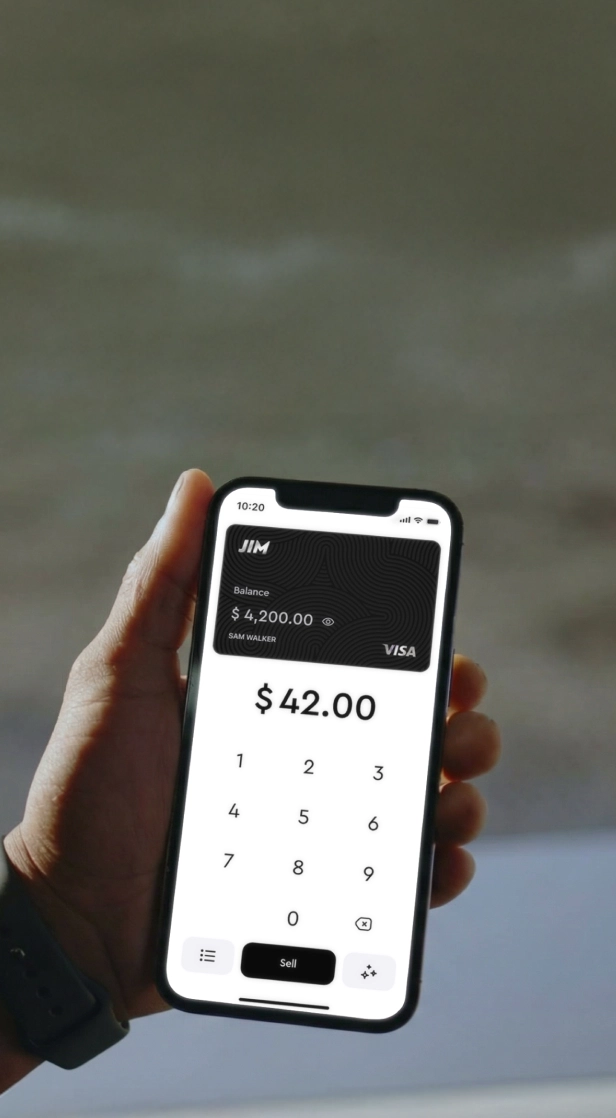
If you want to accept payments anywhere without hardware hassles or delayed payouts, consider JIM. This all-in-one solution turns your iPhone into a point-of-sale, offering a flat 1.99% fee with no hidden costs. Funds appear instantly on your JIM Visa® Prepaid Card, so you skip the typical 1-3 day settlement wait. Setup takes minutes, and the platform maintains PCI DSS compliance, making secure payment acceptance simple for any small business.
Benefits of Integrated Payment Solutions
One of the core benefits of integrated payment systems is operational efficiency that compounds over time. When your payment acceptance connects directly to your business systems, you gain advantages that affect everything from daily workflows to long-term growth.
Streamline Operations and Reduce Human Error
When payment and back-office systems operate separately, staff must re-enter transaction totals into accounting software, inventory databases, and CRM records. Each manual handoff introduces potential for typos, transposed numbers, and timing mismatches. Integrated systems pass this data automatically, removing those failure points from the workflow.
According to Worldpay research, more than half of consumers avoid stores with long checkout lines. Reducing the steps between sale and record-keeping also shortens the time each transaction takes at the register.
Improve Cash Flow Visibility
Traditional setups require waiting for bank statements, manually reconciling batches, and cross-referencing multiple systems to understand your cash position. When transaction data syncs in real-time to your accounting software, that lag disappears. You can see exactly what sold, what settled, and what remains outstanding without compiling reports from separate sources.
Improve Customer Experience and Satisfaction
Checkout friction often stems from system limitations, like a terminal that only accepts certain cards, a register that requires manual price lookups, or a process that forces customers to repeat information. Integrated systems consolidate credit card transactions, online payments, and digital wallets into one workflow, reducing the steps customers have to take in the process.
Strengthen Security and PCI Compliance
Tokenization replaces sensitive payment data with secure tokens that have no value if intercepted. This approach reduces your PCI DSS scope and protects customer behavior data from breaches. Secure payment processing builds trust with every transaction and protects payment data at rest and in motion.
Scale Your Business with Cloud-Based Solutions
Cloud-based integrated solutions grow with your business needs. You can add e-commerce channels, new in-store locations, or mobile payment acceptance without rebuilding your infrastructure. Scalable, all-in-one systems mean you invest once and expand freely.
Integrated Payments vs. Standalone Systems
Choosing between integrated and standalone payment systems affects how efficiently your business runs day to day. This comparison clarifies what you gain by moving beyond disconnected terminals.
Embedded payments offer a superior user experience by keeping customers on your platform throughout checkout. Hosted payment gateways that redirect customers to external pages create friction and increase cart abandonment risk. Integrated solutions maintain the payment experience within your brand environment, optimizing conversions for both e-commerce and in-store transactions.
Types of Payment Systems and Integration Options
Different businesses require different integration approaches. The right setup depends on whether you primarily sell in-store, online, or across multiple channels. Matching these options to your operations ensures you get the right fit.
Point-of-Sale (POS) Integrations
POS integrations connect payment acceptance to your inventory and CRM in one system. When a customer pays, stock levels adjust automatically. This works well for retail shops, coffee shops, and food trucks that need real-time inventory accuracy.
E-Commerce Payment Integrations
Online stores benefit from checkout experiences that keep customers on-site. Integrated e-commerce payment platforms reduce abandonment by eliminating redirects. APIs allow you to customize the payment experience while maintaining security through tokenization and industry security standards.
ERP and Accounting Software Integrations
For businesses managing invoices, accounts payable, and complex financial workflows, ERP integrations automate reconciliation. Transaction data flows directly into your financial systems, and ACH payments can be processed alongside card transactions. This integrated systems approach automates workflows across your entire payment platform.
What to Look for in Integrated Payment Solutions
Selecting the right integrated payment processing platform requires evaluating how well it connects to your existing tools and supports your growth. These criteria help you avoid costly migrations later.
- Compatibility with existing business systems. Does the solution integrate with your ERP, CRM, and accounting software? Look for pre-built connectors or flexible APIs that minimize custom development.
- Supported payment methods. Your customers expect options. Confirm support for cards, ACH, and online payments so you never turn away a sale.
- Security and compliance. Security certification and tokenization should be standard. Ask how the provider protects payment data and reduces your compliance burden.
- Pricing transparency. Hidden fees erode margins. Compare flat-rate pricing against interchange-plus models, and watch for monthly minimums or statement fees that inflate costs.
- Payout speed. Traditional processors settle in 1-3 business days. Faster payouts improve cash flow, especially for businesses with thin margins or seasonal spikes.
- Scalability. Can the platform grow with your business needs? Adding new locations, channels, or payment options should be straightforward, not a rebuild.
- User experience for staff and customers. Intuitive interfaces reduce training time and checkout friction. Test the system before committing.
- Customer support quality. Problems happen. Responsive support prevents small issues from becoming costly downtime.
According to PYMNTS, 52% of SMBs prioritize enhanced security in payment solutions, while 45% want accounting integration. Knowing your priorities helps narrow the field.
For more context on choosing processors, explore our guide to the best credit card processing for small businesses.
Simplify Payments and Focus on Growth With JIM
Integrated payment solutions remove the friction between accepting payments and running your business. When transaction data flows automatically to your CRM and ERP, you optimize time, reduce human error, and gain real-time visibility into cash flow. The result is better customer satisfaction and a foundation that supports growth.
For small business owners who want to accept payments instantly without hardware complexity or delayed settlement, solutions like JIM offer a practical starting point. Turn your iPhone into a payment terminal, pay a flat 1.99% per transaction, and access funds immediately on your JIM Visa® Prepaid Card.
Ready to see how simple payment processing can be? Download the JIM app and start accepting payments in minutes. Visit JIM's POS solutions to explore what's possible for your business.
.avif)