Payment Technology Solutions: Business Guide

See article summary
- Payment technology solutions include processors, gateways, payment service providers, and point-of-sale systems that authorize and settle card transactions.
- Processors route transactions between merchants and card networks; gateways encrypt and transmit the card data.
- Payment service providers bundle processing, gateway, and merchant services into one relationship for simpler onboarding.
- Compare providers on processing volume, settlement speed, hardware needs, security, and integration with your existing tools.
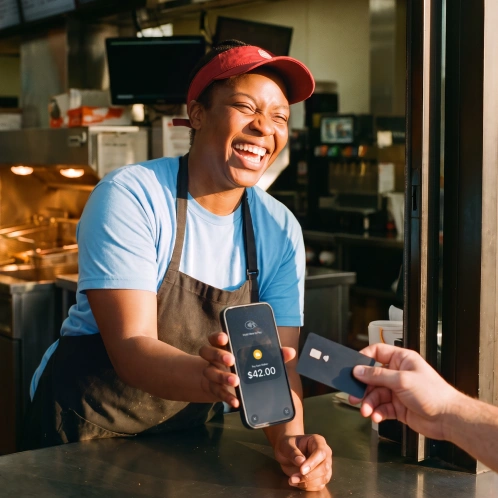
- Mobile sellers can accept contactless card payments on a phone with no extra hardware and instant fund access.
Accepting payments today involves more technology layers than most business owners realize. Between processors, gateways, and merchant services, finding the right payment technology solutions can feel overwhelming.
The payment processing solutions market is projected to reach $162 billion by 2030, driven by digital payments and mobile commerce. Below is a side-by-side of processors, gateways, and payment service providers, plus which fits by monthly volume and business model.
What Are Payment Technology Solutions?
Payment technology solutions are the integrated systems that authorize, secure, and settle card transactions. They include processors, gateways, payment service providers, and point-of-sale systems that move money from your customer's card to your bank account.
Every card transaction passes through multiple systems before money lands in your bank account. Here is what works behind the scenes:
- Payment processors: Route transactions between merchants and card networks. Major processors include Fiserv, Global Payments, and TSYS.
- Payment gateways: Encrypt and transmit card data securely. Examples include NMI and Authorize.net.
- Payment service providers (PSPs): Bundle processing, gateway, and merchant services into one relationship. PayPal, Square, and Stripe operate as PSPs.
- Point-of-sale systems (POS): Hardware and software for capturing in-person transactions.
The key difference: PSPs bundle everything into one relationship, while traditional setups require separate contracts for each piece.
What Are the Emerging Trends in Payment Technology?
According to Federal Reserve 2025 data, credit and debit cards now dominate consumer payments while cash usage continues declining. Mobile phone payments keep climbing as consumers reach for their phones at checkout. Tap to pay adoption accelerates as shoppers expect the same convenience they experience at major retailers.
Real-time payments are becoming a standard expectation rather than a premium feature, replacing the traditional one to three day settlement window. The Federal Reserve's FedNow Service lets participating banks and credit unions send and receive payments in real time, around the clock, every day of the year. Embedded payments continue growing as software platforms integrate acceptance directly into their workflows. Machine learning now powers fraud detection systems, making secure processing accessible to small businesses that previously could not afford dedicated fraud prevention teams.
These shifts matter when choosing payment technology. Systems built around contactless acceptance, instant settlement, and AI-driven security position your business to meet changing customer expectations without becoming obsolete.
How Do Businesses Use Payment Technology Today?
Different business models call for different implementations. Retailers deploy integrated systems connecting point-of-sale terminals with inventory and loyalty programs. Online merchants optimize checkout with digital wallets like Apple Pay and Google Pay to reduce cart abandonment. Service providers benefit from mobile solutions that process payments on-site, improving cash flow and eliminating the need for customers to pay later.
Why Does Payment Technology Matter for Small Businesses?
Your choice of payment technology affects fees, how fast you get paid, security, and customer experience. The wrong choice means higher costs and slower cash flow. The right choice means competitive pricing, faster access to funds, and smoother checkout. Options range from enterprise providers like Fiserv down to streamlined solutions built for independent sellers.
Who Are the Major Global Payment Technology Companies?
If you process high volumes or need complex integrations, these enterprise providers dominate the market:
| Provider | Headquarters | Specialization | Scale | | --- | --- | --- | --- | | Fiserv | Milwaukee, WI | Banking tech, merchant services, Clover POS | Ranked #1 IDC FinTech Top 100 | | Global Payments | Atlanta, GA | Merchant acquiring, software solutions | Global commerce ecosystem | | TSYS | Columbus, GA (now FIS) | Issuer processing, card management | Serves major banks globally | | FIS | Jacksonville, FL | Banking, capital markets, payments | Processes billions of transactions |
- Fiserv owns Clover POS and ranks as the top financial technology provider according to IDC FinTech Rankings Top 100, taking first place for the third consecutive year. The company ended its joint venture with Wells Fargo in April 2025, though the two continue working together under a separate services agreement.
- Global Payments describes itself as providing a "complete worldwide commerce ecosystem" for enterprises. The company specializes in merchant acquiring and integrated software solutions across more than 100 countries. Their scalable platform serves retailers from small shops to multinational chains, supporting both digital payments and traditional card acceptance.
- TSYS now operates as "Total Issuing Solutions" under FIS following their merger. The company continues serving major financial institutions, including Virgin Money UK and Wells Fargo commercial cards.
- FIS ranks among the largest fintech providers globally, processing billions of transactions annually across banking, capital markets, and merchant services. The company acquired Worldpay in 2019, expanding its payment processing capabilities before spinning it off in 2024.
How Do Payment Gateways Work?
Payment gateways form the bridge between your checkout and the financial networks that authorize transactions. They handle the critical work of encrypting sensitive card data before it travels anywhere.
From tap to confirmation, your payment races through multiple systems. Here is what happens in milliseconds:
- Capture and encrypt: Customer taps or swipes; the gateway instantly encrypts card information.
- Transmit: Encrypted data travels to your processor for authorization.
- Route: The processor contacts payment networks, which check with the customer's issuing bank.
- Respond: Approval or decline returns through the same path, keeping checkout moving.
Services like the NMI gateway handle this routing automatically. Read more in the guide to credit card gateways.
Gateway Options
Here is how the major gateway providers stack up:
- NMI: A white-label solution popular with ISOs and software platforms. NMI offers Level III processing for B2B transactions, which can reduce interchange costs for qualifying businesses.
- Authorize.net: One of the most widely used ecommerce gateways, now owned by Visa. It integrates with most shopping cart platforms and offers virtual terminal functionality for online transactions.
- Stripe: A developer-focused gateway with extensive APIs and documentation. Stripe works well for businesses building custom checkout experiences and supports multiple payment methods across digital wallets and credit cards.
Gateways typically charge per-transaction fees plus monthly minimums. Some providers bundle gateway services with processing, while others offer standalone gateway access for merchants with separate processor relationships. For a deeper look at how the full processing flow connects gateway to network to issuer, see the breakdown of how credit card processing works.
What Is a Payment Service Provider?
Payment service providers (PSPs) bundle multiple functions into a single relationship, simplifying onboarding and setup for smaller businesses. Instead of managing separate merchant accounts, gateways, and processor contracts, you get everything through one provider.
What PSPs Include
With a PSP, you get several services under one roof:
- A merchant account aggregated under the PSP's master account
- Gateway functionality for secure transactions
- Processing relationships with card networks
- Often: POS hardware, reporting dashboards, and fraud prevention tools
This bundled approach trades some customization for convenience. You get faster onboarding and simpler billing, though you may pay slightly more per transaction than businesses negotiating dedicated merchant accounts.
PSP Examples
- PayPal is one of the earliest and largest providers in the space. The company aggregates merchants under its master merchant account, handles processing, and provides buyer and seller protection.
- Square packages PSP services with integrated POS hardware, targeting brick-and-mortar retailers and mobile businesses. Their all-in-one approach combines hardware, software, and processing.
- Stripe focuses on online and developer markets, offering extensive APIs for custom integration and supporting various payment options for ecommerce businesses building cloud-based storefronts.
- Adyen serves enterprise clients with omnichannel solutions and global reach. Their scalable infrastructure supports high-volume retailers across multiple countries, processing both digital and in-person transactions.
How Do PSPs Compare to Traditional Merchant Accounts?
The choice between a PSP and a traditional merchant account depends on your volume and technical needs. PSPs offer faster setup, bundled pricing, and aggregated accounts that work well for small businesses processing under $100,000 monthly. Traditional merchant accounts require more underwriting but may deliver lower rates at higher volumes and provide a dedicated merchant ID. For more on this comparison, see the guide to merchant processing services.
How to Choose the Right Payment Technology Solution
There is no one-size-fits-all answer. The right solution depends on how much you process, where you sell, and what your day-to-day operations look like.
By Business Size
Here is how different business types typically match with providers:
| Business Type | Deciding Criterion | JIM When… | Consider an Alternative If… | | --- | --- | --- | --- | | Enterprise or chain | Custom pricing and complex integrations | Not applicable | You need dedicated support and multi-location infrastructure | | Mid-size retail | Integrated POS, inventory, and staff management | Not applicable | You require countertop hardware and inventory modules | | Ecommerce | API flexibility and online checkout optimization | Not applicable | You sell primarily online and need a hosted gateway | | Mobile or field services | Portability and simple setup | You sell in person and want instant payouts | You process card-not-present orders by phone | | Food truck or pop-up | No hardware cost and flat-rate pricing | You want Tap to Pay at 1.99% with instant payouts | You need a full POS with inventory tracking |
Key Decision Factors
While size matters, consider these additional factors that can impact your choice:
- Processing volume: Higher volume typically means more negotiating power for better rates. Below $50,000 per month, flat-rate pricing usually costs less. Above that, interchange-plus pricing often wins.
- Sales channels: Do you sell in-person, online, or both through point-of-sale and ecommerce?
- Settlement speed: Same-day, next-day, or instant access to funds improves cash flow.
- Hardware needs: Fixed terminal versus mobile POS versus no hardware at all.
- Security requirements: Look for secure payment processing with PCI DSS compliance and fraud detection.
- Integration needs: APIs that connect with your existing business software and apps.
Start with your most pressing constraint, whether that is cash flow timing, mobility, or budget, and use it to narrow the field before comparing features.
Typical Payment Technology Solutions Costs by Volume
Credit card processing fees vary by card type, channel, and processor markup. According to Federal Reserve research, credit card processing fees typically range from 1.5 to 3 percent of the transaction amount before processor markup. The table below shows typical all-in cost ranges a small business can expect.
| Monthly Card Volume | Typical Pricing Model | Typical All-In Rate | Notes |
|---|---|---|---|
| Under $20,000 | Flat-rate (single percentage per transaction) | 2.5% to 3.5% | Simplest to budget; no monthly fees with most aggregators |
| $20,000 to $50,000 | Flat-rate or interchange-plus | 2.0% to 3.0% | Interchange-plus becomes competitive as volume grows |
| $50,000 to $250,000 | Interchange-plus | 1.8% to 2.7% | Processor markup negotiated down; debit capped under Regulation II |
| Over $250,000 | Interchange-plus or subscription | 1.5% to 2.5% | Dedicated merchant account; custom enterprise pricing |
Source: Federal Reserve, Pay-by-Bank and the Merchant Payments Use Case; Federal Reserve Regulation II (Debit Card Interchange Fees and Routing). Rates are typical ranges, not quotes; your effective rate depends on card mix, channel, and processor markup.
PCI Compliance Checklist for Payment Technology
Any provider you choose must meet the standards set by the PCI Security Standards Council. Use this checklist before you sign:
- Confirm the provider publishes its PCI DSS compliance status and validation level.
- Verify tokenization is used so full card numbers are never stored on your systems.
- Check that the gateway or processor handles encryption in transit and at rest.
- Ask which compliance level your business falls under; most small businesses are Level 4 (under 1 million transactions annually) and complete an annual self-assessment questionnaire.
- Confirm the provider is registered as a money services business with FinCEN where applicable.
- Request documentation of fraud detection tools and chargeback management.
Red flags include pressure to sign immediately, unclear fee structures, and a lack of published compliance certifications.
Industry-Specific Payment Technology Solutions
- Restaurants and cafes: Need integrated POS with table management, tip capture, and quick table turns. Look for hardware that handles high-volume peak hours.
- Salons and service businesses: Benefit from mobile solutions that let staff accept payment at the chair and add tips, plus recurring billing for memberships.
- Ecommerce: Require a gateway with strong API flexibility, digital wallet support, and fraud tools tuned for card-not-present risk.
- Mobile and field services: Need portability, no hardware cost, and fast payouts to keep cash flow steady between jobs.
Which Payment Technology Solution Should You Choose?
Solutions for accepting payments range from robust enterprise platforms for global brands to lightweight mobile apps for individual sellers. The right choice balances cost, speed, and operational fit with your actual business needs.
For established businesses with complex requirements, enterprise providers offer comprehensive infrastructure, advanced features, and dedicated support.
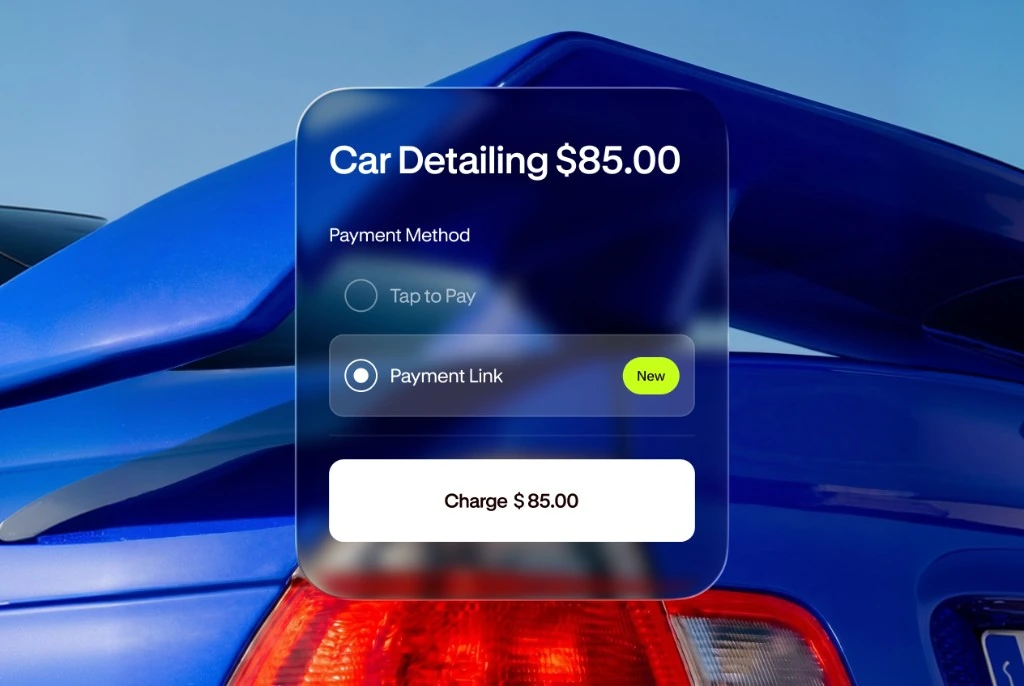
For mobile sellers and small operators, JIM transforms your iPhone into a complete payment terminal. You pay a flat 1.99% fee on Tap to Pay sales, get instant access to funds on your JIM Visa Prepaid Card, and avoid hardware, monthly fees, or contracts. The JIM Card is a virtual Visa Prepaid Card issued by Lead Bank, Member FDIC, pursuant to a license from Visa U.S.A. Inc.; funds held on the card are FDIC insured up to $250,000. It is simple, fast, and built for sellers on the go.
Start accepting payments anywhere, instantly. Download JIM today and start selling with ease.
Frequently Asked Questions
What banks use Fiserv?
What is an example of a PSP?
Is PayPal a PSP?
Does Wells Fargo own Fiserv?
Is the payment solution legit?
What is the $3,000 bank rule?



Sell and get paid in seconds with Jim