Shopify vs Square: Which Is Better for Your Business?

See article summary
- Square starts at $0/month with 2.6% + $0.15 per in-person swipe; Shopify starts at $29/month with 2.6% + $0.10.
- Shopify Basic becomes cheaper than Square Free above 580 in-person transactions per month.
- Square wins for brick-and-mortar simplicity; Shopify wins for e-commerce depth and customization.
- Restaurants favor Square's industry POS; retail with online catalogs favors Shopify's inventory sync.
- Mobile sellers can skip both with phone-based Tap to Pay at 1.99% per sale and instant payouts.
Last updated: August 2026. Pricing verified against each platform's official pricing page.
You're ready to start selling, but two industry giants keep coming up in every search. Making the wrong choice between Shopify vs Square means overpaying on fees or outgrowing your platform within months.
Credit cards account for 32% of consumer payments, according to the Federal Reserve. That makes your payment platform choice one of the most important decisions for your small business. Both platforms offer point-of-sale (POS) systems and e-commerce features, but they serve fundamentally different business models.
See how each option stacks up in cost, features, and real-world use so you can pick the right fit for your business.
Shopify vs Square: Quick Comparison
| Feature | Square | Shopify |
|---|---|---|
| Starting Price | $0/month (Free plan) | $29/month (Basic, annual) |
| In-Person Processing | 2.6% + $0.15 | 2.6% + $0.10 |
| Online Processing | 2.9% + $0.30 | 2.9% + $0.30 |
| Best For | Brick-and-mortar, mobile sellers | E-commerce focused businesses |
| Contract | None required | Month-to-month available |
| Hardware Cost | $0-$799 | $49-$459 |
Square wins on no monthly fees; Shopify wins on e-commerce depth. The break-even point between them is concrete: Shopify Basic (annual billing) costs less than Square Free once you process more than 580 in-person transactions per month, because Shopify saves $0.05 per swipe and charges $29/month for it. Below that volume, Square's $0 plan keeps more money in your pocket.
How Much Do Shopify and Square Cost?
Square starts at $0/month with 2.6% + $0.15 per in-person swipe; Shopify starts at $29/month (annual billing) with 2.6% + $0.10 per in-person swipe. Online rates match at 2.9% + $0.30 on both entry-level plans. The real cost difference shows up in monthly fees and per-transaction fixed costs, not the percentage rate.
Square Pricing
Square's free plan lets you pay only when you process payments. Rates below are Square's published processing fees, as of August 2026:
- 2.6% + $0.15 per tap, dip, or swipe on the Free plan
- 2.5% + $0.15 with Square Plus ($49/month)
- No monthly fees on the basic plan
- Hardware ranges from $0 (first magstripe reader free) to $799 (Square Register)
Shopify Pricing
Shopify charges monthly subscriptions plus processing fees. Rates below are Shopify's published pricing, as of August 2026:
- Basic plan: $29/month (annual billing) or $39/month billed monthly
- In-person processing: 2.6% + $0.10 on the Basic plan with Shopify Payments
- Online processing: 2.9% + $0.30 on the Basic plan with Shopify Payments
- Advanced plan ($399/month) drops in-person rates to 2.4% + $0.10
- POS Pro upgrade: additional $89 per location for advanced features, per Shopify's POS pricing
Average credit card processing fees among major providers range 1.5% to 3.5%, according to NerdWallet. Both platforms fall within industry norms, but your total cost depends on sales volume and channel mix. For more on finding the right processor, see our guide on best credit card processing for small business.
When does Shopify become cheaper than Square?
The percentage rates are nearly identical, so the decision comes down to the monthly fee versus the per-transaction fixed-cost gap. Shopify Basic (annual) charges $29/month but saves you $0.05 on every in-person transaction compared to Square Free ($0.10 vs $0.15 fixed fee). At 580 in-person transactions per month, the savings ($29) exactly offset the subscription. Above 580 transactions, Shopify costs less; below it, Square wins.
Suppose a coffee shop runs 800 in-person transactions a month at a $6 average ticket. On Square Free, processing costs 800 × ($6 × 2.6% + $0.15) = $137.80. On Shopify Basic (annual), the same volume costs $29 + 800 × ($6 × 2.6% + $0.10) = $163.80. Here Shopify's monthly fee outweighs the per-swipe savings, so Square wins despite the higher per-transaction fixed cost, because the ticket is small and the subscription is fixed. Flip the scenario to 800 transactions at a $50 average ticket and Shopify pulls ahead: the $0.05 per-swipe saving on larger tickets compounds faster than the flat $29.
In short: low average ticket and modest volume favors Square Free. High ticket size or high transaction count above the 580 break-even favors Shopify Basic.
Which Is Better for Online Selling?
Shopify wins on online selling. It was built as a dedicated e-commerce platform with 80+ themes, 136 currencies, and thousands of apps. Square Online works as a secondary channel for businesses that sell primarily in person.
Square Online
Square offers a free website builder alongside its payment processing:
- 34 basic templates with limited customization
- 8 currencies supported
- Basic blog alternative via "Stories" feature
Square Online works when in-person sales remain your primary channel and you need a basic online store as a secondary sales channel.
Shopify Online Store
Shopify was built as a dedicated ecommerce platform from the start:
- 80+ themes, highly customizable, plus marketing tools like email marketing and loyalty program features
- 136 currencies supported
- Built-in blog with SEO tools
- Thousands of apps in the Shopify App Store for add-ons and automation
- Advanced inventory management and shipping options
- Multiple sales channels including social media marketplaces
Merchants focused on online sales and long-term scalability will find Shopify offers more ecommerce features out of the box. As you scale your checkout experience, familiarity with digital wallets and payment options becomes increasingly valuable.
POS and In-Person Payments
When face-to-face transactions drive your revenue, POS hardware and software reliability become non-negotiable. Square's roots are in in-person payments, while Shopify expanded into this space more recently.
Square POS Strengths
Square built its reputation on in-person payment processing:
- Five hardware options from free card readers to $799 Square Register
- Options include countertop setups like Square Stand and Square Terminal
- Supports Tap to Pay on iPhone for contactless payments
- Industry-specific POS systems for restaurants and retail stores with barcode scanning
- Offline payment processing capability
- No contracts required
Shopify POS Capabilities
Shopify POS integrates tightly with its e-commerce platform:
- POS Lite included with all e-commerce plans
- POS Pro: $89/month per location for advanced POS features
- Hardware ranges from $49 to $459 for POS terminal options
- Strong inventory sync between online and in-store channels
- Staff management and real-time inventory updates across all sales channels
Shopify POS shines when you need unified inventory management across online and in-person sales.
The mobile POS terminals market is projected to reach $85.11 billion by 2030, according to Grand View Research. This growth shows strong demand for flexible payment solutions.
To understand how modern contactless payments work without card readers, check out how tap to pay works.
Shopify vs Square for restaurants, retail, and services
Your industry changes which platform fits. Restaurants lean toward Square for its industry-specific POS, kitchen display integrations, and offline mode that keeps service running during internet outages. Retail stores with both a physical location and an online catalog benefit from Shopify's unified inventory sync between channels. Service providers and mobile businesses, from plumbers to market vendors, need portability more than a countertop terminal, which is where a phone-based Tap to Pay setup outperforms both.
Can you switch from Square to Shopify?
Yes. Shopify imports CSV product files from Square, and the Shopify App Store includes migration apps that transfer inventory, customers, and order history. The switch takes a few hours for a small catalog and a few days for larger stores. Square's free plan means no sunk subscription cost, so switching away carries no penalty. Shopify's month-to-month billing lets you test the platform without an annual commitment.
How do payouts compare?
Square deposits funds on its standard 1-2 business day schedule, with instant transfer available for a 1.95% fee per Square's instant transfer pricing. Shopify Payments sends funds to your bank account within 2-5 business days after a payment is captured, per Shopify's payout timing documentation. Both lag behind mobile Tap to Pay options that settle instantly after each sale, a factor that matters when cash flow, not feature count, drives your decision.
Which Should You Choose?
The right choice depends on your business model and transaction volume, not a universal "best." Match your situation to the platform that fits.
Choose Square if:
- You primarily sell in person at retail stores, restaurants, or service locations
- You want zero monthly fees while testing your business concept
- You need quick, simple setup with minimal complexity
- You process fewer than 580 in-person transactions per month
- You run a pop-up shop or seasonal business
Choose Shopify if:
- E-commerce is your primary sales channel
- You sell internationally and need support for 136 currencies
- You need extensive customization for your ecommerce website
- You process more than 580 in-person transactions per month, where the lower per-swipe fee offsets the subscription
- You want built-in gift cards and loyalty programs
- You want access to the Shopify App Store ecosystem
Consider a mobile Tap to Pay alternative
If you operate a mobile business, need full portability, and want instant access to funds, a phone-based payment terminal may fit better than either countertop platform. JIM turns an iPhone into a contactless payment terminal at a flat 1.99% per sale, with no hardware purchase, no monthly charges, and no settlement delay. Funds land on your JIM Visa® Prepaid Card right after each sale. This publisher offers JIM, so treat the comparison accordingly and weigh it against your own volume and mobility needs.
Entrepreneurs who need mobile POS capabilities without traditional platform complexity may find this a fitting alternative.
Bottom Line
Both Shopify and Square serve different business models effectively. Square works best for in-person simplicity with zero monthly fees and proven POS hardware. Shopify leads in e-commerce, offering the scalability and customization that growing online stores need. The numbers settle the close calls: below 580 in-person transactions per month, Square Free costs less; above that threshold, Shopify Basic's per-swipe discount overtakes its monthly fee.
Mobile sellers and service providers can skip the hardware entirely. With JIM, any iPhone becomes a payment terminal at a flat 1.99% per sale. No hardware costs, no monthly charges, and no waiting for settlement. Funds land on your JIM Visa® Prepaid Card right after each sale, keeping cash flow moving for market vendors, freelancers, and entrepreneurs on the go.
Ready to simplify your payment setup? Download JIM and start accepting card payments in minutes.
Frequently Asked Questions
Do I need Square if I have Shopify?
Is Shopify POS cheaper than Square?
What are the cons of using Shopify?
What is the downside of using Square?
What is the biggest competitor of Shopify?
What is not allowed on Shopify?
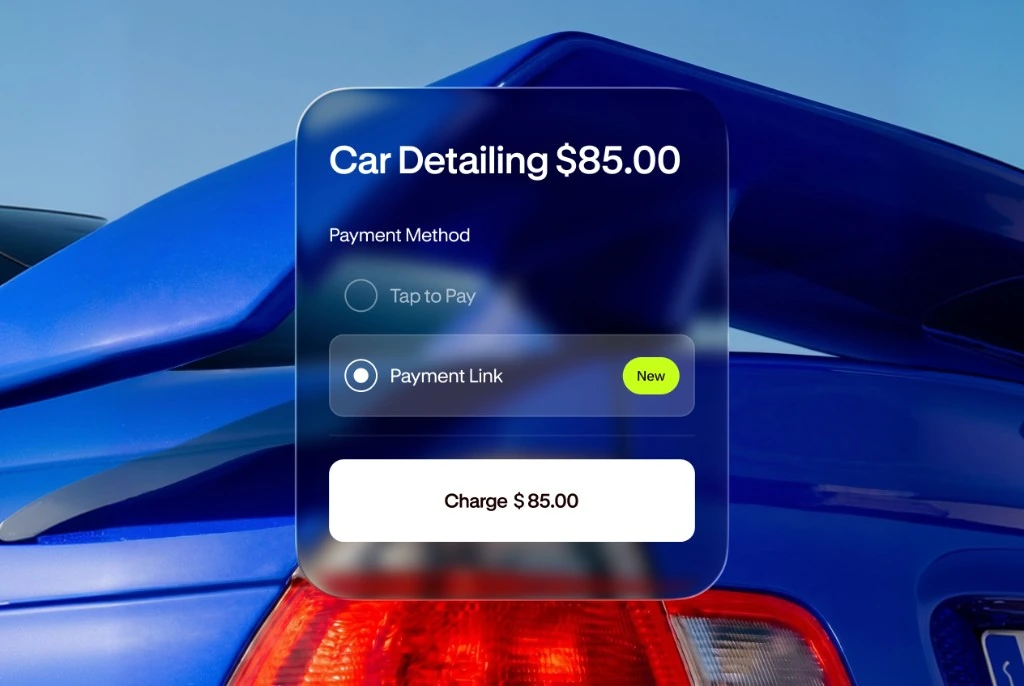



Sell and get paid in seconds with Jim