Square vs Clover: Which POS System Fits Your Business?

See article summary
- Square is cheaper to start: free plan, no contract, $0 hardware starter kit.
- Clover is cheaper per in-person swipe: 2.3% to 2.6% + 10¢ versus Square's 2.6% + 15¢.
- Square wins online (2.9% + 30¢) and includes a free online store; Clover charges for ecommerce.
- Clover's lower rate beats Square's free plan once you clear roughly $3,750 in monthly in-person volume.
- Mobile, in-person-only sellers can skip both with a flat 1.99% Tap to Pay app, no hardware.
Square is cheaper to start and simpler to run; Clover is cheaper per in-person transaction and more flexible on processors. That is the whole decision in one sentence. Below is a side-by-side of fees, hardware, contracts, and which business type each system fits.
Processing fees are the largest hidden cost for retailers, and the decision between Square and Clover can mean thousands of dollars over a year. According to the Federal Reserve's 2024 Report on Payments, approximately 80% of small businesses face payments-related challenges, and fees are the most common hurdle for businesses that collect payment at the point of sale.
Square vs Clover: Quick Comparison
Here is how the two POS systems stack up at a glance. All rates reflect each platform's published U.S. pricing as of August 2026.
| Feature | Square | Clover | JIM |
|---|---|---|---|
| Best for | Simplicity, startups, free plan | Customization, lower in-person fees | Mobile, instant payouts |
| Monthly software | $0 to $149 | $0 to $129.85 | $0 |
| In-person processing | 2.6% + 15¢ (base) | 2.3% to 2.6% + 10¢ | 1.99% flat |
| Online processing | 2.9% + 30¢ | 3.5% + 10¢ | In-person only |
| Hardware cost | $0 to $799 | $199 to $1,899 | $0 (iPhone only) |
| Free plan | Yes (full POS) | Go reader only | Yes |
| Contract | None | Often 3-year for promo rates | None |
Source: Square's official website, accessed August 2026. Source: Clover's official website, accessed August 2026.
One key difference: Square POS includes a free online store, while Clover charges extra for ecommerce functionality. If you need both in-person and online ordering, that gap matters for your bottom line.
Square vs Clover Pricing
Small differences in processing fees compound quickly when you run dozens of transactions daily. Knowing the full cost structure, not just the headline rate, is what protects your margin.
Software Costs
Square offers a genuinely free plan with inventory management, reporting, and a built-in online store. Paid tiers run $49/month for Plus and $149/month for Premium, adding employee management, loyalty programs, and gift card functionality. Source: Square's official website, accessed August 2026.
Clover's pricing works differently. Its $0 Starter plan pairs with the Clover Go mobile reader only; full Clover POS plans start at $14.95/month, and quick-service restaurant plans with kitchen display system access run $89.95/month and up, topping out near $129.85/month for the Advanced full-service restaurant plan. Source: Clover's official website, accessed August 2026.
Processing Fees
Clover undercuts Square by 5 to 30 cents per in-person transaction; Square is cheaper online.
| Transaction | Square | Clover | JIM |
|---|---|---|---|
| $10 in-person | $0.41 | $0.33 to $0.36 | $0.20 |
| $50 in-person | $1.45 | $1.25 to $1.40 | $1.00 |
| $100 in-person | $2.75 | $2.40 to $2.60 | $1.99 |
| $100 online | $3.20 | $3.60 | N/A |
The pattern is clear: Clover offers cheaper processing for in-person payments, while Square is more affordable for online transactions.
For a retail store running 50 transactions daily at a $100 average, the dollar delta is concrete. At Square's base 2.6% + 15¢, that is $2.75 per transaction, or $137.50 per day. At Clover's 2.3% + 10¢, the same sale costs $2.40, or $120.00 per day. Over a year, Clover saves roughly $6,388 on that volume. At Clover's higher 2.6% + 10¢ rate, the per-transaction gap shrinks to a nickel and the yearly saving narrows to about $913. Run the math on your own average ticket before you commit.
For more options, reviewing the best credit card processors for small businesses helps you benchmark these rates against alternatives like Stripe, PayPal, Toast, and Shopify.
When Clover's Lower Rate Pays Off
Clover's lower per-transaction rate has to offset its higher fixed costs before you come out ahead. The break-even table below assumes a $50 average ticket, Square's base 2.6% + 15¢ on the free plan, and Clover's 2.3% + 10¢ plus the $14.95/month Starter plan. Illustrative scenario.
| Monthly in-person volume | Square cost | Clover cost | Cheaper option |
|---|---|---|---|
| $5,000 | $145.00 | $139.95 | Clover |
| $10,000 | $290.00 | $264.95 | Clover |
| $25,000 | $725.00 | $639.95 | Clover |
| $50,000 | $1,450.00 | $1,264.95 | Clover |
| $100,000 | $2,900.00 | $2,514.95 | Clover |
At a $50 average ticket, Clover becomes cheaper once monthly in-person volume clears roughly $3,750, the point where its 0.4 percentage point rate advantage covers the $14.95 plan fee. Below that, Square's zero monthly cost wins. Factor in hardware and contract terms before you switch.
12-Month Total Cost by Business Type
Processing rates only tell part of the story. The simulation below adds software, hardware amortized over 12 months, and processing fees for three common business types. Illustrative scenario: Square uses the free plan with a $0 reader; Clover uses the $14.95/month Starter plan with a $799 Station for café and retail, or a $49 Go reader for mobile.
| Business type | Monthly volume | Avg. ticket | Square 12-mo total | Clover 12-mo total |
|---|---|---|---|---|
| Café (counter service) | $20,000 | $9 | $10,240 | $9,165 |
| Retail store | $40,000 | $45 | $14,080 | $13,085 |
| Mobile service business | $8,000 | $120 | $2,616 | $2,337 |
Clover wins on processing cost in all three scenarios once its plan fee and hardware are absorbed, but the gap narrows at low volume where Square's zero monthly cost and zero hardware spend offset Clover's lower rate. The mobile scenario shows the smallest delta because volume is too low to fully amortize Clover's fixed costs.
Square vs Clover Features
Beyond fees, the features of each point of sale system determine daily usability. Both platforms offer solid functionality, but they excel in different areas.
What Square offers:
- Free online store included (Clover charges extra)
- Easier setup with plug-and-play Square hardware like Square Reader, Square Stand, Square Terminal, and Square Register
- Built-in loyalty programs, payroll integrations, and invoicing
- Risk Manager for fraud prevention on credit card transactions
- User-friendly interface requiring minimal training
- iPad and kiosk compatibility out of the box
What Clover offers:
- Works with multiple merchant service providers for processor choice
- 24/7 phone and email support (Square offers phone support Monday through Friday, 6 a.m. to 6 p.m. Pacific Time at 1-855-700-6000)
- More extensive Clover hardware options including Clover Station, Clover Mini, and Clover Flex
- Stronger offline mode for contactless payments without internet
- Larger app marketplace for add-ons, integrations, and custom APIs
- Barcode scanner and receipt printer bundles across hardware tiers
Square vs Clover for Restaurants
Clover is the stronger fit for full-service restaurants. Its Counter Service and Table Service plans include kitchen display system access, course routing, and table mapping that Square replicates only through paid third-party apps. Square for Restaurants works well for quick-service and coffee shops on the free plan, but operators adding tableside ordering and advanced course flows tend to outgrow it. If kitchen display integration is non-negotiable, Clover's $89.95/month Counter Service plan is the practical starting point.
Square vs Clover for Retail Stores
Square wins for retailers who want inventory, a free online store, and barcode scanning without a monthly fee. Its free plan covers most single-location retail needs, and the $49/month Plus plan adds advanced inventory and multi-location reporting. Clover's Retail plan starts at $14.95/month and adds deeper hardware integration (Scanner, Scale, Station), which suits high-volume stores with dedicated checkout lanes. Choose Square for simplicity and omnichannel selling; choose Clover when dedicated retail hardware and processor flexibility justify the monthly fee.
Square vs Clover for Service Businesses
Service businesses, salons, consultants, and mobile pros, usually do not need a full countertop POS. Square's invoicing and online booking cover appointment-based work on the free plan. Clover's Personal Services plan starts at $0 plus $29.95/month for essentials. For mobile service providers who only need to accept cards on the go, a phone-based Tap to Pay setup skips hardware entirely; learn how tap to pay works to see if it fits your route.
Square vs Clover Pros and Cons
Here is a scannable summary to weigh your options quickly.
| Category | Square | Clover |
|---|---|---|
| Pros | No monthly fees on free plan with full POS; free online store for ecommerce; free magstripe reader included; no contracts or termination fees; simple flat-rate pricing | Lower in-person processing (as low as 2.3% + 10¢); freedom to choose your payment processor; 24/7 phone and email support; full-service countertop hardware options; real-time reporting and inventory management |
| Cons | No 24/7 phone support; locked to Square Payments only; higher in-person fees than Clover | No free full POS plan; often requires 3-year contract; higher online processing fees; hardware costs more upfront ($199 to $1,899) |
What Real Merchants Say
Independent review data adds a layer beyond the spec sheet. Square Point of Sale holds 4.6 out of 5 stars on G2, where the most common complaint is account holds and freezes during review. Clover sits around 3.9 out of 5 on G2 and Capterra, where users cite slow support response times and reseller pricing inconsistency as the top frustrations. Source: G2 and Capterra, accessed August 2026.
Switching Between Square and Clover
Switching processors is common, and the cost depends on what you signed.
Square has no contracts or termination fees, so you can stop using it anytime. Your transaction history exports from the dashboard, and you keep your hardware (though it only works with Square). The main friction is re-entering inventory and re-pairing any new system.
Clover is the harder exit. Promotional pricing often locks you into a 3-year equipment financing agreement, and early termination can trigger the remaining hardware balance plus a fee. Before switching to Square, ask your Clover reseller for the exact payoff figure and confirm whether your Clover hardware can be reprogrammed for another processor or becomes e-waste.
In both directions, your customer data does not transfer automatically. Export your customer directory, item catalog, and sales history as CSV before you cancel, and plan a two-week overlap so you can reconcile outstanding batches and chargebacks.
Which Should You Choose?
The right choice depends on your business model, not on which platform has more features.
Choose Square if:
- You want $0 startup cost with a full-featured free plan
- You need online and in-person selling without extra ecommerce fees
- You prefer no contracts and the ability to leave anytime
- Ease of use matters more than the lowest processing rates
Choose Clover if:
- You already have a merchant account you want to keep
- You want the lowest in-person credit card processing fees
- You need 24/7 phone support for your team
- Your retail business processes high transaction volume where per-transaction savings add up
Alternatives to Square and Clover
Square works best for simplicity and free startup; Clover suits merchants wanting processor flexibility and lower in-person fees. A third path exists for sellers who want to skip hardware entirely.
Disclosure: this section describes JIM, a mobile payment app, as an alternative for a specific use case. JIM is not a replacement for a full POS system.
With Tap to Pay technology, your iPhone becomes your payment terminal, accepting all major credit cards and digital wallets at a flat 1.99% fee. Funds hit your JIM Visa® Prepaid Card instantly, not in 1 to 3 business days.
JIM fits a narrow profile: mobile vendors, freelancers, and service providers who accept payments primarily in person, value instant access to funds over waiting for settlement, and want to skip hardware purchases. Flat 1.99% pricing with no monthly fees or hidden costs works when your sales are in-person and you do not need inventory, kitchen display, or ecommerce features.
Ready to accept payments without buying equipment or signing contracts? Download JIM and start selling in minutes.
Frequently Asked Questions
Is Clover better or Square?
What is the difference between Square and Clover?
Who is cheaper, Clover or Square?
Who is Square's biggest competitor?
What are the downsides of Clover?
What is the downside of using Square?
Can I switch from Clover to Square?
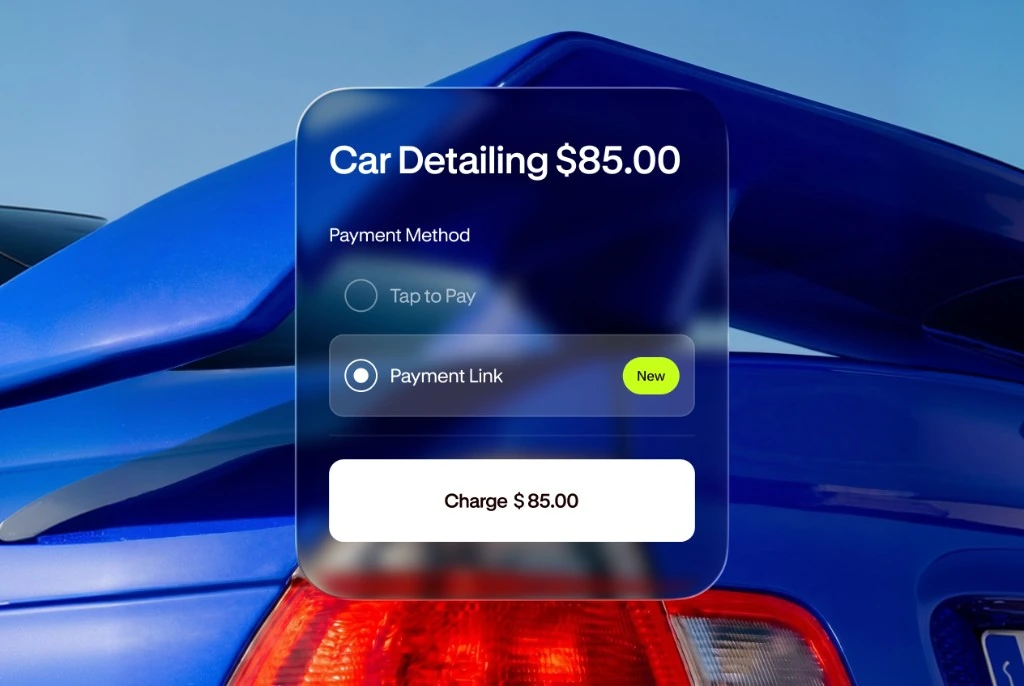



Sell and get paid in seconds with Jim